
Federal Minister for Planning, Development and Special Initiatives Professor Ahsan Iqbal on Wednesday directed all ministries to expedite the implementation of the five corridors under CPEC 2.0, namely the Corridors of Growth, Livelihood, Innovation, Green Development and Regional Connectivity.
CPEC 2.0: Ahsan directs ministries to fast-track implementation of key projects
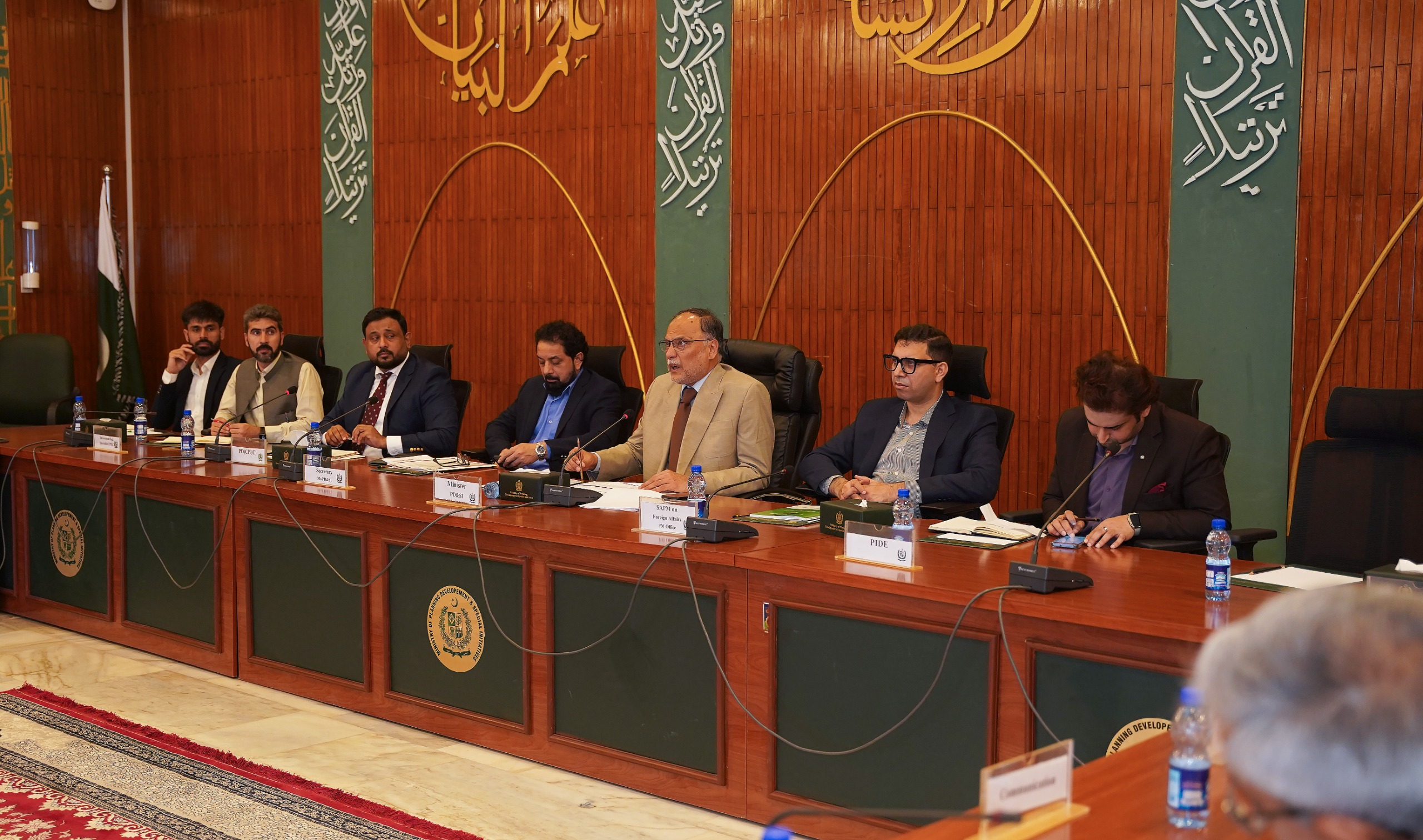
ISLAMABAD, Aug 5 (APP): Federal Minister for Planning, Development and Special Initiatives Professor Ahsan Iqbal on Wednesday directed all ministries to expedite the implementation of the five corridors under CPEC 2.0, namely the Corridors of Growth, Livelihood, Innovation, Green Development and Regional Connectivity.
He issued these directives while chairing the 91st meeting of the CPEC Projects Review and National Steering Committee, which brought together key stakeholders to review progress in infrastructure, power, petroleum, water resources, food and agriculture, Joint Working Group (JWG) meetings and Special Economic Zones (SEZs), a news release said.
The minister said CPEC 2.0 offered immense opportunities to build on the successes of CPEC 1.0 by leveraging investments made in energy and physical infrastructure.
The Pakistan Mission in Beijing and the respective JWG conveners briefed the forum on preparations for the upcoming JWG meetings and the 15th Joint Cooperation Committee (JCC) meeting.
The forum was informed that the calendar had been finalized in consultation with the respective conveners and shared with the Pakistan Mission in Beijing to facilitate coordination with the Chinese side.
During the meeting, the Ministry of Maritime Affairs (MoMA) and the Government of Sindh briefed participants on the latest progress of the Karachi Coastal Comprehensive Development Zone (KCCDZ) project.
Expressing concern over implementation delays, the minister directed all stakeholders to submit their observations within a week and resolve all outstanding issues without further delay.
He emphasized that the memorandums of understanding (MoUs) must be implemented in accordance with agreed terms and applicable rules, stressing that agreements should translate into timely implementation rather than remain confined to paperwork.
He urged all relevant institutions to take ownership of their commitments and directed the Government of Sindh, MoMA and the Board of Investment (BOI) to hold a meeting with the Chinese company to resolve technical issues and expedite the project’s implementation through regular coordination.
Reviewing progress on the initiative to train 1,000 agriculture graduates in China, the minister stressed that the expertise acquired by the graduates must be effectively utilized for the benefit of Pakistan’s agricultural sector.
He directed the relevant authorities to present at the next meeting a comprehensive plan outlining the areas of specialization, deployment and future roles of the trained graduates.
Emphasizing the need to align training with national priorities, he called for greater focus on biotechnology, seed development, high-yield crop varieties, digital extension services, AI-driven agriculture and cooperative farm management.
He also instructed officials to prepare a five-year human resource and sectoral development roadmap to ensure that future training programmes are aligned with the country’s actual agricultural needs.
The meeting also reviewed progress on the Power Supply Stability Project for Gwadar Port and the Free Zone.
The minister reaffirmed the government’s commitment to supporting industrial growth through reliable energy supply and highlighted the importance of resolving outstanding issues on a priority basis.
He underscored the need for a coordinated strategy to expedite infrastructure development and ensure uninterrupted power connectivity for the zones.
The National Highway Authority (NHA) informed the meeting that the financing arrangements for the KKH Phase-II project would be discussed at the Joint Working Group meeting expected at the end of August 2026.
The minister directed that the financing details be finalized at the upcoming meeting in view of the 2028 deadline, adding that if delays persisted, construction of the road should be initiated through the government’s own resources to prevent its submergence in the Diamer-Bhasha Dam reservoir.
He further directed officials to explore the possibility of including leading Pakistani construction companies in the bidding process.
The meeting was attended by the additional secretary of the Ministry of Planning, Development and Special Initiatives, senior officials from the ministries of Foreign Affairs, Interior, Communications, National Food Security and Research, Science and Technology, Information Technology and Telecommunication, Maritime Affairs, and Industries and Production, as well as representatives of the Economic Affairs Division, Power Division, Petroleum Division, Board of Investment, Gwadar Development Authority and the CPEC Secretariat.

