
Federal Minister for Information Technology and Telecommunication Shaza Fatima Khawaja on Thursday said technology would not replace human jobs, but people who know how to use artificial intelligence (AI) and emerging technologies would lead the future workforce.
AI-skilled people will lead future workforce: Shaza Fatima
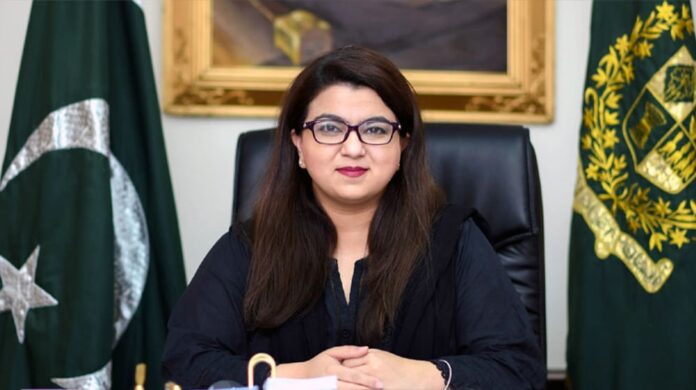
ISLAMABAD, Jul 30 (APP):Federal Minister for Information Technology and Telecommunication Shaza Fatima Khawaja on Thursday said technology would not replace human jobs, but people who know how to use artificial intelligence (AI) and emerging technologies would lead the future workforce.
Speaking at the UN Women Gender-Responsive AI School: Advancing Inclusive and Responsive Artificial Intelligence event, organised by the Ministry of Information Technology and Telecommunication in partnership with UN Women Pakistan, she said Pakistan must prepare its people for the AI-driven era by expanding AI education and technology training across the country.
The minister said AI education should no longer remain limited to computer science students. Instead, AI literacy has become an essential skill for students and professionals across all fields.
She said the government is working to ensure that AI knowledge and tools are accessible to both technology and non-technology communities.
Highlighting the impact of AI on traditional professions, Shaza Fatima said doctors, lawyers, election officials, and professionals from every sector must adapt to technological change.
She said the government’s priority is to equip both technology and non-technology students with a basic understanding of AI, STEM, and other emerging technologies so they can use these tools in their careers and daily lives.
The minister appreciated the efforts of UN Women, COICA, development partners, industry, academia, and the Ministry of IT in promoting digital skills.
She stressed the need to train more teachers and instructors who could pass AI knowledge on to students and professionals across the country.
Shaza Fatima said technology has become the foundation of economic growth, innovation, and productivity, driving sectors including manufacturing, agriculture, healthcare, and financial services.
Calling for greater participation of women in AI research, innovation, and leadership, she warned that AI systems would remain incomplete and biased unless women became builders, creators, and decision-makers in emerging technologies.
She said AI systems are shaped by human knowledge, experiences, and values, making diversity in AI development essential.
The minister said Pakistan had made significant progress in reducing the gender gap in mobile internet usage, which fell from around 38 per cent in 2024 to 25 per cent in 2025 and further to just 8 per cent in the 2026 GSMA report.
She described it as one of the fastest reductions in the digital gender divide globally.
Despite this progress, she said girls still have limited participation in STEM education, reducing their representation in the fields where AI technologies are designed and developed.
She added that AI systems inherit human biases, making it essential to include women and diverse voices in AI development.
Shaza Fatima said AI systems reflect the experiences of the people who develop them, warning that women’s perspectives would remain absent unless they played a greater role in designing and building these technologies.
She urged young women to become AI innovators, developers, and creators instead of remaining only users of technology.
She said initiatives such as gender-responsive AI schools would help ensure that technology is developed through a gender-inclusive approach and support the achievement of the Sustainable Development Goals (SDGs) on quality education and gender equality.
Highlighting the government’s efforts to promote women’s digital inclusion, the minister said Pakistan had introduced several initiatives over the past two years.
She said the Prime Minister’s decision to replace the traditional Ramazan subsidy distribution system through Utility Stores with digital payments had successfully expanded financial inclusion.
The initiative was implemented through collaboration between the Ministry of IT, the Pakistan Telecommunication Authority (PTA), NADRA, the Benazir Income Support Programme (BISP), and the private sector under the leadership of Prime Minister Shehbaz Sharif.
The minister said more than 800,000 women opened digital wallets within a month of the programme’s launch.
She added that while Rs16 billion was distributed under the previous Ramazan package, the latest programme disbursed Rs38 billion to women beneficiaries through digital wallets.
She further said nearly 10 million free SIMs and digital wallets had been provided to women across the country to strengthen their participation in the digital economy.
Shaza Fatima said the government’s long-term goal is to redesign digital governance and the digital economy so that women’s inclusion becomes a permanent feature of national development rather than a temporary policy measure.

