ISLAMABAD, Jul 28 (APP):Pakistan has laid stronger foundations for digital transformation through reforms in spectrum policy, progress in women's digital inclusion, and improved digital governance, said Head of Asia Pacific, GSMA, Julian Gorman on Tuesday. However, he was of the view that sustained investment, trusted digital infrastructure, and coordinated implementation will be essential to achieve the vision of Digital Pakistan 2030. Presenting the Digital Pakistan 2030 report, Gorman said digital …
Pakistan laid stronger foundations for digital transformation through spectrum reforms, women’s digital inclusion: Julia
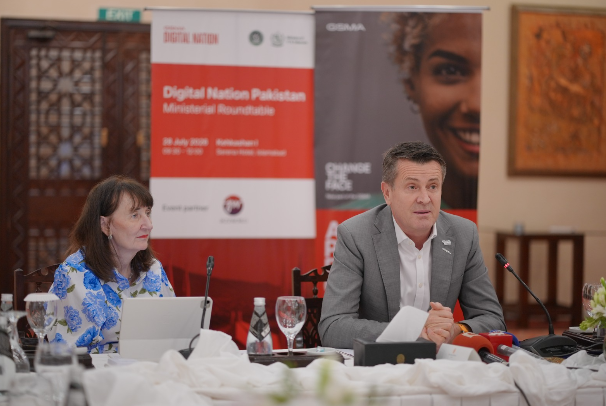
ISLAMABAD, Jul 28 (APP):Pakistan has laid stronger foundations for digital transformation through reforms in spectrum policy, progress in women’s digital inclusion, and improved digital governance, said Head of Asia Pacific, GSMA, Julian Gorman on Tuesday.
However, he was of the view that sustained investment, trusted digital infrastructure, and coordinated implementation will be essential to achieve the vision of Digital Pakistan 2030.
Presenting the Digital Pakistan 2030 report, Gorman said digital technologies had become key drivers of national productivity and competitiveness.
He added that Pakistan now had an opportunity to convert recent momentum into long-term economic growth through investment certainty, digital trust, future-ready infrastructure, and collaboration among government, industry, and development partners.
Referring to a new GSMA report, Gorman said the study highlighted Pakistan’s recent digital progress, outlined what success could look like by 2030, and identified five strategic priorities to transform current momentum into measurable outcomes.
Highlighting the country’s recent achievements, he said Pakistan had strengthened its investment environment by completing the 5G spectrum auction with improved terms, more balanced spectrum pricing, flexible payment mechanisms, and payments denominated in Pakistani rupees, creating greater certainty for future investment in digital infrastructure and 5G deployment.
Gorman said mobile broadband population coverage had reached 81 per cent, smartphone adoption had increased to 68pc, and urban mobile internet usage had risen to 37pc, according to the GSMA State of Digital Opportunities (SDO) Index 2025, enabling more citizens to participate in the digital economy.
He said Pakistan had also made significant progress in digital inclusion, with women’s mobile internet adoption increasing from 45pc to 53pc of the adult female population between 2024 and 2025, while the mobile internet gender gap narrowed from 25pc to 8pc, according to the GSMA Mobile Gender Gap Report 2025.
On digital governance, he said the enactment of the Digital Nation Pakistan Act 2025, the establishment of the Pakistan Digital Authority, the release of the draft National Data Governance Policy for consultation, and stronger whole-of-government coordination had further strengthened the country’s digital ecosystem.
He added that the launch of the National AI Policy, alongside digital transformation initiatives under Uraan Pakistan and Digital Nation Pakistan, demonstrated that the digital economy had become a national development priority.
Looking ahead to 2030, Gorman said Pakistan should aim to become a competitive, inclusive, and trusted digital economy supported by sustained private investment, resilient digital infrastructure, affordable and meaningful digital services, full participation of women and underserved communities, trusted data governance, secure digital networks, and AI-enabled public services.
He said achieving these goals would require clear ownership, measurable outcomes, and strong collaboration among government institutions, industry, and international development partners.
Outlining the report’s five strategic priorities, Gorman said Pakistan must unlock greater investment capacity by ensuring that taxation policies support long-term infrastructure investment.
He added that the mobile sector contributed about Rs.278 billion in taxes and fees in 2025, equivalent to around 40pc of total sector revenues, underscoring the need to balance fiscal objectives with investment incentives.
On digital inclusion, he said the challenge had shifted beyond network availability to affordability, access to devices, digital skills, online safety, and social norms.
He said that literacy and digital skills remained the primary barriers for users, while 28pc of women mobile internet users still relied on someone else’s mobile device.
Gorman said preparing Pakistan for the AI economy would require coordinated investment in spectrum, fibre networks, cloud infrastructure, data centres, and resilient energy systems, together with streamlined regulatory approvals and infrastructure-sharing policies.
He said trusted digital infrastructure must be supported through stronger cybersecurity, effective data governance, online safety measures, anti-scam collaboration, and child protection.
He added that governments, telecom operators, financial institutions, technology companies, and digital platforms all shared responsibility for building public trust.
He also stressed that delivering Digital Pakistan 2030 would require moving beyond periodic consultations towards structured implementation mechanisms with clear institutional ownership, regular progress reviews, and close coordination among federal and provincial governments and international development partners.
“The future of Digital Pakistan will not be defined by the policies we announce, but by the outcomes we deliver—together,” Gorman said.
During a question-and-answer session, Gorman said the world was moving beyond digitalisation towards becoming fully digital societies, where technology increasingly shapes how governments, businesses, and citizens interact.
“We’re entering a new era of digital nations where individuals are at the centre of digital transformation,” he said, adding that artificial intelligence was increasingly influencing everyday decision-making and changing how people communicate, access services, and interact with society.
He added that reliable connectivity was critical for digital payments, businesses, emergency communications, and essential public services. While different countries adopted different approaches to internet management, he said the GSMA encouraged policies that maintained access wherever possible while respecting national security requirements.
He welcomed discussions on improving coordination between the federal government and the provinces in developing a National Digital Master Plan, saying effective governance would help guide AI policy alongside broader digital transformation efforts.
Gorman also praised the Digital Nation Pakistan Act and the establishment of the Pakistan Digital Authority, saying they provided an institutional framework to bring different parts of government together and improve coordination on digital policy.
He said Pakistan was competing with other ambitious economies in the region for international investment and should learn from global best practices while developing solutions suited to its own economic, social, and linguistic realities.
“There is no one-size-fits-all solution,” he said. “Learning from other countries does not mean copying them. Pakistan has unique circumstances that require its own approach.”
Highlighting the importance of collaboration, Gorman said no single organisation could address challenges such as cybersecurity, online fraud, or digital trust on its own.
Instead, governments, regulators, telecom operators, financial institutions, technology companies, and development partners needed to work together.
Addressing the growing threat of online scams, he said increasing smartphone adoption and digital payments naturally made countries more attractive targets for cybercriminals.
“As more people connect to the internet and transact digitally, scams and fraud will increase unless the ecosystem works together to prevent them,” he said.
He added that the GSMA’s Open Gateway initiative was developing standardised mobile network APIs, including number verification tools, to strengthen digital trust and improve online security.
He stressed that building trust in the digital economy extended beyond fraud prevention to include cybersecurity, online safety, resilient networks, and ensuring citizens could use digital services with confidence.