Federal Minister for Planning, Development and Special Initiatives Professor Ahsan Iqbal on Tuesday said the government was intensifying efforts to eliminate hepatitis C through a nationwide collaborative approach, urging all provinces and stakeholders to join the initiative to tackle one of Pakistan’s most pressing public health challenges.
Govt intensifies drive to eliminate Hepatitis C through national collaboration: Ahsan
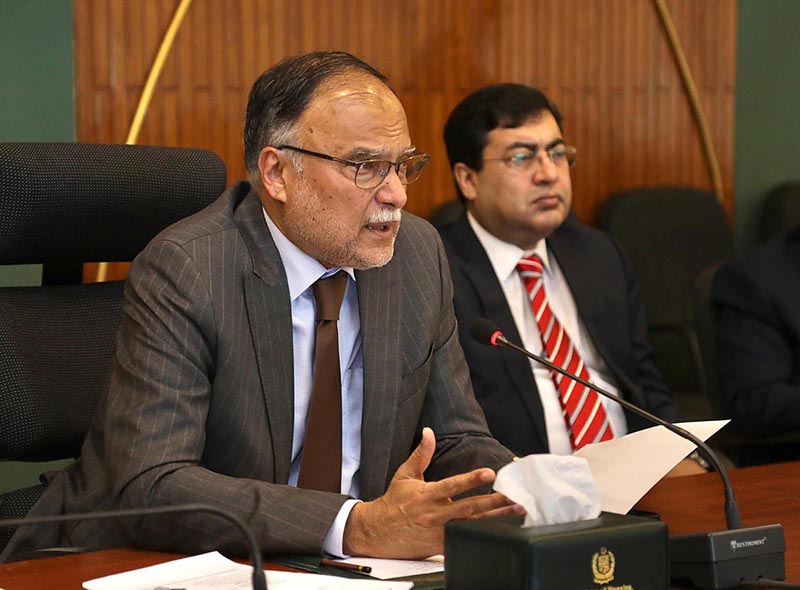
ISLAMABAD, Jul 28 (APP):Federal Minister for Planning, Development and Special Initiatives Professor Ahsan Iqbal on Tuesday said the government was intensifying efforts to eliminate hepatitis C through a nationwide collaborative approach, urging all provinces and stakeholders to join the initiative to tackle one of Pakistan’s most pressing public health challenges.
“We have launched the pilot hepatitis C elimination programme, and are now expanding it to Islamabad Capital Territory, Gilgit-Baltistan and Azad Jammu and Kashmir.
Our goal of achieving Zero Hepatitis C is attainable if the federal and provincial governments, along with all stakeholders, work together,” he said while addressing an event held in connection with World Hepatitis Day.
The minister said Pakistan ranked among the countries with the highest burden of hepatitis C, with more than 10 million people affected, making the disease a major challenge to the country’s human development and economic productivity.
He said the government had launched a pilot hepatitis C elimination programme this year, which was now being expanded to the Islamabad Capital Territory (ICT), Gilgit-Baltistan (GB) and Azad Jammu and Kashmir (AJK), with the objective of achieving a “Zero Hepatitis C” target in these regions.
Ahsan said the initiative demonstrated the government’s commitment to controlling the disease and expressed hope that all provinces would replicate the programme to achieve nationwide elimination.
He said hepatitis C was preventable, stressing that strict adherence to safe blood transfusion protocols, proper sterilisation of medical equipment and the safe use of syringes could significantly reduce infections.
The minister said health was directly linked with national development, adding that no country could realise its economic potential without a healthy and productive workforce.
He stressed that investment in health and education was essential for enhancing human capital and ensuring sustainable economic growth.
He said Pakistan continued to face serious health and education challenges, including high rates of hepatitis C, diabetes, polio and child stunting, and called for treating these sectors as a national emergency.
Ahsan said the government had also launched a nationwide diabetes awareness initiative alongside the hepatitis elimination programme to address the growing burden of non-communicable diseases.
He said Prime Minister Shehbaz Sharif had constituted the National Population Council to address rapid population growth through coordinated national efforts, while emphasising the need for broader policy reforms and consensus on resource allocation mechanisms to support population planning objectives.
The minister assured that the Ministry of Planning would continue extending full support to the Ministry of National Health Services in implementing the hepatitis elimination programme.
He said the success of the initiative depended on a whole-of-society approach, calling upon provincial governments, the private sector, civil society and religious scholars to actively contribute to raising awareness and preventing the spread of hepatitis C.
Ahsan also appreciated the Ministry of Health and the programme team for advancing the national hepatitis elimination campaign and expressed confidence that collective efforts could enable Pakistan to overcome the disease.