
Dismissing India’s “false” accusations against some of Pakistan’s actions, a Pakistani diplomat urged New Delhi to implement Security Council Resolution 2788, which calls for greater use of the UN Charter’s diplomatic tools for conflict settlement, honour its treaty obligations, and take steps aimed at resolving the Kashmir dispute to usher in peace in South Asia.
At UNSC, Pakistan rejects Indian accusations, calls for UN-led Kashmir settlement
Iftikhar Ali
UNITED NATIONS, Jul 24 (APP):Dismissing India’s “false” accusations against some of Pakistan’s actions, a Pakistani diplomat urged New Delhi to implement Security Council Resolution 2788, which calls for greater use of the UN Charter’s diplomatic tools for conflict settlement, honour its treaty obligations, and take steps aimed at resolving the Kashmir dispute to usher in peace in South Asia.
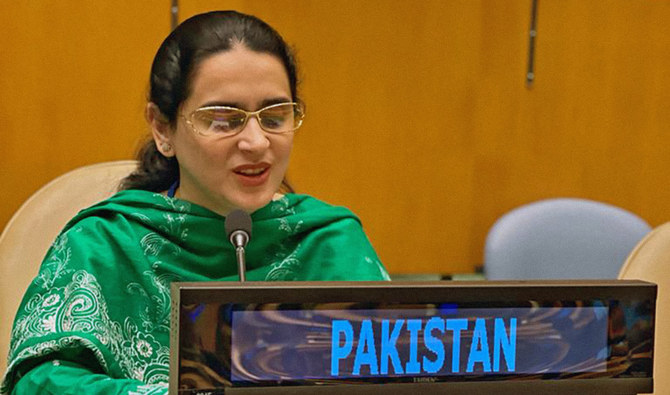
“The contrast between Azad Jammu and Kashmir and Indian-occupied Jammu and Kashmir is stark,” Saima Saleem, a counsellor at the Pakistan Mission to the UN, told the 15-member Council after India’s Ambassador Harish Parvathaneni urged Islamabad to “look inward and address the real issues.”
In Azad Kashmir, she told the Indian ambassador, Kashmiris live freely, participate in political life and raise their voice.
“In Indian-occupied Jammu and Kashmir, voices are silenced, dissent criminalized, thousands of cases of detentions, extrajudicial killings, enforced disappearances and conflict-related sexual violence used as instruments of repression, demographic changes imposed, and the right to self-determination denied,” the Pakistan delegate said while exercising her right of reply.
In his speech, the Indian ambassador responded to his Pakistani counterpart Asim Iftikhar Ahmad who earlier addressed the Security Council during which he highlighted Resolution 2788 and in that context reaffirmed Pakistan’s commitment to a peaceful settlement of the Kashmir dispute in accordance with the Council’s resolutions.
Ambassador Harish also claimed that Jammu and Kashmir was an integral and inalienable part of India. “The only outstanding issue with regard to Jammu and Kashmir is the naked aggression and illegal occupation of India’s sovereign territory by Pakistan,” the Indian envoy added.
To this, Ms. Saleem, the Pakistani delegate, retorted that Jammu and Kashmir was neither an integral part of India nor its internal matter.
“India’s denial cannot rewrite history, change Jammu and Kashmir’s internationally-recognized disputed status, or conceal nearly eight decades of systematic human rights violations against the Kashmiri people, including denial of their inalienable right to self-determination,” she said.
“India itself brought the Jammu and Kashmir dispute before the Security Council yet continues to defy its resolutions,” the Pakistani delegate said, adding, “Let me remind the Indian delegation that Security Council resolutions do not have an expiry date.”
Ms. Saleem also decried India’s “unilateral and illegal’ decision to hold the Indus Waters Treaty in abeyance.
“The water of the Indus rivers is a lifeline for 240 million people of Pakistan—not a weapon of war. Such reckless conduct by India can only endanger peace and security in South Asia.”
India, she added, was a State-sponsor of terrorism, perpetrated by the TTP, BLA and its Majeed Brigade-proxies financed, armed, aided and abetted by India.
“From serving Indian Naval Commander, Kulbhushan Jadhav to assassination plots and killings linked to Indian operatives in North America, India’s terrorist franchise has gone from regional to global.”
At home, Ms. Saleem pointed out India’s Hindutva-inspired right-wing fascist RSS-BJP government has turned Islamophobia into State policy, normalizing hate crimes and genocide against more than 200 million Muslims. Other minorities, including Christians are persecuted, Dalits dehumanized and Sikhs disenfranchised in the largest hypocrisy of the world, it was pointed out.
On its part, even in the face of provocation and aggression, Pakistan had exercised restraint, kept the door to dialogue always open, and consistently chosen peaceful settlement of disputes over confrontation in the region and beyond.
“The path to peace in South Asia lies neither in denial nor in defiance, but in adherence to the Charter and international law,” the Pakistan delegate said.
“We hope India will introspect on the recommendations (on dispute settlement) presented today and demonstrate the moral courage to implement Resolution 2788 in letter and spirit, honour its treaty obligations, and engage sincerely in the peaceful settlement of the Jammu and Kashmir dispute in accordance with the resolutions of the Security Council.”

