ISLAMABAD, Jul 23 (APP):The Senate Standing Committee on Information and Broadcasting was informed on Thursday that only nine of around 372 eligible cases nationwide have so far been transferred to the National Cyber Crime Investigation Agency despite amendments to the Prevention of Electronic Crimes Act (Peca), 2025, granting the agency exclusive authority to investigate offences under the law. Briefing the committee, chaired by Senator Sarmad Ali, NCCIA official said provincial …
Only nine of 372 Peca cases shifted to NCCIA, Senate panel told
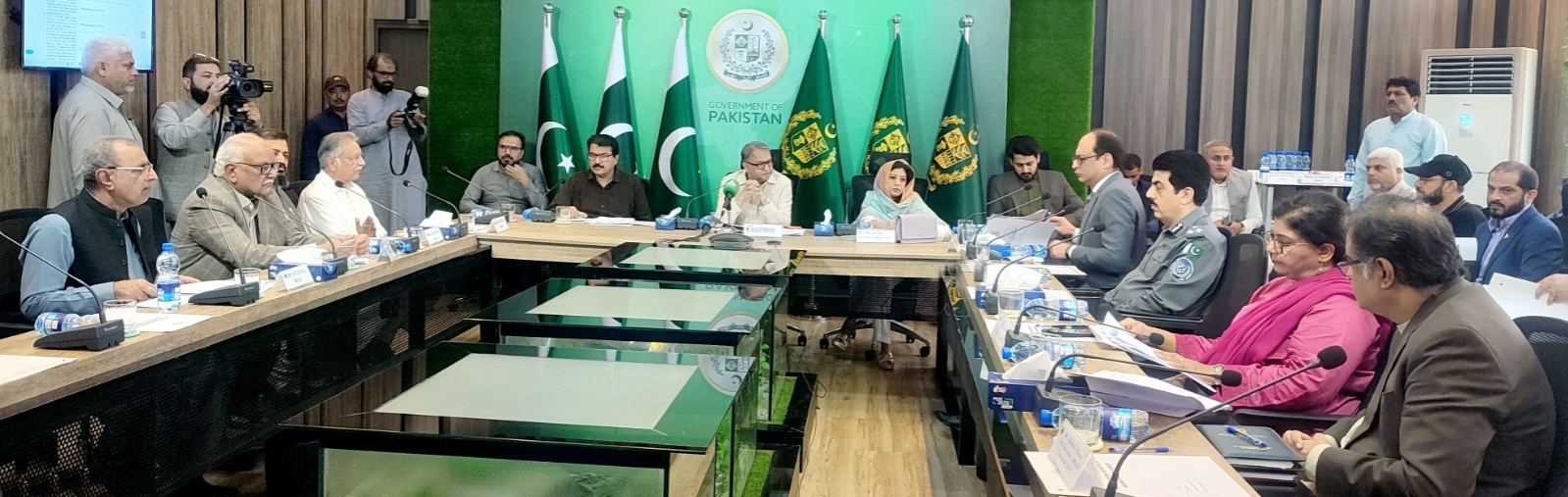
ISLAMABAD, Jul 23 (APP):The Senate Standing Committee on Information and Broadcasting was informed on Thursday that only nine of around 372 eligible cases nationwide have so far been transferred to the National Cyber Crime Investigation Agency despite amendments to the Prevention of Electronic Crimes Act (Peca), 2025, granting the agency exclusive authority to investigate offences under the law.
Briefing the committee, chaired by Senator Sarmad Ali, NCCIA official said provincial police continued to retain the vast majority of Peca cases despite the amended law requiring investigations to be handed over to the agency once offences under the act were invoked in a first information report (FIR).
According to the agency, a province-wise breakdown showed 19 Peca-related cases registered in Islamabad, 268 in Punjab, 47 in Khyber Pakhtunkhwa, 21 in Sindh, seven in Balochistan, 10 in Azad Jammu and Kashmir, and none in Gilgit-Baltistan.
However, officials said only nine cases — all transferred by Sindh Police — had so far been formally handed over to the NCCIA for investigation.
The agency maintained that once Peca provisions were included in an FIR, provincial police no longer had the legal authority to investigate the matter and were required to transfer the case to the NCCIA.
Officials said provincial authorities had informed the agency that the remaining transfers were still under process.
Senator Waqar Mehdi questioned why under-trial Peca cases pending before courts had also not been shifted to the NCCIA despite earlier directions issued by the committee.
He said provincial prosecution departments and advocate generals should explain why the pending cases had yet to be transferred.
Responding to the query, the NCCIA official reiterated that police lost investigative jurisdiction immediately after Peca provisions were applied to a case, comparing the arrangement to offences under the Anti-Terrorism Act, which are investigated by the Counter-Terrorism Department rather than ordinary police.
Following the discussion, committee chairman Senator Sarmad Ali directed that fresh instructions be issued to provincial inspectors general of police, advocate generals and other relevant authorities to transfer all pending Peca cases to the NCCIA and explain the reasons for delays in implementing the committee’s earlier directions.
The committee also took up concerns over social media statistics previously shared by the NCCIA after media reports suggested the agency had presented inaccurate figures and later disowned them.
Responding to the criticism, an NCCIA official rejected the allegations, saying the figures cited during an earlier briefing had been sourced from Meta’s publicly available transparency reports and the Pakistan Telecommunication Authority (PTA).
The official said the committee had specifically sought information on Meta’s response rate to requests submitted by Pakistan and that the agency had cited figures showing an 83.64 per cent response rate for Pakistan and 74.78pc for India.
Referring to a newspaper report published on May 15 questioning the statistics, the official said the figures were publicly available and could be independently verified through Meta’s online transparency reports.
“Anyone can simply search for Meta Pakistan 83.64 and access the report,” the official told the committee, adding that the same applied to the figures relating to India.
He said the agency had also provided the relevant online links in its report submitted to the committee.
Responding to questions about social media subscriber data, the official said those statistics fell within the PTA’s domain and had been taken directly from the regulator’s website, arguing it was incorrect to attribute them to the NCCIA.
The official rejected suggestions that the agency had misled the committee or exaggerated the statistics, maintaining that all figures presented were based on publicly available sources.
The committee also reviewed concerns over notices issued by the NCCIA to newspaper columnist Toufiq Butt following a complaint regarding a column published in Nai Baat on June 11, 2024.
An NCCIA official said the complaint had been filed by Pakistan Administrative Services Association (Punjab Chapter) president Aman Babar, who objected to the use of the expression “Bureau-Corrupts” for bureaucrats, arguing that it was defamatory and had harmed the reputation of PAS officers.
The official said no FIR had been registered and no criminal proceedings had been initiated, adding that the agency was merely conducting an inquiry to record the columnist’s version after receiving the complaint.
According to the briefing, notices were issued on June 19 and June 29 after the columnist failed to appear before the agency.
The official said the column had subsequently been removed from the newspaper’s e-paper but remained available on the writer’s personal Facebook account.
He maintained that the agency was obliged to entertain complaints filed by aggrieved parties and seek the respondent’s version before reaching any conclusion.
The explanation prompted a debate among journalists attending the meeting, several of whom questioned whether the NCCIA had jurisdiction over newspaper content, arguing that print publications fell under the Press Council of Pakistan while electronic media was regulated by Pemra.
Some participants warned that entertaining such complaints could create a “backdoor” mechanism to pressure journalists and have a chilling effect on press freedom.
Others argued that once the same content was independently available on social media, it came within the scope of cyber laws, while some maintained that reposting a newspaper column online should not alter its regulatory status.
The NCCIA reiterated that it had only sought the columnist’s response and that no punitive action had been taken.
The chairman committee observed that the matter should be resolved by the Press Council of Pakistan as the matter was pertaining to a newspaper.
The meeting was attended by Senators Abdul Shakoor Khan, Syed Waqar Mehdi, Pervaiz Rashid and Jan Mohammad, Secretary Information Ashfaq Ahmed Khalil and officials of the Ministry of Information and Broadcasting, the NCCIA and the Central Board of Film Censors.