
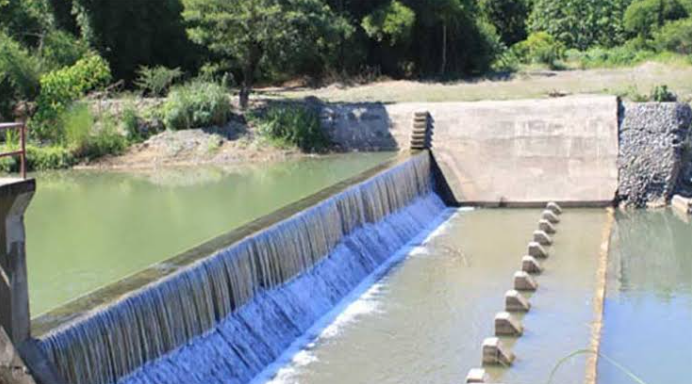
On a cloudy monsoon afternoon in district Swabi, families gather along the calm waters of Kundal Dam for recreation, while children play around them, transforming the quiet shoreline into a vibrant scene of laughter, joy, and memorable moments.
Small dams: A shield against monsoon floods, poverty and climate threats
Fakhar-e-Alam
PESHAWAR, July 22 (APP):On a cloudy monsoon afternoon in district Swabi, families gather along the calm waters of Kundal Dam for recreation, while children play around them, transforming the quiet shoreline into a vibrant scene of laughter, joy, and memorable moments.
Beyond, children laugh near the shoreline while chasing football and parents enjoy traditional chappli kebab while looking colorful boats in reservoir that transformed both the landscape and the lives of nearby communities, Kundal dam has also saved Swabi from monsoon floods.
Only a few years ago, this scene would have been unimaginable in Swabi when flood water routinely turned into a nightmare during monsoon.
Floodwater rushed through villages, submerged fields, entered homes and left many families to migrate safer places besides counting losses after every heavy downpour.
“Before Kundal dam was built, even moderate rainfall would flood our villages, agricultural fields, and water often entered our homes,” recalled Saqib Khan, a resident of Sheikh Jana village in Swabi while talking to
APP.
“Today, that same water is stored safely. It irrigates our crops, supports tourism and protects our villages.”
His story reflects a growing realization across Pakistan, a country increasingly battered by climate change, some of the most effective solutions may not always be the biggest ones.
Pakistan remains among the countries most vulnerable to climate change, experiencing increasingly erratic weather, cloudbursts and devastating floods.
The catastrophic floods of 2022 demonstrated the scale of the challenge especially in Swat where luxury hotels were swept away, while thousands of hectares of farmland, livestock and orchards across KP, Punjab and Sindh were destroyed.
The flood disaster inflicted enormous economic losses, disrupted agriculture and slowed national economic growth.
This year’s monsoon has again highlighted the country’s vulnerability to climate crisis. According to the Provincial Disaster Management Authority (PDMA), flash floods and heavy rains on July 21 claimed 12 lives in different districts of Khyber Pakhtunkhwa, including Khyber, Mansehra and Swat.
The deaths raised the province’s monsoon toll to 35 since late June, making KP the worst-affected province this season.
Most fatalities resulted from collapsing roofs and walls in Peshawar, Mardan, Buner, Bajaur, Lower Chitral, Abbottabad, Tor Ghar, Kurram and other districts, underscoring the increasing severity of extreme
weather.
While mega dams require billions of rupees and often take more than a decade to complete, water experts believed that Pakistan can strengthen its climate resilience through a network of strategically located small
dams.
These relatively inexpensive reservoirs capture rainwater and seasonal flood flows, reducing downstream flooding while storing precious water for irrigation, livestock and domestic use.
Hydrologists argued that their greatest strength lies in serving two purposes simultaneously by protecting communities from floods while addressing chronic water shortages.
As climate change intensifies rainfall and makes weather patterns more unpredictable especially during monsoon, such decentralized infrastructure is becoming increasingly important, particularly in flood prone Khyber Pakhtunkhwa and parts of Punjab.
The transformation brought by small dams extends well beyond flood control. Kundal dam, once built primarily for water storage, has gradually become a recreational destination attracting tourists, adventure enthusiasts and local businesses.
Like Kondal, Tanda dam has not only protected Kohat from flooding but has also become an important recreational facility for local residents and visitors,” says Rehan Khan, a resident of Kohat.
These projects demonstrate how climate adaptation can also generate economic opportunities through tourism, fisheries and improved agricultural productivity.
Water experts and engineers warned that Pakistan’s water challenge extends far beyond seasonal
flooding.
“Pakistan is a water-scarce country,” said Engineer Abdul Wadood Khan of the Irrigation Department. “During the monsoon, enormous quantities of freshwater simply flow away because we lack sufficient storage reservoirs.”
Every cusec of water that escapes unused represents lost agricultural potential, particularly for staple crops such as wheat and rice.
According to National Water Policy, per capita surface water availability has fallen dramatically from about 5,260 cubic meters annually in 1951 to nearly 1,000 cubic meters in recent years and is projected to decline even further.
Experts warned that continued water reductions could deepen food insecurity while increasing pressure on agriculture and rural livelihoods.
Civil engineer Fahim Munawar believed that affordability is one of the greatest strengths of small dams.
“Small dams can generally be completed within two to three years, whereas large dams often require 10 to 15 years,” he explained.
With Pakistan expected to require substantially more water storage in coming decades amid repeated violations of the Indus Water Treaty by India, experts argued that constructing dozens of smaller reservoirs alongside larger national projects could offer a practical and cost-effective solution.
Dr. Niaz Ali, former Chief Conservator Forests believed the country must rethink its water management strategy and may focus on small dams.
Giving details of dams constructed worldwide, he said, about 46,000 dams were constructed across the globe including 22,104 dams by China, 5,334 by India and about 150 dams by Pakistan despite great hydropower potential especially in KP and Punjab provinces.
He said Pakistan will require additional 76 MAF additional water by 2050 due to its rapid population growth which was only possible by constructing small dams.
Officials stressed that the success of small dams depends not only on engineering but also on community participation.
Waheed said hundreds of thousands of cusec water was being wasted during monsoon season due to lack of water reservoirs especially small dams.
“One cusec water is sufficient to irrigate one-acre wheat or rice crop and its waste might cause Rs 150,000 wheat and Rs12,000 rice per 40KG respectively, meaning by high prices of agriculture produced in open market,” he reiterated.
With Federal Government’s support, KP Govt has constructed dozens of small dams while more projects remain under construction or at various stages of planning and design.
Engr Fakhar e Alam, Director Small Dams Irrigation Department told APP that 24 small dams with storage capacity of 75,008-acre feet (AF) having 49,523 acres cultivated command areas (CCA) were being constructed with the financial assistance of the federal government in KP.
Pezu dam in Lakki Marwat, Khattak Bandhan dam in Kohat, and Makh Banda dam in Karak were completed by federal government. Similarly, Ichar and Manchura dams at Mansehra, Chashma Akora Khel dam in Karak, Sarozai dam in Hangu, Sanam dam in Lower Dir, Bada dam and Ulta dam in Swabi were constructed jointly by federal and provincial governments.
Seven medium dams including Bara dam in Khyber, Tank Zam in Tank, Shiekh Haider Zam, Chaudwan Zam, Daraban, and Kora Nullah in DI Khan and Larzan small dam in Tank with water storage capacity of 520,884 AF covering 171,748 CCA besides 31.5-megawatt power generation capacity were in design stage.
He said designs of seven medium dams including Barwasa and Sher Dara Swabi, Sumri Payan Kohat, Surkhaway Mardan, Naki Nowshera, Shaheed Banda Charssadda and Tora Warae Hangu having the total accumulative water storage capacity of 13,014 AF with 14,935 acres CCA were completed.
He said that 37 small and medium dams were constructed in KP including 15 operated by KP government while 11 supervised by WAPDA and ten were constructed in merged districts having 0.1377 million-acre CCA and 0.3414 AF water storage capacity.
Despite their promise, small dams are not without obstacles. Experts pointed to limited funding, shortages of technical expertise in remote areas and occasional disputes on land and over water distribution among local communities.
They recommended expanding hydrological surveys, investing in engineering capacity and involving communities from the planning stage to ensure equitable water sharing and long-term water sustainability.
As Pakistan confronts increasingly severe climate shocks, the debate is gradually shifting from whether more water storage is needed to how it can be built quickly and effectively.
Large dams will remain important for national water security, but many experts now believe small reservoirs can provide immediate, localized protection where communities need it most.
Back at Kundal dam, where floodwater has been transformed into a source of life, livelihoods and leisure, the lesson is simple.
Sometimes the most powerful answer to a growing climate crisis is not the biggest structure on the horizon but the one built close to the people it protects.