FAISALABAD, Jul 19 (APP):Federal Minister for Investment Board Qaiser Ahmed Sheikh on Sunday said that Pakistan had entered into a new phase of investment-led economic revivalafter securing practical agreements worth around $40-42 million with Chinesepharmaceutical companies. The inflow of foreign investment coupled with a nationwide commitment to economic stability would generate employment, strengthen healthcare infrastructure and accelerate sustainable national growth, he added. Talking to media persons during visit to a …
Investment drive gains momentum after $40m-plus China pharma deals: Federal Minister
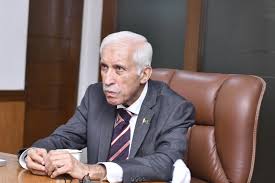
FAISALABAD, Jul 19 (APP):Federal Minister for Investment Board Qaiser Ahmed Sheikh on Sunday said
that Pakistan had entered into a new phase of investment-led economic revivalafter securing practical agreements worth around $40-42 million with Chinesepharmaceutical companies.
The inflow of foreign investment coupled with a nationwide commitment to economic stability would generate employment, strengthen healthcare infrastructure and
accelerate sustainable national growth, he added.
Talking to media persons during visit to a free medical camp organized in Chak
No.146 Bhakri Jhuk, a rural area of Chiniot, the federal minister said that nearly
100 Chinese investors and business leaders were currently in Islamabad to participate
in a Pakistan-China Business-to-Business (B2B) conference focusing on the
pharmaceutical and healthcare sectors.
He said that unlike previous engagements which largely concluded with Memorandums
of Understanding (MoUs), the conference had resulted in practical investment
agreements valued at around $40-42 million.
He termed the achievement a reflection of Prime Minister Muhammad Shehbaz
Sharif’s investment-friendly policies and proactive efforts of the Board of Investment.
He said the agreements would pave way for Chinese companies to establish
pharmaceutical manufacturing facilities in Pakistan, enhance technology transfer,
create employment opportunities and strengthen country’s healthcare industry
while contributing to overall economic growth.
Highlighting the need for political stability to sustain economic progress, the federal minister
urged all political parties to rise above partisan differences and evolve a unified economic
roadmap in the larger national interest.
He endorsed the concept of a “Charter of Economy”, and said that Pakistan’s long-term
development depended on continuity of economic policies and a stable investment climate.
He observed that successive governments had faced political instability over the past 27 years,
adversely affecting economic planning and development. “No country can achieve sustainable
growth without political harmony and policy continuity”, he added.
He said the government intended to allocate huge resources to health and education, but
achieving that objective required substantial growth in national revenue through investment,
industrial expansion and increased economic activity.
He said with concern that many countries allocated around four percent of their national
income to healthcare, but Pakistan’s health expenditure remained close to one percent,
limiting the state’s ability to provide quality medical facilities to all citizens.
Referring to the free medical camp, the minister said that such welfare initiatives were
particularly important for underserved rural communities where access to hospitals,
diagnostic facilities and specialist medical care remained limited.
He said that around 500 patients had already been examined at the camp and many
had undergone medical screening for the first time in their lives.
He appreciated the doctors, paramedics and organizers for providing free consultations,
diagnostic tests and medicines, describing the service to humanity as one of the noblest
forms of public service.
He said that Pakistan’s economy had recorded an estimated growth rate of about 3.7 percent
during the current year but stressed that the pace of economic expansion must increase
further to match the country’s rapidly growing population.
Comparing Pakistan’s economic trajectory with neighboring regional economies, the federal
minister said that great emphasis on investment promotion, industrialization and national
consensus was imperative to improve living standards and ensure long-term prosperity.
The efforts would continue to attract domestic and foreign investment, generate employment
opportunities and improve healthcare and education services to enhance quality of life
across the country, he added.