
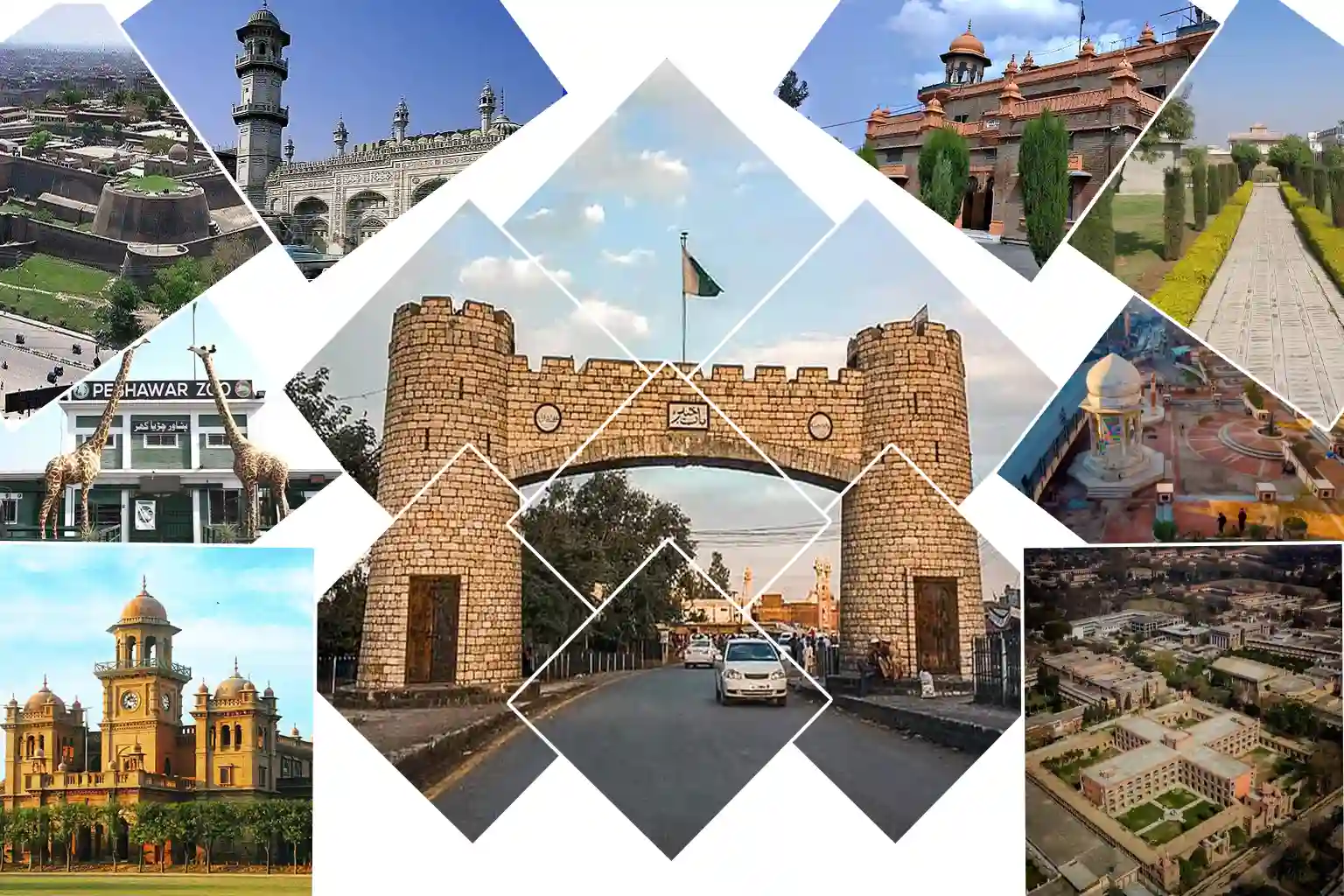
Being a home to Ghandara Civilization, Khyber Pakthunkhwa is a unique province of Pakistan that bore strategic credentials due to its important geographical location besides serving as a gateway between Central Asia and Indian subcontinent.
By Fakhar-e-Alam
PESHAWAR, Jul 17 (APP): Being a home to Ghandara Civilization, Khyber Pakthunkhwa is a unique province of Pakistan that bore strategic credentials due to its important geographical location besides serving as a gateway between Central Asia and Indian subcontinent.
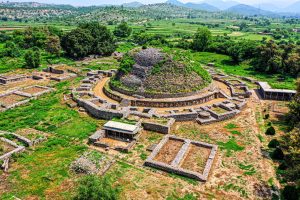
Ruling over Khyber Pakthunkhwa especially Peshawar carried prime importance for kings, monarchs and invaders to strengthen their dynasties. To prolong their rule, Mughals, Sikhs, and British had built massive stone and bricks fortresses in KP to protect mountain passes and valleys against aggressors.
With a documented history of over 2,500 years, Peshawar was considered a gateway to the subcontinent, carrying pivotal importance for kings to rule this region for centuries. These rulers constructed several forts in Peshawar and Khyber districts connecting Pakistan and Afghanistan via Khyber Pass for the safety of their people and safeguarding them against external aggression.
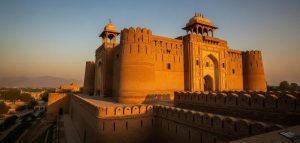
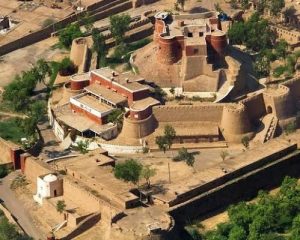
Balahisar fort at Peshawar and Jamrud fort at Khyber were constructed on a prime location where troops were stationed for countering external threats. The mighty Balahisar fort was built opposite Jinnah Park (old Cunningham Park) on main GT Road that could be seen by visitors while entering Peshawar from the east side due to its huge structure and height. Spread over an area of 15.4 acres, Balahisar was built of red bricks 92 feet in height where troops of famous dynasties including Mughal, Sikh and British were stationed.
“In the past, most of the invaders and warriors including Afghans Muslim rulers, Mughals, Sikhs and British used to first conquer Balahisar fort before proceedings to Punjab and other parts of the subcontinent to prolong their dynasties,” said Dr Abdul Samad Khan, Director General Archaeology and Museum while talking to APP.
“Balahisar fort seems to be as old as the city of Peshawar itself,” he said, adding the recent excavations at Gor-Kathri Peshawar ascertained the city’s history dating back to 2,500 years.
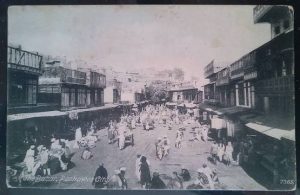
The old main entrance of Balahisar directly faces the GT road that links Peshawar with Afghanistan and Central Asia on the west, and extends towards Pushkalavati (Charsadda) in the North and Hund and Taxila on the East. Dr Samad said that several branches of the past Bara River used to flow through interior Peshawar with one among them probably near the Balahisar Fort.
Renowned historian, Dr A.H. Dani in his book “Peshawar-Historic City of Frontier (now Khyber Pakhtunkhwa)” wrote that when Hiuen Tsang, a Chinese traveller, had visited Peshawar in 630 AD, he spoke of a “royal residence” i.e Balahisar.
According to Dr Dani, a channel of old Bara River surrounded by a high spot perhaps comprised Balahisar and Inder Shahr and the present elevated Balahisar could have been the citadel. The Chinese word “Kung Shing” is used for its significance and is explained as the fortified or walled portion of a town where the royal palaces used to be situated. This shows that the royal residence formed the nucleus of a Citadel, which must have been further protected by a moat.
The history revealed that in 11th century AD, Raja Jaipal, a ruler of the Hindushahi dynasty was defeated in Peshawar’s vicinity and Commander Mehmud Ghaznavi garrisoned the fort with his army. “There were different opinions about the origin of the fort but mostly Mughals were believed to be the architects of present day Balahisar,” Assistant Director Archology KP Bakhtzada Muhammad told APP.
According to renowned historian Abul Fazl, Balahisar was redesigned and built by Mughal emperor Zaheeruddin Babar in 1526. However, after overthrowing emperor Humayun by Shershah Suri, the Afghans destroyed the fort.
“When he was staying in it, Hamyun decided to rebuild the fort to use it for his conquest of India at a later stage and himself supervised its rebuilding,” said Bakhtzada Muhammad, adding Balahisar was also used by Hari Singh Nalwa as a royal residence for Maharaja Ranjeet Singh during Sikh rule.
“The Afghan Durrani rulers used it as their winter camp in early 19th century and named it “Balahisar” a Persian name, meaning high fort,” Bakhtzada said. Later on, Sikhs renamed it as Samargarh in 1834 but the name remained unpopular.
Balahisar remained a key settlement for successive rulers and witnessed the rules of Hindu Maharajas, Ghauris, Ghazanvis, Tughlaqs, Mughals and Sikhs. The fort also remained the residence of the Afghan king, Ahmed Shah Durrani and his son Taimur Shah Durrani.
However, after the death of the latter in 1793 AD, the Durrani rule weakened and Sikhs captured Peshawar and Balahisar in 1834 after the battle of Nowshera.
“Firstly, the Sikhs destroyed a major portion of the fort but later regretted it and Sher Singh, on orders of his father Ranjeet Singh, erected the fort with unbaked bricks. On the entrance of the main courtyard of Balahisar, a Sikh period inscription can be seen at the arch gate.”
This is the only inscription available today in Balahisar, which reads, “Victory to Porak. This was built by Raja Bikramajit and was named Samir or Samar Garh.” At the time of Sikh Shahi annexation to British rulers in 1849, Balahisar had mud walls.
The British had replaced its structure with red bricks in its present shape and kept troops in Balahisar till the cantonment was laid out in Peshawar. “When the Afridi tribesmen launched a massive attack on Peshawar city in 1930 in a bid to overthrow colonial rulers, the fire of British artillery dispersed them from Balahisar, ” Bakhzada said.
The architectural wonder has always been the centre of attraction for local and foreign tourists and visiting dignitaries presenting a rare view of its huge battlements and architectural designs.
Another famous Jamrud fort constructed at Khyber district was built by Sikh General Hari Singh Nalwa in 1836 from where Afridi tribes and invaders actions were monitored in Khyber Pass. Ali Masjid fort was also constructed near Landi Kotal on Khyber Pass on a high rocky cliff. This fort was built by the British to oversee trade routes and control the rugged mountain pass. Likewise. Chitral fort in Hindu Kush mountains range became the seat of the former royal family of Chitral famous for its wooden architecture and riverside location.
Faud Ishaq, former President Sarhad Chamber of Commerce and Industry told APP that these forts, especially Balahisar, were the identity of Peshawar and a substantial revenue could be generated by projecting these forts on digital media. He said Peshawar’s Ghandara civilization, archeological heritage and ancient forts can help attract foreign exchange besides enhancing the province’s soft image before the world.

