
Pakistan called for inclusive, human-centered, and equitable artificial intelligence governance at a high-level discussion held at the United Nations Headquarters on Thursday, jointly organised by the Permanent Missions of Pakistan and Tajikistan and the Prime Minister’s Youth Programme.
Pakistan showcases youth led, inclusive AI vision at UN forum
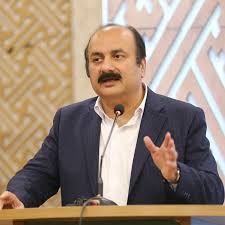
ISLAMABAD, Jul 16 (APP):Pakistan called for inclusive, human-centered, and equitable artificial intelligence governance at a high-level discussion held at the United Nations Headquarters on Thursday, jointly organised by the Permanent Missions of Pakistan and Tajikistan and the Prime Minister’s Youth Programme.
The event brought together diplomats, UN officials, technology experts, academics, and youth representatives to explore how AI can advance sustainable development through innovation, inclusion, and resilience while ensuring that no country or community is left behind.
Speakers warned that unequal access to digital infrastructure, financing, technology, and skilled human resources could widen existing global inequalities, particularly for developing countries.
They stressed that AI must become a tool for shared progress by expanding access to technology, investing in capacity building, and placing young people at the centre of sustainable development efforts.
Chairman Prime Minister’s Youth Programme Rana Mashhood Ahmad Khan highlighted Pakistan’s efforts to prepare its youth for an AI-powered future.
He said the government has allocated Rs 40.58 billion to the Prime Minister’s Youth Programme for 2026-27, reflecting its commitment to building a skilled and digitally empowered generation.
He said more than 600,000 laptops have been distributed, while 73,000 young people have received training in artificial intelligence, blockchain, and data science.
More than 217,000 technical skills scholarships have also been awarded across 8,000 courses.
He added that the Digital Youth Hub has registered over 804,000 users, created access to 114,000 employment opportunities, and partnered with more than 3,180 organisations.
Mashhood said Pakistan’s National Artificial Intelligence Policy aims to train one million AI professionals and 10,000 AI trainers by 2030 while expanding AI education, research, and innovation across the country.
He called for stronger international cooperation to bridge the global AI divide through investments in digital infrastructure, skills development, and responsible AI practices.
Tajikistan’s Minister of Economic Development and Trade, Abdurahmon Abdurahmonzoda, highlighted his country’s leadership in the field of artificial intelligence.
He said Tajikistan has adopted Central Asia’s first National Artificial Intelligence Strategy until 2040, declared 2025 to 2030 as the Years of the Development of the Digital Economy and Innovation, and established the Regional Artificial Intelligence Centre to strengthen regional cooperation and digital skills development.
The discussion featured Jennifer Louie of the United Nations Development Programme, Google AI expert Hashim Syed and Youth Delegate Bisma Qamar, alongside representatives from China, Azerbaijan and Kazakhstan.
The panel stressed that AI governance frameworks must evolve alongside technological advances to address emerging risks, including cybersecurity challenges.
The participants underscored that young people must be recognised not only as beneficiaries of technology but also as innovators, partners and decision makers.
They called for expanding initiatives such as the Digital Youth Hub, the National Youth Council, and innovation programmes to widen opportunities for young people.
In his closing remarks, Pakistan’s Permanent Representative to the United Nations, Ambassador Asim Iftikhar Ahmad, said humanity must shape the future of artificial intelligence and not the other way around.
The ambassador warned that without equitable access, AI could deepen the digital divide between developed and developing countries.
Ambassador called for greater coherence in global AI governance and outlined four priorities, including bridging the AI divide, ensuring equitable development outcomes, empowering youth as leaders of technological change, and promoting ethical, transparent, safe, and accountable AI systems.
Ambassador Asim said the collective goal must be to build strong international partnerships that ensure the benefits of artificial intelligence contribute to greater inclusion, resilience, and sustainable development for all.

