
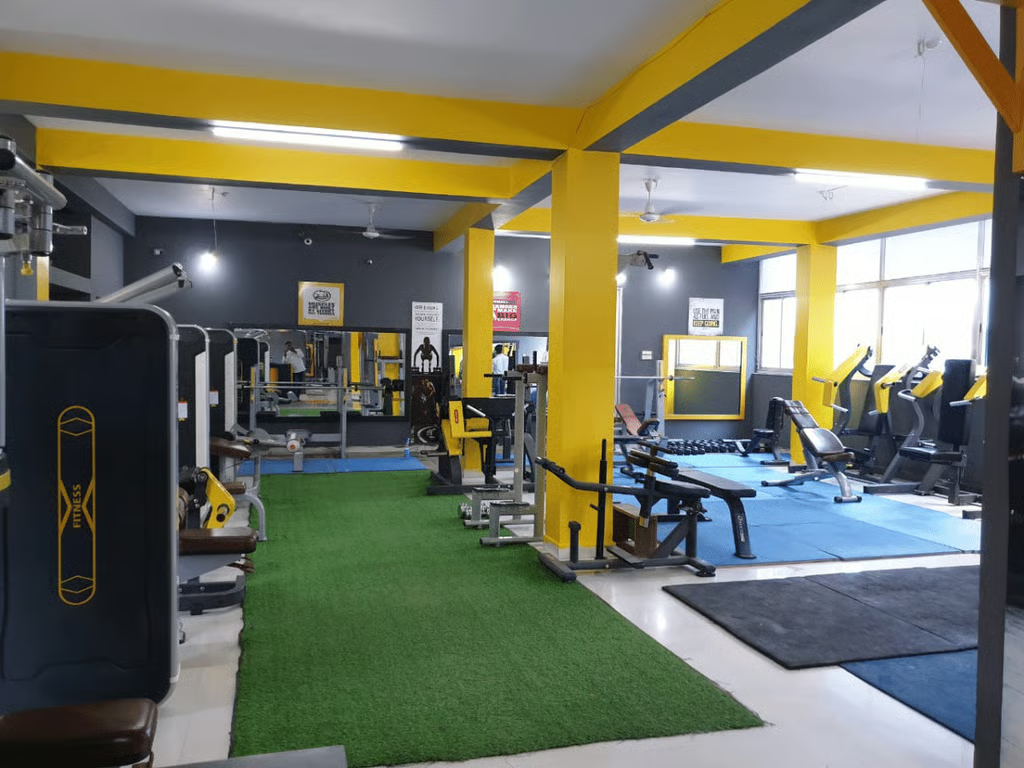
As upbeat music echoes through a modest dedicated gym in Thanda Pani, a rural community on the outskirts of Islamabad, a line of young women take turns lifting weights and running on treadmills. It is an image that would have been almost unimaginable in the area just a few years ago.
Lifting the weight of expectation: Pakistani women reshaping gym culture
By Iqra Yousaf
ISLAMABAD, Jul 11 (APP): As upbeat music echoes through a modest dedicated gym in Thanda Pani, a rural community on the outskirts of Islamabad, a line of young women take turns lifting weights and running on treadmills. It is an image that would have been almost unimaginable in the area just a few years ago.
For decades, gyms in Pakistan were largely perceived as male domains. Today, that perception is steadily changing. From major cities to semi-urban communities, women are increasingly carving out time, not for work, family, or studies, but for themselves.
This shift is backed by data; according to Smartscraper, Islamabad boasted 225 gyms by April 2026, a 7.08 percent increase since 2023, highlighting a skyrocketing demand for fitness facilities.
Islamabad reportedly hosts around 2,000 sports and fitness facilities, a massive footprint that reflects how deeply a culture of active living has taken root.
Gym owners are at the front lines of this transformation, adapting to a surge in female registrations. Farzana Amin, the owner of Ladies Fitness Club, Shaheen Town, recalled the rapid evolution of her own business when speaking to APP.
“In the beginning, only 10 to 15 women used to come to the gym regularly. Within a few months, our membership increased to around 60 to 65 women,” Farzana shared.
She noted that she purposefully opened a ladies-only gym after observing that many women wanted to improve their health but felt hesitant in co-gender facilities. “My aim was to provide a safe, comfortable, and supportive environment where women could exercise with confidence.”
The demographic of women reclaiming their health spans all generations. Mussarat Shaheen, a housewife, talking to APP admitted she never envisioned herself working out at this stage of her life. “Most of my time was spent taking care of my family, and I often ignored my own health,” Shaheen said. “With age, I realized that staying active is important for my energy. Fitness is not only for young people; everyone can make positive changes at any age.”
For younger, working professionals, the motivations are equally deep. Sana Khan, a regular gym-goer, found solace in the gym after battling fatigue from long office hours and an inactive lifestyle. “I started going to the gym to improve my health and energy levels, not just to change my appearance,” Khan explained. “I believe consistency is more important than following extreme diets.”
While the culture is thriving, it brings modern psychological challenges, heavily fueled by digital spaces. University students and young girls note that while social media first introduced them to fitness routines, it presents a double-edged sword.
Gym member Zarmeena Ali observed that digital platforms increase awareness but simultaneously manifest toxic standards. “Social media creates pressure to achieve unrealistic body goals,” Zarmeena said. “People join gyms with the expectation of quick results, but fitness requires patience and dedication. It is a long-term commitment, not a temporary trend.”
Mehmoona Khalid, an Islamabad-based gym instructor, echoed these concerns to APP. She revealed that a large part of her job now involves managing expectations and dismantling the allure of shortcuts.
“Young girls mostly aim to become healthier, stronger, and more confident,” Mehmoona explained. “While some initially join to lose weight before a wedding, they eventually realize regular exercise improves mental health and overall quality of life.” She strongly discourages these shortcuts. “Sustainable fitness is achieved through consistency, strength training, cardio, and realistic goals rather than excessive exercise,” she explained to APP.
The rush for quick results has triggered a worrying trend of extreme dieting, prompting urgent warnings from medical experts. Speaking to APP, physician Dr. Ghulam Fareed Soomro highlighted the severe physiological toll of overly restrictive eating patterns.
“Crash dieting causes immediate fatigue, muscle loss, and weakened immunity,” Dr. Soomro warned. “Long-term, it risks hormonal imbalances, bone loss, and severe nutritional deficiencies in iron, protein, and vital vitamins like B12 and D.”
Nutritionist Dr. Sumaira Naseem clarified that doctors only recommend highly restrictive diets under strict professional supervision for specific medical situations, such as severe pre-surgery obesity. For cosmetic weight loss, she warns it is outright dangerous, noting that adults should generally never drop below 1,200 calories per day.
“Quick results are neither realistic nor healthy,” Dr. Sumaira told APP. “Gym claims of losing 10 to 15 kg in a month are often just marketing tactics. The biggest mistake women make is copying someone else’s diet plan or completely cutting out carbohydrates and healthy fats. Every woman has different nutritional needs based on her age, lifestyle, and evolving physical capabilities.”
“Workouts must be age-appropriate to protect joints and bones, while cautioning against strenuous exercise during illness or extreme monsoon humidity without proper hydration” Dr Sumaira warned.
Compared to developed nations where daily exercise is normalized, Pakistan is still in the early stages of building a widespread fitness culture. However, if this momentum continues, backed by qualified trainers, proper nutrition, and community support, this shift will become far more than a passing trend. Instead, it marks the beginning of a healthier, more active nation where investing in personal well-being is no longer a luxury, but an essential part of everyday life.

