At a Chinese cotton research lab in Anyang, Henan province, Dr. Noor Muhammad, a Balochistan-born postdoctoral scientist, has spent the past four years researching how cotton can withstand salt stress, a threat all too familiar to farmers back home.
Turning Salt into Soil: A Pakistani Scientist’s Cotton Quest in China
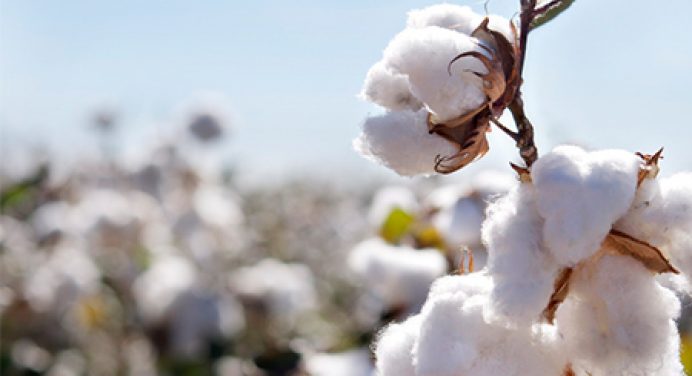
BEIJING, Jul. 10 (APP): At a Chinese cotton research lab in Anyang, Henan province, Dr. Noor Muhammad, a Balochistan-born postdoctoral scientist, has spent the past four years researching how cotton can withstand salt stress, a threat all too familiar to farmers back home.
As a mainstay of Pakistan’s economy, cotton accounts for more than 60 percent of the nation’s export earnings and provides a livelihood for millions of farming families. Balochistan, Pakistan’s largest province, lies outside the traditional cotton belt, yet it has carved a niche as the country’s pioneer in globally certified organic cotton production.
Dr. Noor’s research holds the potential to accelerate this momentum by developing salt-tolerant cotton varieties, enabling cultivation on marginal land currently unsuitable for cultivation. Noor’s work at the Institute of Cotton Research of Chinese Academy of Agricultural Sciences (ICR-CAAS), a national research institute and research center specializing in cotton in China since 1957, organizes and presides over major national cotton research projects addressing significant science and technology-related issues in cotton production. His research employs advanced techniques including gene expression analysis, enzymatic studies and bioinformatics to understand plant stress responses and develop more resilient crop varieties, CEN reported on Friday.
Dr. Noor’s journey in China began in 2017, when he moved to Southwest University of Science and Technology in Mianyang, Sichuan, to pursue a Master’s degree in Life Sciences, followed by a Ph.D. in Plant Biology and Agronomy. During his 9 years living and conducting research in China, he gained not only academic expertise but also a deep appreciation of the country’s agricultural innovations and culture.
Dr. Noor contends that Chinese agricultural technologies could provide practical remedies in view of China’s substantial investment and contribution in combating climate change, which poses a grave threat to Pakistan’s farming sector.
“Water management is critical,” he says, pointing to China’s drip irrigation under plastic mulch, which saves 30 to 50 percent of water and has revolutionized cotton production in Xinjiang. He also highlights the potential of salt-tolerant and drought-tolerant crop varieties, protected cultivation and greenhouse technology, digital agriculture and e-commerce platforms and agricultural mechanization.
Concerning mechanization, he notes that China has nearly fully mechanized cotton harvesting, and affordable Chinese machinery for planting, spraying, and harvesting could significantly enhance productivity.
Seeing CPEC 2.0 as a critical opening for Balochistan, where agricultural modernization is taking center stage, he is now seeking partnerships to transfer knowledge, technology and germplasm.
His long-term goal is to advance food security, alleviate poverty and promote sustainable development in Balochistan through evidence-based agricultural practices. Among the approaches he highlighted is China’s “science and technology backyard” model, a tripartite framework that integrates agricultural research, postgraduate training and rural development services. He believes the model could be adapted to Pakistan to bridge the gap between scientists and farmers.