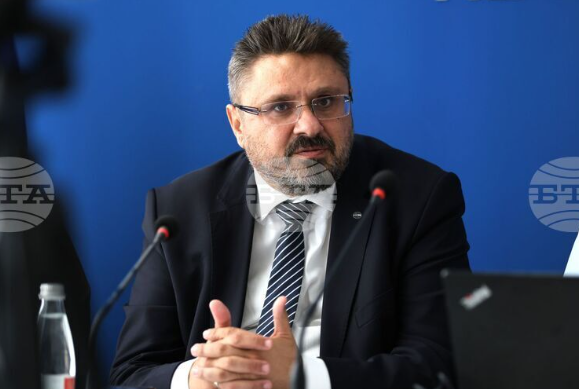
Presenting good examples in foster care is a way to encourage more people to become foster parents, BTA Director General Kiril Valchev said at the opening of a discussion on the “Foster Me” project at the BTA National Press Club. The event was organized by BTA and the Social Assistance Agency.
BTA, Social Assistance Agency discuss foster care promotion in Petrich
BakuJul 7 (AZERTACAPP):Presenting good examples in foster care is a way to encourage more people to become foster parents, BTA Director General Kiril Valchev said at the opening of a discussion on the “Foster Me” project at the BTA National Press Club. The event was organized by BTA and the Social Assistance Agency.
Valchev said the initiative aims to tell the stories of people who show empathy without expecting anything in return. He said Foster Me is being carried out jointly with the Social Assistance Agency and with the support of the Bulgarian Orthodox Church. Its main goal is to collect and publicize positive examples of foster care that can encourage more Bulgarians to support children and families at risk.
Valchev pointed to a decline in the number of foster families in Bulgaria. When the initiative was launched, there were 1,629 registered foster families caring for 1,518 children, while the latest figures show 1,604 foster families and 1,488 children in their care. Valchev added that by the end of the year BTA plans to compile the stories presented under the initiative in a print edition, which will also be published online.
During the meeting, a film told the story of Petrich foster parent Kirilka Zaykova. She and her husband have been foster parents for eight years, providing a home, care and love to seven children. Zaykova said foster care is both a calling and a responsibility, and that every child, regardless of age, needs love, care, patience and a safe family environment.
She said her family welcomes every child as a new member. A girl placed with them at three days old is now about to be adopted. Zaykova said the family is emotionally prepared for the separation because they know it is the right step for the child.
School psychologist Todor Luchkov said foster care is a mission, not just a job. He said the biggest challenge for foster families is building children’s sense of trust and security, especially among older children who often carry fears and traumatic experiences. Foster families cannot change the children’s past, he said, but they can change their future.
Vanya Kostova, director of the Family-Type Accommodation Centre in Petrich, said the municipality lacks foster families for older children. Most foster families prefer babies and young children, while older children who cannot be placed with relatives or foster families are accommodated in family-type centres. Kostova said nine children are currently placed in the Family-Type Accommodation Centre for children without disabilities in Petrich.
Ginka Aleksandrova, director of the Social Assistance Directorate in Petrich, said there are currently three approved foster families in the municipality, with the number in recent years ranging between three and five. She urged people interested in foster care to contact the Social Assistance Directorate, where they can receive information about the application and approval process.
Father Pavel Milushev, vicar of the Petrich spiritual district, expressed support for foster parents and said they can turn to the church for financial, psychological or material assistance if needed.
Dimitar Cholev, director of the Education and Culture Directorate at Petrich Municipality, said the municipality is pursuing a consistent social policy in support of children, families and vulnerable groups. He highlighted Petrich Municipality’s participation in the Foster Me 2015 project and said foster care has proved an effective alternative to institutional care because it gives children security, support and an opportunity for full development.
The meeting in Petrich was part of the national Foster Me initiative, under which BTA and the Social Assistance Agency are organizing discussions across the country to promote foster care and encourage more families to become foster parents.