The Indian government illegal move to hold the 1960 Indus Water Treaty (IWT) in abeyance has violated the charter of United Nations and guarantee of the World Bank, experts say.
India’s illegal move to hold IWT in abeyance violates UN Charter, World Bank guarantee
By Fakhar-e-Alam
PESHAWAR, Jul 02 (APP): The Indian government illegal move to hold the 1960 Indus Water Treaty (IWT) in abeyance has violated the charter of United Nations and guarantee of the World Bank, experts say.
Legal experts, political analysts and international relations scholars have strongly condemned the Indian Govt’s decision to place the Indus Waters Treaty (IWT) in abeyance, arguing that the illegal move undermined international law, threatened regional stability and raised serious concerns over water security for millions of people dependent on the Indus River system.
Speaking to APP, international law expert and Advocate Supreme Court of Pakistan, Asif Yousafzai said access to water was recognized internationally as a fundamental human right, and any attempt to restrict or politicize water resources could have far-reaching humanitarian consequences.
“The United Nations has explicitly recognized access to water as a basic human right essential for the full enjoyment of people’s lives and all other human rights,” he said. “Restricting river water flows to a lower riparian state raises serious legal and humanitarian concerns because it directly affects the rights to life, health and an adequate standard of living of millions of people.”
He maintained that India’s uncalled for decision to place the IWT in abeyance after the April 2025 Pahalgam incident was inconsistent with the principles of the United Nations Charter, World Bank guarantee and international treaty obligations.
According to Asif Yousafzai, instead of utilizing the dispute resolution mechanisms provided under the treaty, India had attempted to link water cooperation with broader political and security disputes that would put peace of the subcontinent into jeopardy.
“The treaty already contains comprehensive procedures for addressing disagreements through bilateral discussions, neutral experts and international arbitration. Bypassing these solid mechanisms weakens confidence in international agreements besides shows India disregard for global treaties,” he added.
He further observed that restrictions on water resources disproportionately affect vulnerable communities, particularly women, children and rural populations whose livelihoods largely depend on agriculture, fisheries, forests, water and livestock.
Legal expert Malik Ashfaq advocate, said water and food were universally recognized as essential human necessities under United Nations (UN) charter and should never be used as political weapons against others. “India’s claim of keeping the treaty in abeyance is provocative and raises significant legal questions,” he said.
“Under international law, treaties generally remain in force unless they are lawfully terminated, suspended by mutual agreement or materially breached in accordance with recognized legal principles”, he said
He said the IWT was designed in such a manner to survive political crises and military conflicts between the two neighboring countries.
Brokered by the World Bank and signed in 1960 by Pakistan President Field Marshall Ayub Khan and Indian Prime Minister Jawaharlal Nehru, the treaty has often been described as one of the world’s most successful transboundary water-sharing agreements.
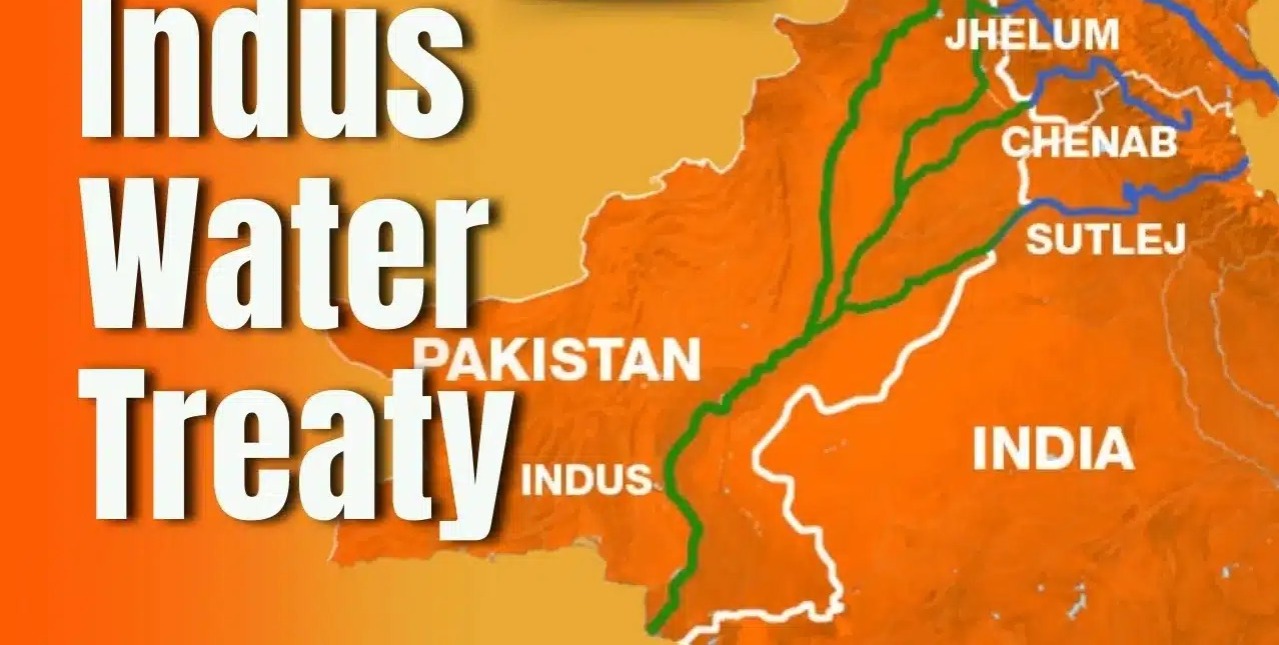
Despite the wars of 1965 and 1971, Kargil conflict and prolonged periods of diplomatic tensions, both countries continued implementing the treaty for more than 66 years. Under the agreement, Pakistan received rights over the western rivers namely Indus, Jhelum and Chenab while India has rights over the eastern rivers like Ravi, Beas and Sutlej. The treaty also established the Permanent Indus Commission to facilitate cooperation and addressed technical disputes.
Former Chairman of the Department of International Relations at the University of Peshawar, Professor Dr. Adnan Sarwar Khan, said the treaty remained internationally recognized and could not be unilaterally suspended by either party. He referred to recent proceedings before the Permanent Court of Arbitration, noting that Pakistan has all rights to pursue legal remedies available under the treaty framework.
“Pakistan has consistently maintained that disputes should be resolved through the mechanisms already provided in the treaty rather than through unilateral actions and using water as a weapon,” he said. Dr Adnan Khan warned that attempts to use water as a political tool could create dangerous precedents in international relations.
“If the so-called principle that an upper riparian state can unilaterally suspend water-sharing arrangements gains acceptance, it could have negative implications far beyond South Asia and potentially influence other international river disputes,” he observed. He added that climate change, increasing water scarcity and growing populations make adherence to established water-sharing agreements more important than ever.
The experts emphasized that the Indus River system supported Pakistan’s agriculture, food production, hydro-power generation and drinking water supplies. Millions of farmers depended on irrigation from the western rivers, while numerous industries and urban centers relied on the same water resources.
They warned that prolonged uncertainty regarding water cooperation could adversely affect agricultural productivity, food security and rural livelihoods. Environmental consequences could also emerge, including reduced freshwater flows affecting wetlands, mangrove forests, fisheries and biodiversity.
The experts reiterated that species such as the endangered Indus River dolphin and indigenous masher fish populations depended upon maintaining healthy river ecosystems and these species would likely to be vanished if river water was blocked.
The experts further argued that procedural issues such as delays in data sharing, reduced technical cooperation and prolonged disputes over water infrastructure by India could weaken confidence-building measures established under the treaty over several decades.
The World Bank, which facilitated the treaty and continued to play a procedural role under certain dispute-resolution provisions, remained an important stakeholder in preserving one of the world’s longest-standing international water-sharing agreements. Calling for continued diplomatic engagement, Asif Yousafzai said Pakistan should continue pursuing legal and diplomatic avenues available under international law.
“Our objective is not confrontation but compliance with international commitments. Treaties are intended to provide certainty and stability, particularly during periods of political tension,” he said.
The experts unanimously stressed that, at a time when climate change was intensifying water scarcity across South Asia, preserving internationally recognized mechanisms for trans-boundary water cooperation was essential for regional peace, sustainable development and the welfare of millions of people dependent on the Indus Basin.
The expressed the hope that international community would think beyond trade and put pressure on fascist Modi government to restore IWT imperative for peace and life of millions of people in the region.