The National Disaster Management Authority (NDMA) on Wednesday issued a nationwide alert warning of heightened risks of glacial lake outburst floods (GLOFs), flash floods, landslides and urban flooding across northern and central Pakistan from July 1 to 4, as rising temperatures and an active monsoon system coupled with westerly waves are expected to trigger heavy rainfall and accelerate glacier melting.
Heavy rains to trigger flood chaos, NDMA Warns
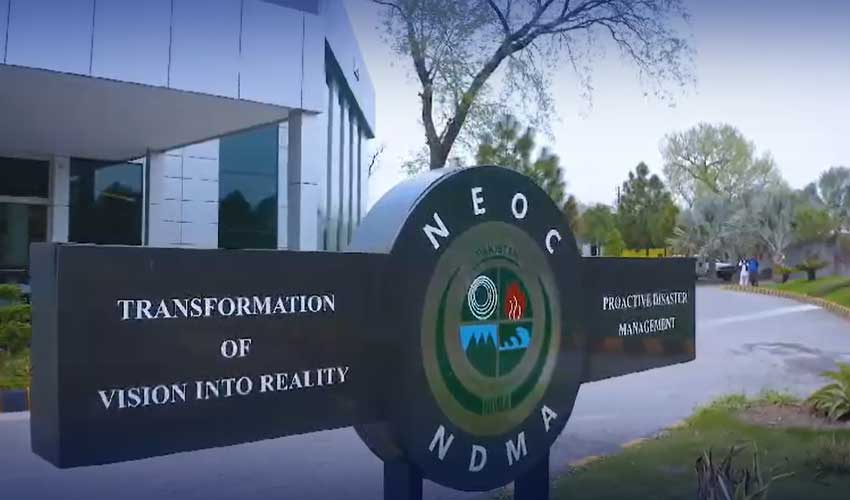
ISLAMABAD, Jul 01 (APP):The National Disaster Management Authority (NDMA) on Wednesday issued a nationwide alert warning of heightened risks of glacial lake outburst floods (GLOFs), flash floods, landslides and urban flooding across northern and central Pakistan from July 1 to 4, as rising temperatures and an active monsoon system coupled with westerly waves are expected to trigger heavy rainfall and accelerate glacier melting.
The advisory, issued by the National Emergencies Operation Centre (NEOC), urged authorities to remain on high alert and advised the public to strictly follow official safety instructions.
According to the NEOC, continuous monitoring and early risk assessment are being carried out to ensure the timely dissemination of warnings to all relevant authorities.
The authority warned that glacier adjacent areas of Gilgit-Baltistan, Khyber Pakhtunkhwa and Azad Jammu and Kashmir face an increased threat of glacial lake outburst floods due to accelerated glacier melting caused by soaring temperatures and the forecast of heavy rainfall.
It said the evolving weather conditions could trigger sudden flash floods, debris flows, landslides and rockfalls, posing serious risks to vulnerable mountain communities.
The NDMA advised residents and local administrations in Hunza, Nagar, Ghizer, Skardu, Shigar, Ghanche, Kharmang, Astore, Diamer, Upper and Lower Chitral, Swat and other glacier-fed valleys to exercise extreme caution.
It further warned that rising temperatures and expected rainfall could significantly increase water flow in the Hispar-Hopper Nullah, heightening the risk of flash floods, debris flows and riverbank erosion in surrounding areas.
Separately, the NEOC also issued a flash flood alert for July 1-4, warning that the combined impact of the monsoon system and westerly waves could cause a sudden surge in water levels in hill torrents and seasonal streams across several regions.
The advisory said parts of Khyber Pakhtunkhwa, Punjab, Balochistan, Azad Jammu and Kashmir and Gilgit-Baltistan could experience flash flooding during the forecast period.
In Khyber Pakhtunkhwa, increased water flows are expected in hill torrents and streams in Charsadda, Nowshera, Peshawar, Mardan, Swabi, Kohat, Bannu, Lakki Marwat, Dera Ismail Khan, Mansehra, Abbottabad, Haripur, Swat, Upper and Lower Dir, Chitral, Shangla, Buner, Battagram, Torghar and Kohistan.
In Punjab, low-lying areas .
Seasonal streams in Rawalpindi, Attock, Jhelum, Chakwal, Mianwali, Bhakkar, Khushab, Sargodha, Faisalabad, Jhang, Sialkot, Narowal, Gujrat, Gujranwala, Lahore, Sheikhupura, Hafizabad and Mandi Bahauddin are likely to face flooding.
In Balochistan, localised flash floods are expected in Zhob, Sherani, Musa Khel, Barkhan, Sibi, Kohlu, Dera Bugti, Loralai and adjoining areas.
The NDMA also warned that heavy rainfall could trigger overflowing streams and localised flooding in the mountainous areas of Azad Jammu and Kashmir and Gilgit-Baltistan.
Urban flooding is also expected in low-lying areas of major cities, with heavy rainfall likely to disrupt traffic and inundate roads and residential neighbourhoods.
The authority warned that roads, bridges, irrigation infrastructure and other public facilities could sustain damage due to flooding and landslides.
The NDMA directed all relevant departments to ensure precautionary measures, drainage arrangements, emergency response preparedness and continuous monitoring of river flows and glacial lakes.
Residents living in low-lying areas and along riverbanks have been advised to avoid unnecessary travel and remain vigilant throughout the forecast period.
The authority urged the public to follow official advisories issued by the NDMA, Provincial Disaster Management Authorities (PDMAs) and local administrations, and to use the Pak NDMA Disaster Alert App for authentic information on weather forecasts, potential hazards and safety guidelines.