Punjab Chief Minister Maryam Nawaz Sharif on Tuesday unveiled a major green transport initiative aimed at expanding electric buses, e-bikes, e-taxis and electric three-wheelers across the province.
CM unveils plan to deploy 5,000 electric buses in Punjab
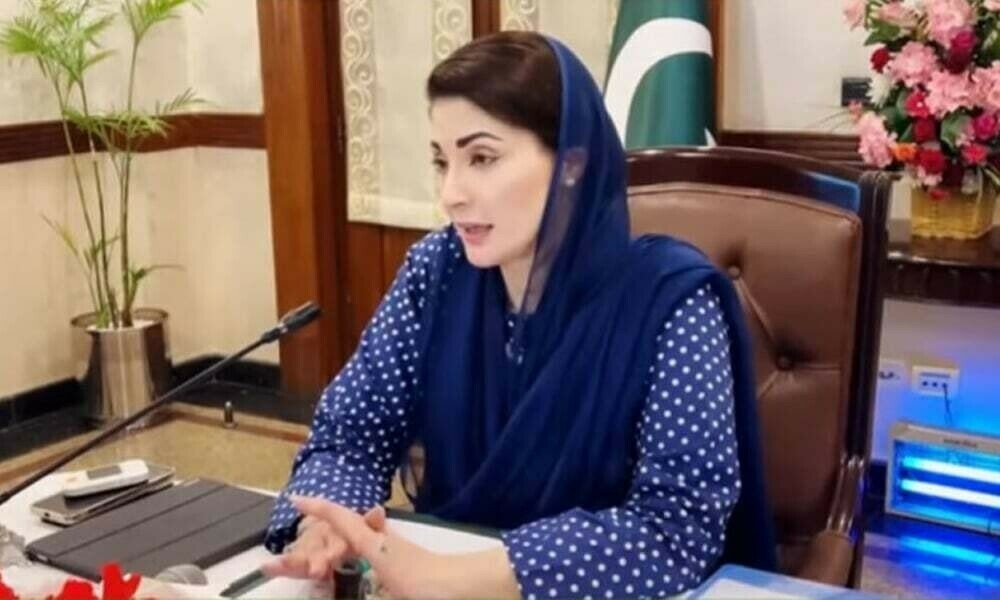
LAHORE, Jun 30 (APP): Punjab Chief Minister Maryam Nawaz Sharif on Tuesday unveiled a major green transport initiative aimed at expanding electric buses, e-bikes, e-taxis and electric three-wheelers across the province.
Chairing a meeting of the Transport Department and the Punjab Mass Transit Authority, here the chief minister was briefed on progress regarding electric buses, the Gujranwala and Faisalabad mass transit projects, e-taxis, the Lahore Super Autonomous Rapid Transit (SRT) project, e-bikes, the command and control centre, and the Murree Glass Train initiative.
The meeting decided to introduce additional electric buses, e-taxis, e-bikes and electric three-wheelers simultaneously to promote green transport across the province.
Officials informed the meeting that Punjab had also achieved another milestone by establishing an electric bus manufacturing industry under the government’s business-friendly policies.
An assembly plant has already commenced assembling electric buses in the province.
The chief minister said Punjab would deploy 5,000 electric buses over the next five years, adding that the province was no longer only operating buses but had also started manufacturing them.
The meeting also approved the re-launch of the interest-free e-bike scheme for students under easier installment plans. Under the programme, 100,000 electric bikes would be provided to students within one year.
The Punjab government would provide a subsidy of Rs70,000 per e-bike. Male students would pay a down payment of Rs14,000 and an interest-free monthly installment of Rs2,100.
The CM Punjab announced that the provincial government would bear the entire down payment and registration fee for female students, who would only have to pay an interest-free monthly installment of Rs2,100. Government employees would also be eligible to obtain e-bikes on easy installments.
The meeting was informed that 1,500 electric buses would be operated in 91 tehsils across the divisions of Gujranwala, Gujrat, Rawalpindi, Multan, Sahiwal, Bahawalpur, Dera Ghazi Khan, Faisalabad and Sargodha during the first phase. The meeting approved the PC-I for the procurement of buses.
Officials said work on the Gujranwala and Faisalabad mass transit systems was progressing rapidly. Around 400 electric buses were already operational in various districts, while another 400 buses would soon be converted to electric operation.
The chief minister directed the immediate launch of 61 electric buses in 28 districts ahead of their scheduled inauguration on July 10. She also ordered the immediate operationalisation of buses in Jhang, Kabirwala, Bhakkar, Attock, Mandi Bahauddin, Hafizabad, Chiniot, Layyah, Okara and Sialkot.
She also hinted at that another 189 newly acquired electric buses, prepared for soft launching in different districts, would be inaugurated online.
The meeting was informed that 112 additional electric buses had reached Gujranwala, Gujrat, Sheikhupura, Multan, Murree, Vehari, Kasur, Lodhran, Nankana Sahib and Narowal and would begin operations from July 25.
Officials further informed the meeting that 488 more electric buses would depart from a Chinese port for Punjab on July 20.
She directed the authorities to immediately introduce electric bus services in Kot Addu, Talagang and Taunsa Sharif, besides extending services to Vehari and Lodhran. She also ordered an increase in the number of electric buses in Vehari, Lodhran and Nankana Sahib.
She directed that every district should have at least 15 electric buses, ordering that additional buses be dispatched wherever the existing fleet falls below that number.
The chief minister remarked that Punjab had not only introduced electric buses but had also established a new manufacturing industry.
The meeting reviewed pictorial evidence and video footage of construction work on the Gujranwala and Faisalabad mass transit projects.
Officials informed the meeting that the 19.5-kilometre Gujranwala Mass Transit route had been expanded to 25 stations, with construction, barricading, diversions and piling work progressing at a fast pace. Work on the Gakhar Mandi and Aimanabad underpasses and stations was also underway in multiple shifts, while tree transplantation was being carried out alongside construction.
The chief minister directed the authorities to ensure strict implementation of safety measures throughout the construction phase and noted that the project would significantly upgrade the surrounding urban infrastructure.
The meeting was also informed that work on the 20.3-kilometre Faisalabad Mass Transit System, comprising 21 stations, was progressing swiftly. Bus depots would be established at Faisal Town and Airport Chowk, while work on both the at-grade and elevated sections had commenced.
The meeting was further informed that 582 applicants had deposited payments under the e-taxi scheme, while 206 electric taxis had already been delivered.
Officials also briefed the chief minister on the Super Autonomous Rapid Transit (SRT) project.
The Lahore SRT route would be 18 kilometres long, and its depot was expected to be completed by July 2026.