ISLAMABAD, Jun 19 (APP):Calling for dialogue to become the first response to disputes rather than the last, Mr. Faisal Karim Kundi, Governor Khyber Pakhtunkhwa, underscored the transformative role of mediation and Alternative Dispute Resolution (ADR) in strengthening access to justice, reducing conflict, and promoting social harmony. He expressed these views while addressing the closing ceremony of the Two-Day Foundation Training on Mediation organized by the International Mediation and Arbitration Centre …
Dialogue should be first response to disputes, Governor KP

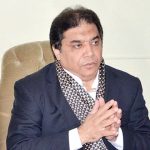
ISLAMABAD, Jun 19 (APP):Calling for dialogue to become the first response to disputes rather than the last, Mr. Faisal Karim Kundi, Governor Khyber Pakhtunkhwa, underscored the transformative role of mediation and Alternative Dispute Resolution (ADR) in strengthening access to justice, reducing conflict, and promoting social harmony.
He expressed these views while addressing the closing ceremony of the Two-Day Foundation Training on Mediation organized by the International Mediation and Arbitration Centre (IMAC), Ministry of Law and Justice, at the National Institute of Public Administration (NIPA), Peshawar, said a press release received here.
Addressing the participants as Chief Guest, Governor Faisal Karim Kundi commended the Ministry of Law and Justice and IMAC for bringing mediation training to Khyber Pakhtunkhwa. He appreciated the support of the Hon’ble Federal Minister for Law and Justice, Senator Azam Nazeer Tarar, in facilitating the programme and expressed the hope that similar initiatives would continue in the future.
Highlighting Pakistan’s recent diplomatic role in facilitating dialogue between the United States and Iran, the Governor stated that mediation extends beyond courts and communities and also serves as a powerful tool of diplomacy and statecraft. He remarked that Pakistan’s constructive engagement under the leadership of Prime Minister Muhammad Shehbaz Sharif and Field Marshal Syed Asim Munir demonstrated how dialogue and principled engagement can help resolve even the most complex disputes.
Referring to the province’s long-standing tradition of jirga, a community-based dispute resolution mechanism, he noted that structured mediation complements traditional practices by providing a framework consistent with constitutional principles, procedural fairness, and enforceable outcomes. He emphasized that mediation holds particular significance for the merged and southern districts of Khyber Pakhtunkhwa, where access to formal justice mechanisms may be constrained by geography and infrastructure.
Earlier, a Memorandum of Understanding (MoU) was signed between IMAC and NIPA/, PARD/PPSA to formalize institutional collaboration in the fields of mediation, ADR, professional training, research, and capacity building. The MoU was signed by Ms. Aisha Rasool, Senior Consultant, Ministry of Law and Justice and Project Director IMAC, and Capt. (Retd.) Usman Gul, Director General NIPA, PARD and PPSA, in the presence of the Governor and other distinguished guests.
Speaking on the occasion, Capt. (Retd.) Usman Gul, Director General, NIPA, termed the signing of the MoU between IMAC, NIPA, and PARD a significant step towards mainstreaming mediation and Alternative Dispute Resolution within public administration. He emphasized that mediation is an effective governance tool for promoting dialogue, reducing conflict, strengthening public trust, and fostering peaceful dispute resolution, particularly in Southern Khyber Pakhtunkhwa and the merged districts.
Lead Trainer Dr. Syed Ata-ur-Rehman underscored the growing importance of mediation as a tool for effective governance and public service. He also highlighted that the Khyber Pakhtunkhwa ADR Act, 2020 places a responsibility on the Government to arrange appropriate training and capacity-building programmes for Saliseen.
Ms. Aisha Rasool, speaking on the occasion, highlighted that the training programme was organized on the advice and encouragement of the Governor of Khyber Pakhtunkhwa, reflecting his commitment to strengthening access to justice and ADR in the province. She noted that the signing of the MoU marked the beginning of a long-term institutional partnership aimed at promoting mediation, professional training, research, and capacity building.
She highlighted that IMAC, established under the Ministry of Law and Justice, has rapidly emerged as Pakistan’s leading institution for mediation and arbitration. Over the past year, IMAC has trained more than 1,400 judges, lawyers, civil servants, academics, and business professionals; facilitated the accreditation and notification of 247 mediators and mediation centres; and contributed to important policy and legislative reforms relating to ADR. She further noted that IMAC has also expanded its international footprint through training programmes involving participants from Azerbaijan, Bangladesh, China, Türkiye, and Pakistan.
The ceremony concluded with the distribution of certificates among participants by the Governor of Khyber Pakhtunkhwa. Participants appreciated the training and described it as highly useful and enriching. They also expressed keen interest in attending more such programmes in the future to further strengthen mediation and ADR practices in the province.