ISLAMABAD, Jun 18 (APP):The National Assembly’s Standing Committee on Finance and Revenue, chaired by Syed Naveed Qamar, on Thursday continued its clause-by-clause consideration of the Finance Bill, 2026. The Committee deliberated extensively on proposals relating to sales tax exemptions, import regulations, income tax amendments, digital tax administration and various sector-specific concessions. The body examined the proposed expansion of the Third Schedule to the Sales Tax Act, under which sales tax …
Naveed Qamar advocates sector-neutral tax policy, reaffirms Parliament’s constitutional authority over taxation
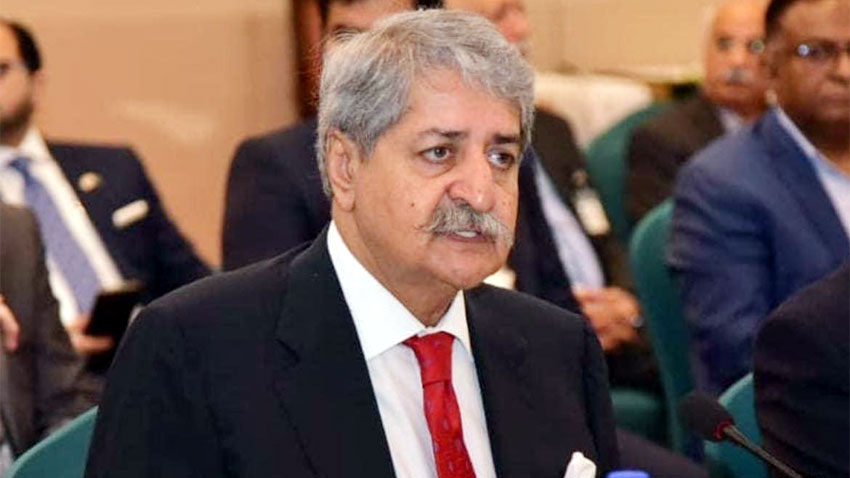
ISLAMABAD, Jun 18 (APP):The National Assembly’s Standing Committee on Finance and Revenue, chaired by Syed Naveed Qamar, on Thursday continued its clause-by-clause consideration of the Finance Bill, 2026.
The Committee deliberated extensively on proposals relating to sales tax exemptions, import regulations, income tax amendments, digital tax administration and various sector-specific concessions.
The body examined the proposed expansion of the Third Schedule to the Sales Tax Act, under which sales tax would be charged at the manufacturing stage on the basis of printed retail prices.
The Federal Board of Revenue (FBR) informed the Committee that the proposal seeks to include 21 additional categories comprising hundreds of consumer products, including packaged food items, beverages, cosmetics, insecticides and household goods. It was explained that, for locally manufactured products, retail prices would be printed at the manufacturing stage.
Members expressed concern over possible initial price increases, market distortions and practical implementation challenges, and sought further clarification on the likely impact on consumers.
The Committee also held a detailed discussion on the taxation of stationery items. Members emphasized that educational supplies, including pencils, geometry boxes and similar items used by students, should remain exempt to promote access to education and avoid placing an additional financial burden on families.
The FBR clarified that while exercise books remain exempt from sales tax, other stationery items are proposed to be taxed at a concessional rate of 10 percent. The Committee directed the FBR to furnish detailed revenue estimates and impact analysis before a final decision.
A significant discussion took place on the proposed 15-year sales tax exemption for Pakistan International Airlines (PIA) under the privatization agreement.
Members expressed concern that granting a tax concession exclusively to one airline would create an uneven competitive environment in the aviation sector.
The Secretary Aviation explained that the concession formed part of the Share Purchase Agreement (SPA) negotiated with prospective investors under the privatization process.
The Chairman observed that tax policy should remain sector-neutral and should not create market distortions or confer undue competitive advantage on any single entity. The Committee recommended that the government reconsider the broader sectoral implications of the proposal and explore extending similar concessions across the aviation sector to ensure a level playing field.
The Committee further reviewed proposals relating to concessions for dredgers, tankers and shipping vessels. The Chair observed that, in light of the evolving regional situation, Pakistan has an opportunity to strengthen its maritime sector and position its ports as alternative regional trade and transit hubs.
The Committee called upon the Ministry of Maritime Affairs to present a comprehensive briefing on the country’s maritime development strategy and the policy measures required to capitalize on emerging opportunities.
The Committee also considered provisions relating to digital integration, faceless assessment, algorithmic settlement and the establishment of an Independent Case Scrutiny Committee.
Members welcomed the objective of modernizing tax administration but expressed reservations regarding the delegation of powers to the executive. They stressed the need for transparent legal safeguards, clearly defined eligibility criteria and robust oversight mechanisms to ensure accountability and protect taxpayers’ rights.
The Committee agreed to the proposal to tax returns on life insurance policies surrendered within the first four years, observing that such a measure would discourage misuse of exemptions while continuing to protect genuine long-term policyholders.
During the deliberations, the Chairman underscored that tax policy should be designed to encourage investment, economic growth and competitiveness rather than focusing solely on revenue collection. He observed that excessive taxation and sector-specific distortions discourage investment and reduce long-term economic potential.
Emphasizing the importance of a balanced fiscal approach, he said that while revenue generation remains important, it should not come at the expense of broader economic objectives.
Referring to the evolving regional geopolitical environment, the Chairman observed that recent developments have created new opportunities for Pakistan, particularly in the maritime and logistics sectors.
He emphasized that the government should proactively formulate investment-friendly policies and targeted incentives to capitalize on these opportunities and position Pakistan as a competitive regional trade hub.
The Chairman also expressed concern over proposals delegating authority to the executive for determining withholding tax rates, emphasizing that the constitutional principle of parliamentary oversight over taxation must be preserved. He reiterated that decisions regarding tax rates should remain the prerogative of Parliament.
Expressing dissatisfaction over the absence of comprehensive fiscal analysis, the Chairman noted that the Committee had repeatedly sought revenue impact assessments for every taxation proposal placed before it. He emphasized that such information is indispensable for evidence-based legislative scrutiny and informed decision-making.
The Committee also confirmed the minutes of its previous meeting held on 17 June 2026.
The Committee decided to continue its consideration of the Finance Bill, 2026 at its next sitting scheduled for Friday, 19 June 2026 at 11:00 a.m.
The meeting was attended by MNAs Rana Iradat Sharif Khan, Ali Zahid, Syed Sami ul Hassan Gillani, Bilal Farooq Tarar, Muhammad Usman Awaisi, Zeb Jaffar, Dr. Nafisa Shah, Hina Rabbani Khar, Dr. Sharmila Faruqui, Dr. Mirza Ikhtiar Baig, Muhammad Javed Hanif Khan, Arshad Abdullah Vohra and Shahida Begum.
The Minister for Finance, Minister of State for Finance, Secretary Finance, Secretary Aviation, Director General (Tax Policy Office), Member FBR and senior officers from the Finance Division and the Federal Board of Revenue also attended the meeting.