LAHORE, Jun 18 (APP): Pakistan Virtual Assets Regulatory Authority (PVARA) Chairman and Minister of State for Crypto and Blockchain Bilal Bin Saqib Thursday urged young civil servants to embrace artificial intelligence (AI) as a tool for improving governance, enhancing public service delivery and strengthening the state capacity. Addressing the closing session of a workshop titled “Strengthening Governance through Artificial Intelligence-Enabled Whole-of-Government (WoG) Approaches” at the Civil Services Academy (CSA) Lahore, …
Bilal Bin Saqib urges young civil servants to harness AI for smarter, citizen-centric governance

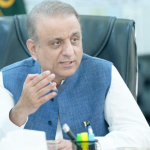
LAHORE, Jun 18 (APP): Pakistan Virtual Assets Regulatory Authority (PVARA) Chairman and Minister of State for Crypto and Blockchain Bilal Bin Saqib Thursday urged young civil servants to embrace artificial intelligence (AI) as a tool for improving governance, enhancing public service delivery and strengthening the state capacity.
Addressing the closing session of a workshop titled “Strengthening Governance through Artificial Intelligence-Enabled Whole-of-Government (WoG) Approaches” at the Civil Services Academy (CSA) Lahore, he said AI was no longer a technology of the future but a practical tool already being used by millions worldwide and should be leveraged by the government to better serve citizens.
He said Pakistan’s young officers were entering public service at a transformative moment when technology offered an unprecedented opportunity to redesign how the state functions and interacts with citizens.
Bilal Bin Saqib stressed that governments across the world were increasingly using AI-driven solutions to improve decision-making, predict challenges and deliver services more efficiently. He said Pakistan must also move from traditional paper-based governance to data-driven and AI-enabled public administration.
Explaining the concept of Whole-of-Government approaches, he said citizens should experience a unified and responsive state rather than navigating multiple departments for services. He emphasized that AI could help integrate information across institutions, improve coordination and enable proactive governance.
The minister said AI could assist government departments in areas such as disaster management, healthcare, education, procurement and revenue administration by identifying patterns, predicting risks and improving operational efficiency.
Referring to Pakistan’s progress in digital governance, he noted that the country had improved its ranking in the United Nations E-Government Development Index 2024 from 150th in 2022 to 136th. However, he said the ranking also highlighted the need for continued reforms and innovation within public institutions.
He urged civil servants to become AI-literate, understand data and cybersecurity principles and learn how emerging technologies could be applied responsibly within government systems.
Bilal Bin Saqib encouraged officers to identify and improve at least one public service process during their initial postings, saying meaningful reforms often begin with small but practical innovations that reduce delays and improve citizen experiences.
He also highlighted the potential of AI-powered dashboards, early warning systems, citizen service platforms and decision-support tools in enhancing governance and public sector performance.
While highlighting the benefits of technology, he cautioned that AI could not replace integrity, accountability or human judgment in public service.
“Technology can process information and identify patterns, but it cannot replace conscience, fairness or responsibility,” he remarked.
Calling upon young officers to become catalysts for innovation, he urged them to help bridge the gap between traditional administrative practices and modern technological solutions.
He said Pakistan’s large youth population represented a significant national asset and that effective governance, technological adoption and strong institutions were essential to transforming the country’s potential into sustainable progress.
Concluding his address, Bilal Bin Saqib encouraged civil servants to lead through initiative, curiosity and problem-solving, and to use AI responsibly to build a more efficient, transparent and citizen-centric government system.
Civil Services Academy (CSA) Director General Farhan Aziz Khawaja, Common Training Programme (CTP) Director Syed Shabbir Zaidi, Programme Officer Arif ul Islam and others were present.
At the end of the ceremony minister distributed certificates and souvenirs to 54th CTP participants.