Federal Minister for Information Technology and Telecommunication Shaza Fatima Khawaja on Wednesday said the government’s target is to expand fibre-to-the-home coverage to 10 million household passes in the coming years, which would significantly improve access to reliable internet services.
Govt. to expand fibre-to-home coverage to 10 mln households: Shaza Fatima
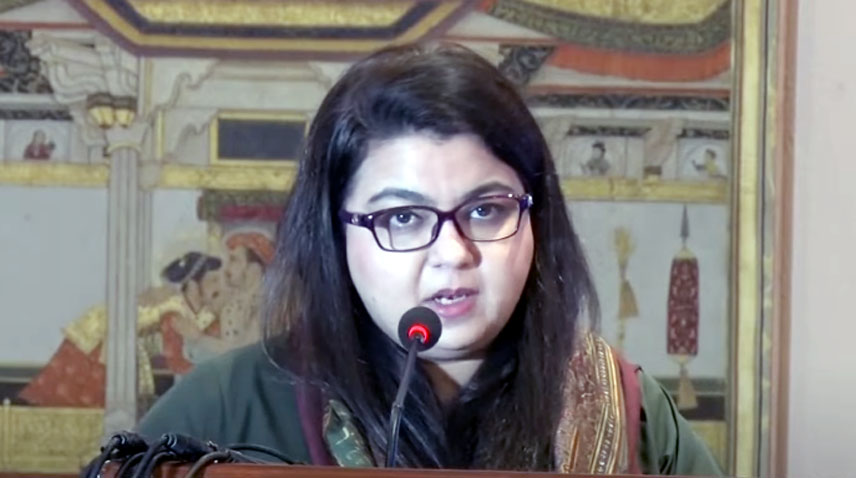
ISLAMABAD, Jun 17 (APP):Federal Minister for Information Technology and Telecommunication Shaza Fatima Khawaja on Wednesday said the government’s target is to expand fibre-to-the-home coverage to 10 million household passes in the coming years, which would significantly improve access to reliable internet services.
Addressing a community-centred connectivity policy forum titled “The Jhuggiwala Story”, she said fibre-to-the-home coverage in Pakistan has increased from around 3 million household passes to more than 5 million.
“The government aims to further expand this to 10 million household passes in the coming years, which would significantly improve access to reliable internet services,” she said.
She referred to the government’s broader plan to train 1 million people in artificial intelligence and digital technologies, with a focus on reaching non-technical populations, including those in agriculture, industry, and traditional professions.
She said digital literacy and AI skills are now essential across all sectors, adding that whether a person is a worker, architect, lawyer or doctor, technological awareness has become necessary for professional growth and productivity.
She also highlighted telecom sector reforms, including the elimination of right-of-way charges and related legislative steps aimed at ensuring policy continuity and long-term stability.
She said provinces had supported these measures.
According to her, these reforms are essential because digital connectivity directly affects citizens, especially women in rural areas, and limited access risks increasing inequality and the digital divide.
She emphasized that in today’s rapidly evolving AI-driven world, delays in policy implementation can have significant consequences.
The minister further highlighted progress in reducing the gender digital divide, noting improvements in mobile internet usage gaps, although she acknowledged that challenges still remain.
She said millions of women have already been trained in digital skills, while further free online training opportunities are being offered to youth and beginners every six months.
She also mentioned ongoing collaboration with institutions such as Ignite and international partners to offer advanced digital training courses, adding that Pakistan has already trained hundreds of thousands of young people in digital, soft, and entrepreneurial skills.
Referring to digital inclusion in social protection programmes, she said millions of women have been enabled to use digital wallets to receive financial assistance, which has also expanded their ability to carry out transactions such as utility payments, mobile top-ups, and online shopping.
She said the transition toward digital payments has helped reduce barriers, improve transparency, and empower women economically.
She added that earlier challenges related to access to mobile phones or internet usage have largely been addressed through targeted interventions and policy direction.
Referring to Jugiawala, a small town with a population of around 13,000, she added that training 200 women along with 25 trainers could eventually influence the entire locality and surrounding areas, creating a ripple effect in which future generations benefit from the initiative.
The minister stressed the importance of sustainability of such programmes, saying they should not remain one-time or ad hoc activities but instead be institutionalised under regular national frameworks.
She said Pakistan’s development strategy is based on a multi-stakeholder approach involving government institutions, private telecom companies, development partners, and civil society, with youth and women’s participation at the centre of economic growth and digital transformation.
She added that small development initiatives can create long-term spillover effects on communities, noting that efforts in digital skills training and connectivity can transform the lives of thousands and future generations.
She appreciated the participants, particularly women and their families, for their trust and engagement, and expressed hope that many of them would go on to become successful entrepreneurs and business leaders in the future.