ISLAMABAD, Jun 17 (APP):Lawmakers from the government benches on Wednesday praised the Budget 2026–27, terming it the best possible financial plan under challenging economic conditions, while opposition members called for salary increases, relief measures, and greater focus on the agriculture sector. Pakistan Peoples Party Parliamentarians (PPP) leader Shazia Marri, participating in the general discussion, acknowledged economic challenges and said her party supported parliamentary cooperation despite prevailing difficulties. She said Pakistan …
Govt. calls budget 2026–27 “best possible plan” as opposition demands relief, salary hike
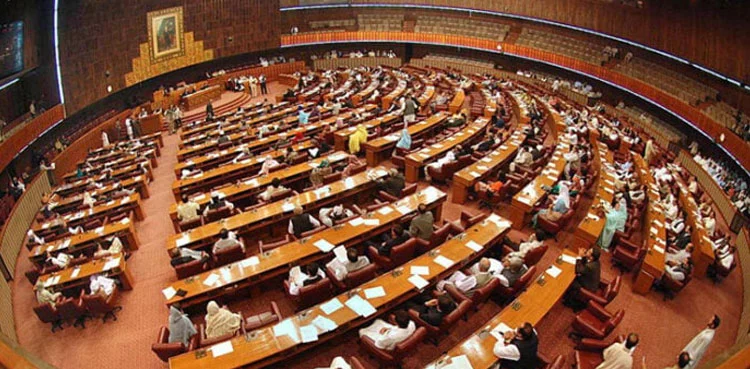
ISLAMABAD, Jun 17 (APP):Lawmakers from the government benches on Wednesday praised the Budget 2026–27, terming it the best possible financial plan under challenging economic conditions, while opposition members called for salary increases, relief measures, and greater focus on the agriculture sector.
Pakistan Peoples Party Parliamentarians (PPP) leader Shazia Marri, participating in the general discussion, acknowledged economic challenges and said her party supported parliamentary cooperation despite prevailing difficulties.
She said Pakistan was facing complex regional and global challenges that required consensus-based policy making.
She also referred to debates on constitutional and financial arrangements, including the National Finance Commission (NFC) Award, saying her party supported constitutional protections for provinces after internal deliberations.
Marri criticised the rising burden of indirect taxation and inflation, questioning official poverty indicators and arguing that increasing living costs were not reflected in statistical classifications.
Referring to social protection initiatives, she said programmes such as the Benazir Income Support Programme (BISP) were essential for supporting low-income households and stimulating economic activity, urging that such schemes should remain free of political influence.
She also highlighted development concerns in Balochistan, calling for greater local benefit from natural resources and industrial processing within the province.
She stressed the need to address grievances related to salaries and allowances of public sector employees, particularly security personnel.
Marri emphasised upon youth development, warning against negative narratives about Pakistan’s future and calling for national unity and equal opportunities across all regions. She also welcomed recent diplomatic developments and praised national leadership for efforts toward regional stability.
She lauded President Asif Ali Zardari, Prime Minister Shehbaz Sharif, Field Marshal Syed Asim Munir, and Deputy Prime Minister Ishaq Dar, saying Pakistan’s progress reflected collective effort and stability.
She said Pakistan had consistently supported dialogue and diplomacy and had made significant sacrifices in the fight against terrorism, referring to incidents such as the Army Public School (APS) attack.
Turning to domestic politics, she referred to her visit to Gilgit-Baltistan, praising political engagement during the election period and paying tribute to the legacy of Zulfikar Ali Bhutto, Benazir Bhutto, and Asif Ali Zardari in expanding political and administrative rights in the region.
She urged respect for electoral mandates and called for democratic restraint and maturity in political discourse.
Pakistan Tehreek-e-Insaf (PTI) Chairman, Gohar Ali Khan criticised the federal budget, raising governance concerns and calling for institutional reforms, while also highlighting issues related to public welfare, taxation, and accountability.
He said parliamentary engagement required restraint and responsibility, urging efforts to strengthen democratic institutions.
He also offered “unconditional cooperation” for democracy, constitutional rule, and protection of citizens’ rights.
He referred to pending political negotiations and said his party’s demands were constitutional, including access to legal rights and resolution of cases involving detained party members.
He also proposed a structured framework for parliamentary cooperation to ensure accountability and legislative stability.
He welcomed Pakistan’s diplomatic engagement in regional affairs, including efforts involving Iran and the United States, and praised Pakistan’s role in promoting peace in the Middle East, including support for an independent Palestine.
He raised concerns over inflation, indirect taxation, and rising fuel and utility costs, urging a review of the government’s taxation strategy.
Parliamentary Secretary for Water Resources, Rana Ansar praised Pakistan’s armed forces and leadership, saying the country had gained global respect through recent diplomatic efforts.
She said citizens stood with state institutions and expressed hope for peace and prosperity, while paying tribute to the government and military leadership for their roles in national security and diplomacy. However, she raised concerns over the federal budget, particularly the lack of focus on women.
She said women contribute nearly half the population but appeared to lack dedicated development allocations and called for stronger gender-responsive budgeting.
She also termed the proposed seven percent salary increase insufficient amid inflation and urged its revision.
Rana Ansar expressed concern over taxation on infant nutrition products, warning of negative impacts on child health and development.
She stressed that children’s nutrition and education must be prioritised in policy making.
She highlighted delays in key infrastructure projects, including the K-IV water scheme for Karachi, warning that reliance on tanker systems and water mafias was worsening the crisis.
She called for improved drainage and sewerage systems in Karachi and Hyderabad to address urban flooding, disease outbreaks, and infrastructure weaknesses during monsoon seasons.
She urged strengthening local government institutions, warning that weak district-level governance was undermining public service delivery. She also raised concerns about drug use among students and called for stronger preventive measures.
Pakistan Muslim League-Nawaz (PML-N) lawmaker Raja Khurram Shahzad praised civil and military leadership, saying Pakistan had successfully avoided a major global conflict and strengthened its international standing.
He highlighted inequalities in Islamabad’s education system, pointing to disparities between elite schools and under-resourced institutions serving the majority population.
He called for improved facilities, trained teachers, and early introduction of modern subjects, including artificial intelligence.
He warned of a growing water crisis in Islamabad and proposed construction of small dams and improved water supply systems. He also called for balanced urban development and equal access to basic services.
On health, he noted pressure on major hospitals such as Pakistan Institute of Medical Sciences and Polyclinic, calling for new healthcare facilities and timely completion of delayed projects.
He raised concerns about unemployment among Islamabad’s youth and urged a dedicated job quota for local residents. He also demanded establishment of a separate legislative assembly for the federal capital.
Pakistan Peoples Party Parliamentarians (PPP) leader Naz Baloch also congratulated national leadership for diplomatic achievements and said Pakistan had played a constructive role in regional peace efforts.
She stressed that budget discussions should focus on financial matters rather than political point-scoring.
She called for inclusive governance in Karachi, rejecting ethnic divisions and emphasising equal rights for all residents.
Baloch raised concerns over inflation, rising electricity costs, and unemployment, while warning about climate change impacts on agriculture and livelihoods.
She criticised climate-related levies on fuel and questioned their utilisation. She also highlighted insufficient investment in the Information Technology sector and called for greater focus on digital skills and youth training.
She pointed to issues in the power sector, including circular debt, load-shedding, and rising utility costs, and urged exploration of alternative energy sources.
Pakistan Muslim League-Nawaz (PML-N) MNA Azhar Qayyum Nahra said Pakistan had emerged as an “ambassador of peace” due to the efforts of its leadership and institutions.
He said recent difficult economic decisions had helped stabilise the country and provide some relief to the public.
Azhar Nahra welcomed tax adjustments, including relief in super tax and property-related taxes, saying these measures would benefit the business community.
However, he stressed that the agriculture sector required greater attention. He said farmers, as the backbone of the economy, were not receiving sufficient support.
The legislator called for better monitoring to ensure relief packages reached farmers effectively and suggested prioritising fertiliser subsidies over tractor schemes.
He also urged immediate relief in electricity and fuel prices for the farming sector and proposed promoting solar energy for agricultural use.
Pakistan Peoples Party Parliamentarians (PPPP) MNA Mir Amer Ali Khan Magsi said the budget contained several positive measures but required further review in some areas.
He highlighted rising input costs in agriculture, including fertilizer and transport and warned that price instability in key crops such as wheat, rice, potatoes and tomatoes was affecting the market.
Amer Magsi called for stronger coordination between federal and provincial governments on pricing and supply management.
He also opposed a 45 per cent tax on agricultural income, saying it was too heavy a burden on farmers, and called for consultation before finalising such measures.
Amer Magsi stressed the need to improve rural infrastructure, research facilities, and farm-to-market roads.
MQM-P MNA Nikhat Shakeel Khan paid tribute to victims of a recent helicopter crash and prayed for the deceased.
She criticised the proposed seven per cent salary increase, calling it insufficient amid rising inflation and suggesting a 15 to 20 per cent raise.
Nikhat Shakeel also expressed concern over low allocations for education and health.
While appreciating the Benazir Income Support Programme (BISP), she called for greater transparency and reforms to help beneficiaries become self-reliant.
She criticised taxation on essential medical items for diabetic patients, including insulin and testing equipment, saying these should be tax-free.
Makhdoom Zain Hussain Qureshi questioned the government’s economic performance over the past four years, saying growth had remained weak compared to regional countries.
He said agriculture was declining due to rising costs of inputs and stressed the need for better seeds, research, and productivity reforms to revive the sector.
PML-N MNA Bilal Farooq Tarar welcomed several relief measures in the budget, including revised income tax slabs, removal of the nine per cent additional surcharge, abolition of super tax on businesses, and tax cuts for the real estate sector.
He also highlighted incentives for export-oriented IT and financial sectors and tax exemptions on raw materials used in cancer medicines.
Bilal Tarar praised Pakistan’s diplomatic efforts, saying leadership had helped prevent wider conflict in the Middle East and improved the country’s global image.
He said no new taxes were introduced despite fiscal pressure and said allocations for major hydropower projects such as Dasu and Diamer-Bhasha.
Bilal Tarar stressed that agriculture, water and the economy were interconnected and called for political unity on national issues.
PPPP MNA Syed Ali Musa Gilani praised Pakistan’s leadership for strengthening diplomatic influence and promoting regional peace.
He said Pakistan had gained international recognition through its role in conflict resolution and emerging as a regional bridge between global powers.
Musa Gilani expressed hope that regional stability and easing sanctions on Iran would attract investment and improve economic confidence.
He also called for better health facilities and increased funding for medical infrastructure.
PPPP MNA Dr Shazia Sobia Aslam Soomro also praised the country’s leadership for improving Pakistan’s global standing and promoting peace.
She said the budget failed to meet public expectations for relief, jobs, and economic stability.
Dr Shazia stressed the need for greater investment in youth employment, skills development, and technology.
Calling agriculture the backbone of the economy, she urged subsidies on fertiliser, diesel, pesticides, and electricity, along with timely water supply.
She highlighted concerns over more than 26 million out-of-school children, rising drug use in educational institutions, and worsening public health indicators.
Dr Shazia also called for urgent attention to water shortages in Karachi and better coordination on the K-IV project.
Pakistan Tehreek-e-Insaf (PTI) lawmaker Aniqa Mehndi strongly criticized the government’s economic policies, particularly the continuous increase in taxes on petroleum products and their rising prices.
She said the government may be meeting its financial targets through frequent increases in petrol and diesel prices, the burden is directly falling on the poor, labourers, farmers and the middle class.
Aniqa Mehndi said that the increase in the prices of fertilizers, seeds, and agricultural medicines has created additional difficulties for farmers, resulting in higher production costs and reduced output.
She urged the government to determine the prices of wheat, rice and other crops in line with production costs.
Aniqa Mehndi demanded an immediate reduction in taxes and levies on petroleum products, control over the prices of agricultural inputs, provision of easy loans to farmers, relief in electricity tariffs and a reduction in taxes on solar systems.
PML-N legislator Shaista Pervaiz said that the federal budget has been presented in a challenging economic environment, with the government attempting to allocate resources for development projects, provincial shares, education, health and other key sectors.
She said that presenting the budget amid high inflation, debt pressures, and the International Monetary Fund (IMF) programme was a difficult task.
However, she said that the government had taken positive steps by allocating funds for infrastructure, the energy sector and other important areas.
She said that efforts had also been made to provide relief to salaried individuals and pensioners, which she termed commendable.
Highlighting Pakistan’s demographic situation, she said the country’s population as its biggest asset, saying that it has exceeded 240 million.
She said this major demographic shift presents an opportunity, and if young people are provided with education, healthcare and skills training, they can become a driving force for national development, citing examples of countries such as China, South Korea and Malaysia.
However, she expressed concern over the growing drug abuse crisis in the country, calling it a serious national challenge, adding that more than 10 million people in Pakistan are affected by drug addiction, with a large proportion being young people, while hundreds of thousands more fall into addiction every year.
Shaista Pervaiz urged the government to allocate dedicated funds in the budget for drug prevention and rehabilitation, establish free treatment centres in every district, and focus on rehabilitation rather than punishment for addicts.
She said that drug addiction is deeply linked to poverty, unemployment, and illiteracy, stressing the need for a comprehensive national strategy to address the issue, saying it as not only an economic challenge but a major social crisis requiring collective responsibility.
PTI MNA Mujahid Ali stressed the need for political unity and consultation to address Pakistan’s ongoing challenges, saying all political parties must work together for national development.
The PTI lawmaker said that eliminating corruption required a joint strategy from all political forces rather than any single party, adding that Pakistan is a resource-rich country, but mismanagement and corruption remain major obstacles to progress.
Referring to Pakistan’s political history, he said several prominent leaders had faced difficult circumstances, adding that the country still needs tolerance and political harmony.
On foreign policy, Mujahid Ali expressed concern over the situation in Gaza and Palestine, calling on Muslim countries to adopt a unified and more effective stance on the issue.
He urged the government to conduct the proceedings of the National Assembly in the national language.
Muttahida Qaumi Movement–Pakistan (MQM-P) lawmaker Abdul Aleem Khan termed the budget as a constitutional requirement and a comprehensive financial roadmap.
He said Pakistan had recently achieved notable diplomatic and defence successes, which had improved its global image and the country is increasingly being recognised as a peace-loving nation with strengthened defence capabilities.
The lawmaker paid tribute to Prime Minister Muhammad Shehbaz Sharif, Chief of Defence Forces (CDF) and Deputy Prime Minister Ishaq Dar saying that national stability was essential in the prevailing circumstances.
Speaking on budgetary allocations, he said that the total size of the federal budget stands at Rs18.771 trillion, with a significant portion allocated to debt servicing, reflecting continued pressure on the economy.
He highlighted key government targets, including 4% GDP growth, the creation of two million jobs and an inflation target of 8.2%. However, he stressed that achieving these goals would require effective and consistent policy implementation.
Emphasising employment concerns, he urged that government jobs be ensured strictly on merit, pointing out that a large segment of the youth remains affected by unemployment and growing frustration.
Referring to salaried individuals, he said a proposed 7% salary increase was insufficient in light of current inflation and should be revised to a double-digit adjustment to provide meaningful relief.
PPPP legislator Irfan Leghari said that macroeconomic stability is important, the budget must prioritise relief for the common man, particularly low-income and vulnerable groups.
He said that inflation, unemployment and household expenses continue to rise, placing significant pressure on lower and middle-income families.
Irfan Leghari urged the government to introduce further relief measures, strengthen social safety nets and expand employment and technical training opportunities for youth.
Referring to the devastating 2022 floods, he said several areas in Sindh and other parts of the country suffered extensive damage, with thousands of homes destroyed and agricultural land affected.
He said many regions were still awaiting full rehabilitation and called on the federal government to release additional funds and accelerate reconstruction efforts.
The MNA also stressed the need to ensure the protection of Sindh’s rights in accordance with constitutional and legal provisions, urging that the province receive its due share of resources.
Turning to the agriculture sector, he said rising prices of fertiliser, diesel, and other inputs were creating severe difficulties for farmers.
He said recent difficult economic decisions had helped stabilise the country and provide some relief to the public.
Azhar Nahra welcomed tax adjustments, including relief in super tax and property-related taxes, saying these measures would benefit the business community.
However, he stressed that the agriculture sector required greater attention. He said farmers, as the backbone of the economy, were not receiving sufficient support.
The legislator called for better monitoring to ensure relief packages reached farmers effectively and suggested prioritising fertiliser subsidies over tractor schemes.
He also urged immediate relief in electricity and fuel prices for the farming sector and proposed promoting solar energy for agricultural use.
Pakistan Peoples Party Parliamentarians (PPPP) MNA Mir Amer Ali Khan Magsi said the budget contained several positive measures but required further review in some areas.
He highlighted rising input costs in agriculture, including fertilizer and transport and warned that price instability in key crops such as wheat, rice, potatoes and tomatoes was affecting the market.
Amer Magsi called for stronger coordination between federal and provincial governments on pricing and supply management.
He also opposed a 45 per cent tax on agricultural income, saying it was too heavy a burden on farmers, and called for consultation before finalising such measures.
Amer Magsi stressed the need to improve rural infrastructure, research facilities, and farm-to-market roads.
MQM-P MNA Nikhat Shakeel Khan paid tribute to victims of a recent helicopter crash and prayed for the deceased.
She criticised the proposed seven per cent salary increase, calling it insufficient amid rising inflation and suggesting a 15 to 20 per cent raise.
Nikhat Shakeel also expressed concern over low allocations for education and health.
While appreciating the Benazir Income Support Programme (BISP), she called for greater transparency and reforms to help beneficiaries become self-reliant.
She criticised taxation on essential medical items for diabetic patients, including insulin and testing equipment, saying these should be tax-free.
Makhdoom Zain Hussain Qureshi questioned the government’s economic performance over the past four years, saying growth had remained weak compared to regional countries.
He said agriculture was declining due to rising costs of inputs and stressed the need for better seeds, research, and productivity reforms to revive the sector.
PML-N MNA Bilal Farooq Tarar welcomed several relief measures in the budget, including revised income tax slabs, removal of the nine per cent additional surcharge, abolition of super tax on businesses, and tax cuts for the real estate sector.
He also highlighted incentives for export-oriented IT and financial sectors and tax exemptions on raw materials used in cancer medicines.
Bilal Tarar praised Pakistan’s diplomatic efforts, saying leadership had helped prevent wider conflict in the Middle East and improved the country’s global image.
He said no new taxes were introduced despite fiscal pressure and said allocations for major hydropower projects such as Dasu and Diamer-Bhasha.
Bilal Tarar stressed that agriculture, water and the economy were interconnected and called for political unity on national issues.
PPPP MNA Syed Ali Musa Gilani praised Pakistan’s leadership for strengthening diplomatic influence and promoting regional peace.
He said Pakistan had gained international recognition through its role in conflict resolution and emerging as a regional bridge between global powers.
Musa Gilani expressed hope that regional stability and easing sanctions on Iran would attract investment and improve economic confidence.
He also called for better health facilities and increased funding for medical infrastructure.
PPPP MNA Dr Shazia Sobia Aslam Soomro also praised the country’s leadership for improving Pakistan’s global standing and promoting peace.
She said the budget failed to meet public expectations for relief, jobs, and economic stability.
Dr Shazia stressed the need for greater investment in youth employment, skills development, and technology.
Calling agriculture the backbone of the economy, she urged subsidies on fertiliser, diesel, pesticides, and electricity, along with timely water supply.
She highlighted concerns over more than 26 million out-of-school children, rising drug use in educational institutions, and worsening public health indicators.
Dr Shazia also called for urgent attention to water shortages in Karachi and better coordination on the K-IV project.
Pakistan Tehreek-e-Insaf (PTI) lawmaker Aniqa Mehndi strongly criticized the government’s economic policies, particularly the continuous increase in taxes on petroleum products and their rising prices.
She said the government may be meeting its financial targets through frequent increases in petrol and diesel prices, the burden is directly falling on the poor, labourers, farmers and the middle class.
Aniqa Mehndi said that the increase in the prices of fertilizers, seeds, and agricultural medicines has created additional difficulties for farmers, resulting in higher production costs and reduced output.
She urged the government to determine the prices of wheat, rice and other crops in line with production costs.
Aniqa Mehndi demanded an immediate reduction in taxes and levies on petroleum products, control over the prices of agricultural inputs, provision of easy loans to farmers, relief in electricity tariffs and a reduction in taxes on solar systems.
PML-N legislator Shaista Pervaiz said that the federal budget has been presented in a challenging economic environment, with the government attempting to allocate resources for development projects, provincial shares, education, health and other key sectors.
She said that presenting the budget amid high inflation, debt pressures, and the International Monetary Fund (IMF) programme was a difficult task.
However, she said that the government had taken positive steps by allocating funds for infrastructure, the energy sector and other important areas.
She said that efforts had also been made to provide relief to salaried individuals and pensioners, which she termed commendable.
Highlighting Pakistan’s demographic situation, she said the country’s population as its biggest asset, saying that it has exceeded 240 million.
She said this major demographic shift presents an opportunity, and if young people are provided with education, healthcare and skills training, they can become a driving force for national development, citing examples of countries such as China, South Korea and Malaysia.
However, she expressed concern over the growing drug abuse crisis in the country, calling it a serious national challenge, adding that more than 10 million people in Pakistan are affected by drug addiction, with a large proportion being young people, while hundreds of thousands more fall into addiction every year.
Shaista Pervaiz urged the government to allocate dedicated funds in the budget for drug prevention and rehabilitation, establish free treatment centres in every district, and focus on rehabilitation rather than punishment for addicts.
She said that drug addiction is deeply linked to poverty, unemployment, and illiteracy, stressing the need for a comprehensive national strategy to address the issue, saying it as not only an economic challenge but a major social crisis requiring collective responsibility.
PTI MNA Mujahid Ali stressed the need for political unity and consultation to address Pakistan’s ongoing challenges, saying all political parties must work together for national development.
The PTI lawmaker said that eliminating corruption required a joint strategy from all political forces rather than any single party, adding that Pakistan is a resource-rich country, but mismanagement and corruption remain major obstacles to progress.
Referring to Pakistan’s political history, he said several prominent leaders had faced difficult circumstances, adding that the country still needs tolerance and political harmony.
On foreign policy, Mujahid Ali expressed concern over the situation in Gaza and Palestine, calling on Muslim countries to adopt a unified and more effective stance on the issue.
He urged the government to conduct the proceedings of the National Assembly in the national language.
Muttahida Qaumi Movement–Pakistan (MQM-P) lawmaker Abdul Aleem Khan termed the budget as a constitutional requirement and a comprehensive financial roadmap.
He said Pakistan had recently achieved notable diplomatic and defence successes, which had improved its global image and the country is increasingly being recognised as a peace-loving nation with strengthened defence capabilities.
The lawmaker paid tribute to Prime Minister Muhammad Shehbaz Sharif, Chief of Defence Forces (CDF) and Deputy Prime Minister Ishaq Dar saying that national stability was essential in the prevailing circumstances.
Speaking on budgetary allocations, he said that the total size of the federal budget stands at Rs18.771 trillion, with a significant portion allocated to debt servicing, reflecting continued pressure on the economy.
He highlighted key government targets, including 4% GDP growth, the creation of two million jobs and an inflation target of 8.2%. However, he stressed that achieving these goals would require effective and consistent policy implementation.
Emphasising employment concerns, he urged that government jobs be ensured strictly on merit, pointing out that a large segment of the youth remains affected by unemployment and growing frustration.
Referring to salaried individuals, he said a proposed 7% salary increase was insufficient in light of current inflation and should be revised to a double-digit adjustment to provide meaningful relief.
PPPP legislator Irfan Leghari said that macroeconomic stability is important, the budget must prioritise relief for the common man, particularly low-income and vulnerable groups.
He said that inflation, unemployment and household expenses continue to rise, placing significant pressure on lower and middle-income families.
Irfan Leghari urged the government to introduce further relief measures, strengthen social safety nets and expand employment and technical training opportunities for youth.
Referring to the devastating 2022 floods, he said several areas in Sindh and other parts of the country suffered extensive damage, with thousands of homes destroyed and agricultural land affected.
He said many regions were still awaiting full rehabilitation and called on the federal government to release additional funds and accelerate reconstruction efforts.
The MNA also stressed the need to ensure the protection of Sindh’s rights in accordance with constitutional and legal provisions, urging that the province receive its due share of resources.
Turning to the agriculture sector, he said rising prices of fertiliser, diesel, and other inputs were creating severe difficulties for farmers.