The Supreme Court of Pakistan has held that the law of limitation is not merely a technical procedural rule but a mandatory legal principle founded on public policy, and that a suit filed after the expiry of the prescribed limitation period is not maintainable.
Time-barred suit not maintainable; decree cannot be granted on unproven documents, rules SC
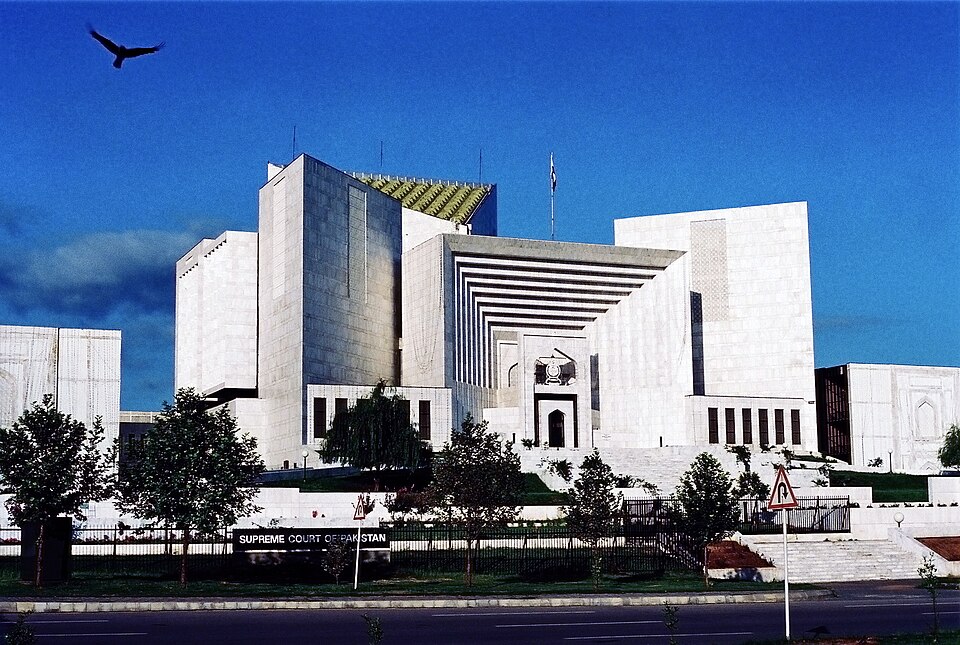
ISLAMABAD, Jun 17 (APP):The Supreme Court of Pakistan has held that the law of limitation is not merely a technical procedural rule but a mandatory legal principle founded on public policy, and that a suit filed after the expiry of the prescribed limitation period is not maintainable.
The Court further ruled that no decree can be granted in favour of a party on the basis of unproven documents or insufficient evidence.
According to the detailed judgment, Justice Muhammad Shafi Siddiqui authored the verdict on behalf of a three-member bench comprising two other judges including Justice Shahid Waheed and Justice Naeem Akhtar Afghan. The Court dismissed an appeal filed by M/s Stallions (Private) Limited and upheld the judgment of the Islamabad High Court.
The case arose from a claim by a private construction company, which asserted that in 1996 it had installed additional security gates, anti-riot gates, bollards and road blockers at the Prime Minister House. The company alleged that the Capital Development Authority (CDA) had failed to make full payment for the work and subsequently filed a suit in 2013 seeking recovery of more than Rs 90 million, including outstanding dues and profits.
In its judgment, the Supreme Court observed that under Article 117 of the Qanun-e-Shahadat Order, the burden rests upon the party asserting a claim to prove it through admissible and legally acceptable evidence. The Court held that the mere fact that the opposing party did not challenge the evidence did not confer legal validity upon defective or unproven evidence.
The judgment noted that the plaintiff company had failed to prove the documents relied upon in support of its claim in accordance with the law and had also failed to produce any independent and credible evidence to substantiate its assertions. Consequently, the burden of proof never shifted to the Capital Development Authority.
The Court further held that courts were duty-bound under the law of limitation to independently examine whether a suit has been filed within the prescribed period, irrespective of whether the parties raise such an objection. It observed that the law assisted those who pursue their rights diligently and within time, not those who remained inactive for prolonged periods.
The Supreme Court ruled that the company’s cause of action had arisen in 1997 when its demand for additional payment was not accepted. Even if subsequent correspondence between the parties was taken into account, the suit instituted in 2013 remained clearly barred by limitation. The Court clarified that correspondence, representations or repeated requests did not suspend or extend the limitation period.
Concluding that the Islamabad High Court had correctly appreciated both the law and the facts of the case, the Supreme Court found no grounds for interference and accordingly dismissed the appeal.