Lawmakers in Senate on Tuesday urged the government to focus on security, economic reforms, provincial development and public welfare measures to ensure sustainable growth and the equitable distribution of resources across the country.
Senators urge govt to focus on security, economic reforms, public welfare measures
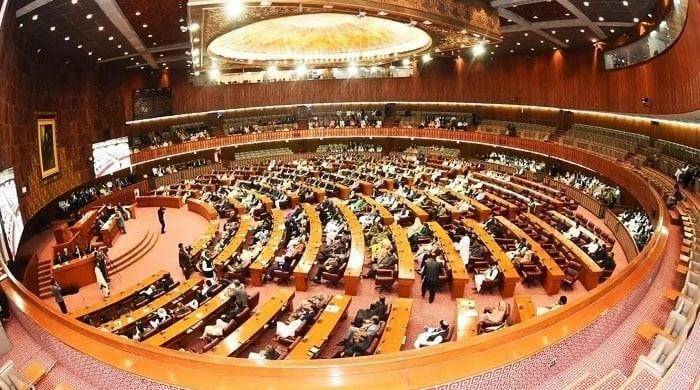
ISLAMABAD, Jun 16 (APP): Lawmakers in Senate on Tuesday urged the government to focus on security, economic reforms, provincial development and public welfare measures to ensure sustainable growth and the equitable distribution of resources across the country.
Resuming the debate on the federal budget, the lawmakers raised issues relating to national security, provincial development spending, education, investment and economic management.
Taking part in the debate, Senator Maulana Atta ur Rehman of JUI-F said peace and security were prerequisites for economic prosperity, arguing that people living under fear and insecurity in Khyber Pakhtunkhwa and Balochistan could not effectively pursue economic activity and livelihoods.
He said that growing frustration, political deprivation and insecurity could lead to further alienation.
He urged policymakers to formulate policies based on ground realities and ensure equal treatment of all provinces.
Senator Danesh Kumar of the Balochistan Awami Party (BAP) expressed displeasure over the absence of ministers during the budget debate, terming it disappointing that lawmakers were discussing the country’s most important financial document without adequate government representation.
He also voiced concern over cuts in Balochistan’s development allocations and called for greater federal attention to the province.
He said Balochistan continued to face economic and security challenges and deserved increased development spending, improved infrastructure and an equitable share of national resources, including water.
Referring to Pakistan’s recent diplomatic role, he congratulated the national leadership, political parties and Chief of Army Staff (COAS) Field Marshal Syed Asim Munir for facilitating dialogue between Iran and the United States. As a non-Muslim Pakistani, he said he felt proud that Pakistan had earned international recognition through its diplomatic efforts.
He particularly praised Field Marshal Syed Asim Munir, saying his leadership had contributed significantly to enhancing Pakistan’s global standing and prestige.
Senator Bilal Ahmed of the PPPP questioned the budget’s development priorities, saying it lacked a comprehensive roadmap for increasing national income, improving education and promoting science and technology.
He expressed concern over allocations for higher education and the large number of children who remain out of school.
He remarked that Balochistan’s strategic importance and vast mineral resources required far greater investment and planning than reflected in the current budget.
Senator Amir Waliuddin Chishti of the MQM-P said Pakistan’s high energy costs, taxation regime and regulatory environment were discouraging both domestic and foreign investment.
He said several multinational companies and international financial institutions had scaled down their operations in the country, reflecting declining investor confidence.
Referring to Karachi’s contribution to the national economy, he said the city generated substantial revenue but continued to face serious infrastructure and governance challenges.
He called for greater federal support and stronger local government systems.
Taking part in the debate, Senator Dost Muhammad of PTI criticized the budget and claimed that development commitments made to the former tribal districts had not been fulfilled.
He expressed concern over the socio-economic situation in merged areas and reiterated support for PTI founder Imran Khan, saying political stability was essential for addressing national challenges.
Senator Zarqa Suharwardy of PTI strongly criticized the budget, alleging that it primarily benefited wealthy segments of society while offering little relief to ordinary citizens struggling with inflation and rising utility costs.
She questioned various tax concessions and fiscal measures, arguing that the burden of economic adjustment continued to fall disproportionately on middle and lower-income groups.
She called for expanding the tax net, reducing government expenditures and implementing policies aimed at easing the hardships faced by common citizens.
Senator Falak Naz of PTI highlighted concerns regarding jailed PTI leaders and workers, urging authorities to ensure fair treatment and due process. She said elected representatives and political workers should be afforded their legal rights.
Senator Mishal Azam of PTI rejected the budget, terming it inadequate for addressing poverty, inflation and unemployment. She claimed the budget failed to provide meaningful relief to ordinary citizens and accused the government of ignoring the needs of low-income households.
She also raised concerns over pending financial dues of Khyber Pakhtunkhwa and called for increased allocations for development projects, security requirements and public welfare programmes in the province.
She said that economic hardship, inflation and unemployment remained the most pressing challenges facing the country. She urged the government to focus on public relief measures.
Later, the House was adjourned to meet again on Wednesday at 12:30 pm.
He expressed concern over the socio-economic situation in merged areas and reiterated support for PTI founder Imran Khan, saying political stability was essential for addressing national challenges.
Senator Zarqa Suharwardy of PTI strongly criticized the budget, alleging that it primarily benefited wealthy segments of society while offering little relief to ordinary citizens struggling with inflation and rising utility costs.
She questioned various tax concessions and fiscal measures, arguing that the burden of economic adjustment continued to fall disproportionately on middle and lower-income groups.
She called for expanding the tax net, reducing government expenditures and implementing policies aimed at easing the hardships faced by common citizens.
Senator Falak Naz of PTI highlighted concerns regarding jailed PTI leaders and workers, urging authorities to ensure fair treatment and due process. She said elected representatives and political workers should be afforded their legal rights.
Senator Mishal Azam of PTI rejected the budget, terming it inadequate for addressing poverty, inflation and unemployment. She claimed the budget failed to provide meaningful relief to ordinary citizens and accused the government of ignoring the needs of low-income households.
She also raised concerns over pending financial dues of Khyber Pakhtunkhwa and called for increased allocations for development projects, security requirements and public welfare programmes in the province.
She said that economic hardship, inflation and unemployment remained the most pressing challenges facing the country. She urged the government to focus on public relief measures.
Later, the House was adjourned to meet again on Wednesday at 12:30 pm.