Minister for Defence Khawaja Muhammad Asif Tuesday reaffirmed the government’s commitment to addressing the longstanding challenges facing Balochistan, stressing that sustainable solutions require collective efforts from all political stakeholders and state institutions.
Govt committed to resolving Balochistan issues through collective efforts: Asif
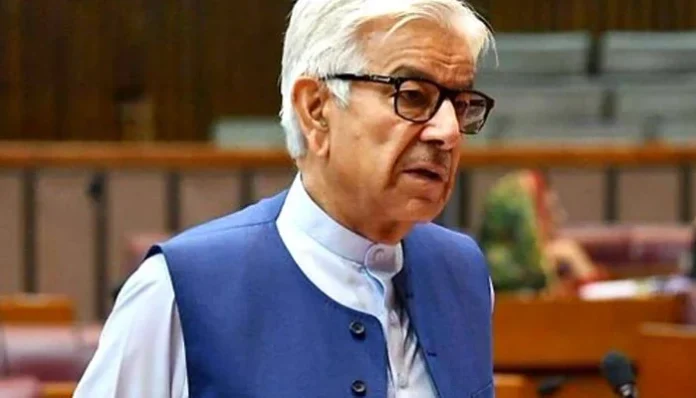
ISLAMABAD, Jun 16 (APP): Minister for Defence Khawaja Muhammad Asif Tuesday reaffirmed the government’s commitment to addressing the longstanding challenges facing Balochistan, stressing that sustainable solutions require collective efforts from all political stakeholders and state institutions.
Speaking during the National Assembly debate on the Federal Budget 2026-27, the minister said the issues confronting Balochistan had developed over decades and could not be resolved overnight.
Khawaja Asif emphasized the need for a unified national approach to restore peace, improve security and address the province’s socio-economic grievances.
“The insecurity on highways and roads in Balochistan is a matter of collective concern. It is our shared responsibility to ensure peace and development in the province,” he added.
Addressing the issue of terrorism, Khawaja Asif said militant activities in Khyber Pakhtunkhwa and Balochistan were directly linked to elements operating from Afghan territory.
Khawaja Asif said that Pakistan had repeatedly engaged with the Afghan authorities through diplomatic channels to address its security concerns.
The minister said that he had personally visited Kabul twice alongside senior officials, including the Director General of Inter-Services Intelligence (ISI), to discuss counterterrorism cooperation. “We were prepared to extend economic assistance but sought a written assurance that Afghan soil would not be used against Pakistan,” he said.
He said, similar discussions were also held in Turkiye and Qatar, but the desired outcomes had yet to be achieved.
He reiterated Pakistan’s commitment to dialogue and constructive engagement while emphasizing that meaningful progress depended on credible guarantees against the use of Afghan territory for terrorist activities.
Highlighting the sacrifices made by security forces, Khawaja Asif informed the House that around 4,000 security personnel had embraced martyrdom since 2022 while defending the country against terrorist threats.
He said Pakistan was still grappling with the consequences of policies adopted during the 1980s, which left behind a legacy of weapons and militancy that contributed to prolonged instability.
Referring to recent security developments, the minister said Pakistan had demonstrated resilience and strength in the face of external challenges.
He said that the country’s response to an attack by a “five-times larger enemy” in May 2025 as a moment of national pride.
Khawaja Asif also highlighted Pakistan’s recent diplomatic achievements, crediting Prime Minister Muhammad Shehbaz Sharif, Chief of Defence Forces Field Marshal Syed Asim Munir, and the entire national leadership for enhancing the country’s international standing through prudent decision-making and effective diplomacy.
Commenting on the situation in Azad Jammu and Kashmir (AJK), the minister maintained that decisions regarding refugee seats should be made by the elected assembly and representatives of the region rather than by pressure groups.
He rejected attempts by foreign-funded elements to influence local political matters and said all legitimate demands had already been addressed through constitutional and democratic mechanisms.
The minister opposed proposals aimed at creating divisions on ethnic grounds, saying that people from diverse communities had lived together peacefully across Pakistan for decades while preserving their cultural identities.
He urged lawmakers to avoid political point-scoring on issues related to national unity and security.
On the economic front, Khawaja Asif said the country had been on the verge of default when the current government assumed office but had since achieved stability through prudent economic management.
“The economy has emerged from the ICU and is now moving towards stability,” he said, expressing optimism that Pakistan’s GDP growth rate could reach six to seven percent within the next one to two years.
The minister also assured the House that reductions in petroleum prices would be passed on to the public and underscored the importance of establishing a fair and rational taxation system that encourages voluntary tax compliance and strengthens national economic development.