The Supreme Court of Pakistan has dismissed an appeal filed by a former husband, holding that the repeated use of criminal and civil proceedings to challenge a woman’s remarriage after the dissolution of marriage through khula amounted to harassment and an abuse of the legal process.
SC dismisses appeal, terms repeated legal action against woman’s remarriage after Khula an abuse of process
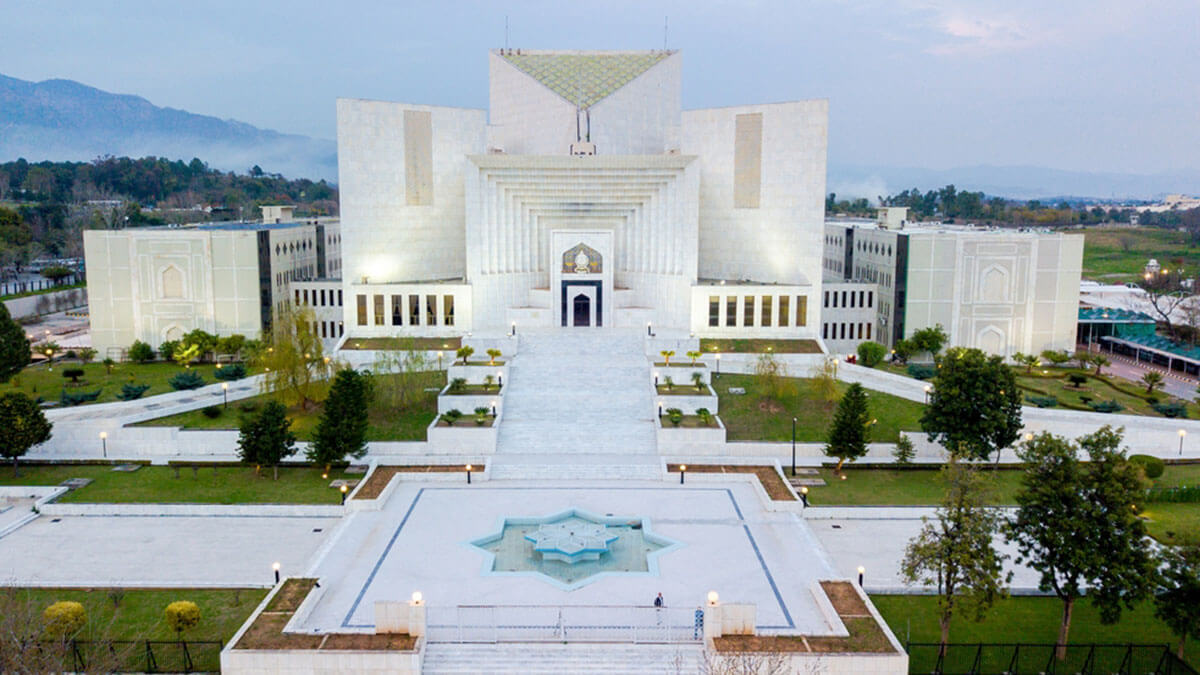
ISLAMABAD, Jun 16 (APP): The Supreme Court of Pakistan has dismissed an appeal filed by a former husband, holding that the repeated use of criminal and civil proceedings to challenge a woman’s remarriage after the dissolution of marriage through khula amounted to harassment and an abuse of the legal process.
The court ruled that a marriage stands legally dissolved upon the completion of the iddat period following a decree of khula, and that a woman thereafter has the full legal right to remarry. It observed that the unjustified initiation of legal proceedings in such circumstances constitutes a misuse of judicial processes.
According to a detailed judgment approved for reporting, a three-member bench headed by Chief Justice Yahya Afridi and comprising Justice Muhammad Shafi Siddiqui and Justice Mian Gul Hassan Aurangzeb dismissed Civil Petition for Leave to Appeal (CPLA) No. 303-P/2018 and upheld the judgment of the Peshawar High Court.
The court held that the central issue was not the legality of the khula itself, as the Family Court had already dissolved the marriage between the parties through a khula decree on September 13, 2014. Following the completion of the iddat period, the marital relationship had legally come to an end.
The judgment noted that the former husband had repeatedly approached various forums, sought police and magistrate intervention, and attempted to declare his former wife’s subsequent marriage unlawful. The court observed that such actions amounted to an abuse of the legal process.
The Supreme Court further held that khula is a recognized right of women under Islamic law and Pakistan’s family laws. After obtaining khula, a woman is legally entitled to contract a marriage of her choice, and the consent or approval of the former husband carries no legal significance.
The court observed that complaints filed under Section 22-A of the Code of Criminal Procedure (CrPC), as well as other related applications, had already been dismissed by the relevant courts. Despite this, the petitioner continued to pursue similar allegations before higher judicial forums without any valid legal basis.
The judgment emphasized that courts cannot be used as instruments to target an individual’s private life, damage reputation, or exert pressure on another party. It further observed that such litigation adversely affects the dignity and social standing of women and undermines the integrity of the judicial system.
The court stated that repeatedly filing baseless and harassing cases not only constitutes an abuse of legal process but also places an unnecessary burden on the judicial system.
While dismissing the appeal, the Supreme Court imposed costs of Rs500,000 on the appellant, directing that the amount be paid to the woman within 30 days. Failing payment, legal proceedings may be initiated for its recovery.