
ISLAMABAD, Jun 16 (APP):Federal Minister for Railways Hanif Abbasi Tuesday reaffirmed that Pakistan would respond decisively to any attempt by India to block its share of water, terming water security as a "red line" for the country. Participating in the budget debate in the National Assembly on the Federal Budget 2026-27, Hanif Abbasi said that future conflicts could increasingly revolve around water resources. He emphasized the importance of the Indus …
Pakistan to respond firmly to any attempt to block its water share: Abbasi
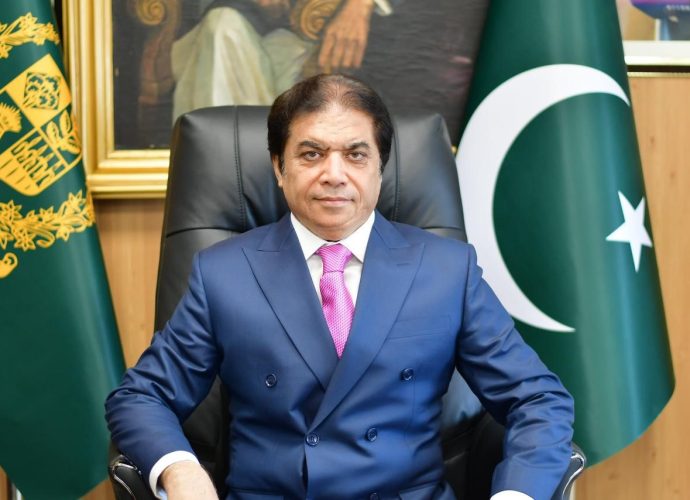
ISLAMABAD, Jun 16 (APP):Federal Minister for Railways Hanif Abbasi Tuesday reaffirmed that Pakistan would respond decisively to any attempt by India to block its share of water, terming water security as a “red line” for the country.
Participating in the budget debate in the National Assembly on the Federal Budget 2026-27, Hanif Abbasi said that future conflicts could increasingly revolve around water resources.
He emphasized the importance of the Indus Waters Treaty (IWT), describing it as a vital agreement governing water distribution between Pakistan and India.
“Water is Pakistan’s red line. Any attempt to deprive Pakistan of its legitimate share of water will be met with an appropriate and strong response,” he stated.
The minister urged the government to expedite the completion of major water reservoir projects to ensure long-term water security for future generations.
He stressed that national unity was essential to overcoming both internal and external challenges and paid tribute to the sacrifices of security personnel in the fight against terrorism.
Hanif Abbasi said Pakistan had earned recognition as a responsible and trusted state on the global stage, saying its constructive diplomatic role in regional affairs, including efforts related to tensions involving the United States and Iran.
He said that major global powers—including China, Russia, the United States, European Union member states and Central Asian countries—had expressed confidence in Pakistan’s leadership and its role in promoting regional peace and stability.
The minister credited Pakistan’s leadership with facilitating dialogue and fostering understanding among regional stakeholders, saying these efforts had enhanced the country’s international standing.
He said that recent diplomatic achievements as evidence of the wisdom and maturity of Pakistan’s leadership, including Prime Minister Muhammad Shehbaz Sharif and Chief of Defence Forces (CDF) Field Marshal Syed Asim Munir.
Calling for political consensus on issues of national importance, Hanif Abbasi urged all political forces to rise above differences and prioritize Pakistan’s sovereignty, security and development.
“We must work together as one nation and place Pakistan’s interests above all other considerations,” he said.
Referring to Pakistan’s nuclear programme, Hanif Abbasi said the country’s strategic capability was the result of contributions made by successive national leaders, scientists and institutions.
He said that former Prime Minister Shaheed Zulfikar Ali Bhutto laid the foundation of the programme, while renowned scientist Dr Abdul Qadeer Khan played a pivotal role in its development.
He also highlighted former Prime Minister Nawaz Sharif’s decision to authorize the nuclear tests conducted on May 28, 1998, despite international pressure, describing it as a demonstration of national resolve.
The minister said Pakistan’s nuclear capability has significantly strengthened the country’s defence and contributed to strategic stability in the region.
Hanif Abbasi emphasized that all ethnic and linguistic communities in Pakistan enjoy equal rights and should continue to coexist in an atmosphere of harmony, mutual respect and national solidarity.
Expressing unwavering support for the people of Indian Illegally Occupied Jammu and Kashmir (IIOJK), he reiterated Pakistan’s commitment to extending political, diplomatic and moral support to their right to self-determination.
The minister said Pakistan’s progress and prosperity depend on national cohesion, political stability and a collective commitment to development and security.
He paid tribute to the armed forces and security personnel safeguarding the country’s borders and acknowledged their sacrifices in maintaining peace and stability.
Hanif Abbasi called on all stakeholders to work together to strengthen the economy, protect national interests and build a prosperous future for coming generations.

