Responding to a question, Finance Minister Muhammad Aurangzeb said the government had built sufficient fiscal buffers to absorb the secondary impact of rising international oil prices and expected the financial support arrangement with provinces to continue for the next three years. He said Pakistan had already witnessed the impact of higher oil prices in April when the country's oil import bill increased by $1 billion. He said coordinated efforts by …
Post-Budget-Presser-2-(Last)-ISLAMABAD
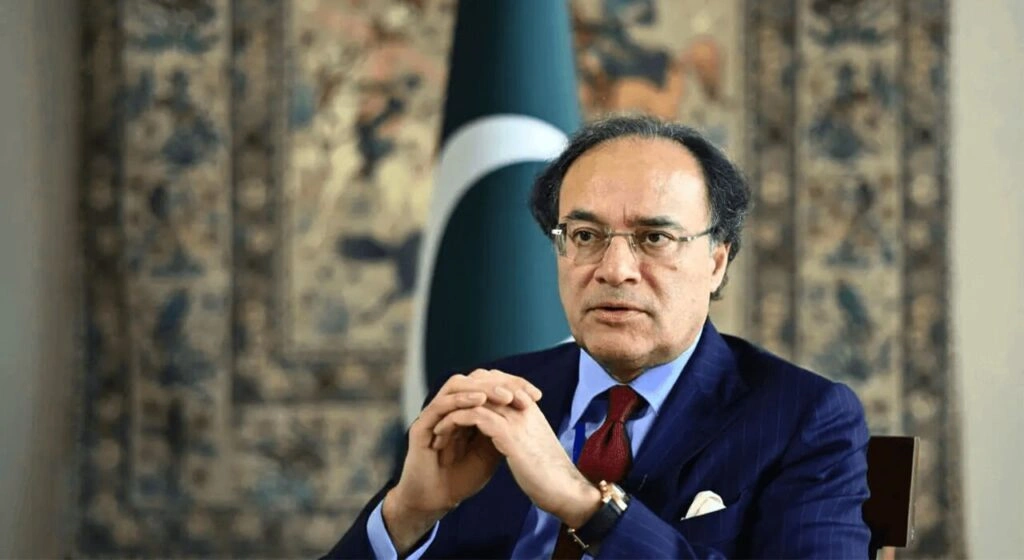
Responding to a question, Finance Minister Muhammad Aurangzeb said the government had built sufficient fiscal buffers to absorb the secondary impact of rising international oil prices and expected the financial support arrangement with provinces to continue for the next three years.
He said Pakistan had already witnessed the impact of higher oil prices in April when the country’s oil import bill increased by $1 billion. He said coordinated efforts by the government, particularly through the National Command and Monitoring Centre (NCMC), helped reduce the additional burden to around $500 million in May.
Aurangzeb said the government hoped ongoing diplomatic efforts by Pakistan’s leadership would help bring an early end to the regional conflict, but cautioned that damage to energy infrastructure would continue to affect global energy markets into the next fiscal year.
He said while the government had successfully managed the immediate supply and price impacts, it had incorporated adequate fiscal redundancy in the budget to address second and third-order effects of energy market disruptions.
On provincial support, the minister expressed gratitude to all provinces for assisting the federal government in meeting pressing national requirements, including allocations reflected in the defence budget.
He said the current arrangement was in place for the ongoing fiscal year and the federal government expected it to continue for the next three years following discussions with the provinces.
Responding to concerns regarding tax relief for salaried individuals, Aurangzeb said the government had prioritized segments that had received limited relief in the previous budget and ensured that taxpayers across different income categories benefited from reductions over the last two years.
Responding to questions, Minister of State for Finance Bilal Azhar Kayani said the government’s economic strategy extended beyond taxation measures and included export financing, tariff reforms and housing initiatives.
He said affordable housing financing schemes would enable people, particularly in smaller districts, to construct or purchase homes worth up to Rs 10 million with financing available at five percent for ten years.
On the Public Sector Development Programme (PSDP), Aurangzeb said development spending should be viewed in the context of total national development expenditure rather than federal allocations alone.
He noted that some provincial development spending had been adjusted this year due to strategic requirements, but emphasized that the country still had substantial development resources available.
Kayani said the government’s export-led growth strategy would benefit the entire economy by encouraging industrial expansion, diversification, job creation and higher wages.
He said exporters were not the sole beneficiaries of the policy as workers, machine operators, drivers and labourers across the industrial value chain would also gain from increased economic activity.
Highlighting development priorities, Kayani said the PSDP included funding for major education and health projects, including the Jinnah Medical Complex in Islamabad, Danish University in Muzaffarabad and educational institutions in Gilgit-Baltistan, Balochistan, Sindh and other underdeveloped regions.
He said the Danish Schools and universities initiative reflected Prime Minister Shehbaz Sharif’s vision of providing quality education opportunities to the poorest segments of society, particularly orphaned children.
He said housing finance initiatives would also support low and middle-income groups, citing examples of drivers and factory workers who had successfully obtained loans to build or purchase homes.
Responding to a question regarding the petroleum levy target of Rs1.676 trillion, Aurangzeb said the government had not increased the levy rate and any changes would only involve adjustments between petrol and diesel while maintaining the overall levy structure.
On reports regarding the merger of the Special Investment Facilitation Council (SIFC) and the Board of Investment (BOI), the finance minister said the government’s right-sizing exercise aimed to eliminate duplication among institutions.
He said both organizations shared investment facilitation responsibilities and the objective was to provide foreign investors with a single-window mechanism to facilitate investment in Pakistan.
Earlier, Minister of State for Finance and Railways Bilal Azhar Kayani said the Federal Budget 2026-27 was a public-oriented budget aimed at providing relief to the salaried class, businesses, exporters and vulnerable segments, while supporting economic growth and employment generation.
He said the government had prioritized reducing the tax burden on salaried individuals, acknowledging that a limited number of taxpayers had been contributing disproportionately.
“Whenever fiscal space becomes available, our first priority is to pass on relief to the salaried class,” he said, adding that meaningful tax reductions had been introduced across multiple income brackets.
Kayani said key demands of exporters and the formal industrial sector had been addressed through measures such as reduction in overall tax burden, rationalization of super tax, and facilitation for businesses.
Highlighting the consultative process, he said the budget reflected extensive engagement with stakeholders, including the Federation of Pakistan Chambers of Commerce and Industry and chambers across major cities, as well as industry bodies and SMEs.
He said the government had also introduced targeted social and sectoral measures, including GST exemptions on essential health-related products, support for the shipping sector, enhanced export financing, housing initiatives and increased allocation for the Benazir Income Support Programme.
Kayani expressed confidence that the budget would boost industrial activity, exports and purchasing power while sustaining the country’s economic recovery.