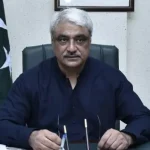
For retired government servant Misal Khan (85), the announcement of a seven percent increase in pensions in the Federal Budget 2026-27 was more than just a number but reassurance that his years of public service had not been forgotten by the government.
From pensioners to property builders: Federal budget brings hope across Khyber Pakhtunkhwa
By Fakhar-e-Alam
PESHAWAR, Jun 12 (APP): For retired government servant Misal Khan (85), the announcement of a seven percent increase in pensions in the Federal Budget 2026-27 was more than just a number but reassurance that his years of public service had not been forgotten by the government.
Like thousands of pensioners and federal government employees in Khyber Pakhtunkhwa, Misal Khan who retired in 2001 welcomed increase in salaries and pensions in the federal government’s budget 2026-27, describing it as a timely relief amid rising living costs and economic presures due to regional security l situation.
“The government has demonstrated its strong commitment to supporting millions of public servants and pensioners during difficult economic times,” he said, expressing hope that the additional income would help families manage increasing household expenses.
He said that increase will help pensioners families to meet the education and households needs of their families besides get timely treatment.
However, he suggested at least 10 percent increase in pension and salaries of public sector workers keeping in view of rising living cost, hoping that the Finance Minister may reconsider it.
From the bustling markets of Dera Ismail Khan to the scenic valleys of Chitral, reactions to the budget reflected a sense of positive optimism.
Many residents praised what they viewed the budget as a people-welfare oriented, highlighting measures for salaried employees, pensioners, workers, farmers, businesses, and the construction sector.
For employees working in Peshawar’s Civil Secretariat, the salary increase offers practical relief. Sajid Khan, Omar Khan, and Zeeshan Kaiser said the raise would help them cope with the growing cost of food, utilities, education, and healthcare.
“We have been struggling with rising inflation for years. Every bit of relief matters,” Omar working in education department employee remarked.
The government’s decision to raise the minimum wage by 10 percent also resonated strongly with workers and labour representatives, who viewed the measure as a step toward improving living standards for low-income families besides meeting the education and health expanses in dignified manner.
Among the most welcomed announcements was the proposed reduction in income tax rates for salaried individuals. Assistant Professor Sundas Amin described the tax relief as a significant step for middle-income earners who have long shouldered a heavy tax burden.
“The restructuring of tax slabs will leave more disposable income in the hands of salaried people,” she said, adding that the abolition of the surcharge on salaried individuals was particularly encouraging.
Educationists also endorsed the increase in salaries and income tax relief measures. Professor Dr. Muhammad Naeem of Swabi University termed the tax relief and salary increases “historic,” saying they would provide meaningful support to millions of households grappling with inflation and price hike.
Beyond government offices and educational institutions, the budget also sparked optimism among those connected to the property and construction sectors.
In Nowshera, contractors Wisal Khan and Irshad Khan said the proposed reduction in property-related taxes would revive investor confidence and stimulate economic activity.
According to the budget proposals, withholding tax on property purchases by tax filers would be reduced from 2.5 percent to 1.5 percent, while tax on property sales would be cut from 5.5 percent to 2.75 percent.
“These reductions will make property transactions more affordable and encourage investment,” said Wisal Khan. CEO of a private construction firm.
“When the construction sector grows, dozens of other industries including steel, pipes, furniture and paints benefit as well.”
Indeed, construction remains one of Pakistan’s largest employment-generating sectors, supporting industries ranging from cement and steel to transportation and electrical goods. Stakeholders believed increased activity could create thousands of jobs for both skilled and unskilled workers.
Business leaders, however, offered a more measured response. While welcoming the abolition of the Super Tax which was a long-standing demand of the business community, the leaders of the Sarhad Chamber of Commerce and Industry (SCCI) argued that the budget go far enough in promoting investment and industrial growth.
SCCI President Junaid Altaf praised the government’s decision to privatize loss-making state enterprises and abolish the Super Tax but questioned the realism of ambitious revenue collection and growth targets.
“The economy needs stronger measures to encourage businesses and attract investment,” he said.
Former SCCI President Zahidullah Shinwari echoed similar concerns, claiming that challenges such as unemployment and industrial stagnation require more focused attention.
Yet despite reservations from some quarters, the prevailing mood across much of Khyber Pakhtunkhwa remained positive.
For pensioners calculating monthly expenses, salaried workers hoping to stretch their paychecks further, and contractors anticipating new projects, the budget has offered something many had been seeking—a sense of financial breathing room and renewed hope for economic stability.
As the proposals move toward implementation, many residents said the real test will be whether the promised relief reaches ordinary households with speed.
For now, however, the budget has succeeded in generating optimism among diverse segments of society, from government offices and university campuses to construction sites, farmers to IT and local markets across the province.
The experts hoped that GDP targets will be achieved, agriculture to achieve new heights and direct investment will come that will help generate employment opportunities for youth.