ISLAMABAD, Jun 11 (APP):Pakistan’s renowned IT expert and former chairman of the National Database and Registration Authority (NADRA), Tariq Malik, told the Identity Week Europe Conference in Amsterdam on Thursday that identity systems should be viewed as nation-building projects rather than technology projects, stressing that inclusion, trust and state ownership are the foundations of successful digital identity programmes. Addressing the conference as a keynote speaker before more than 4,500 participants …

ISLAMABAD, Jun 11 (APP):Pakistan’s renowned IT expert and former chairman of the National Database and Registration Authority (NADRA), Tariq Malik, told the Identity Week Europe Conference in Amsterdam on Thursday that identity systems should be viewed as nation-building projects rather than technology projects, stressing that inclusion, trust and state ownership are the foundations of successful digital identity programmes.
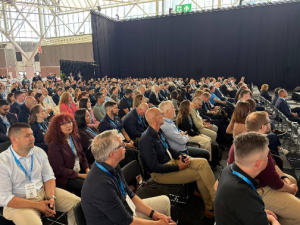
Addressing the conference as a keynote speaker before more than 4,500 participants from around the world, Malik shared lessons from over two decades of work on identity programmes across Asia, Africa and the Middle East, including Pakistan, Malawi, Zambia and Madagascar.
Responding to a question on the biggest challenge facing countries where millions of people still lack legal identity, he said the problem was rarely technology itself.
Instead, he identified distance, poverty, weak civil registration systems, exclusion of women and vulnerable groups, and lack of trust in institutions as the main barriers to universal identity coverage.
Technology can help solve these problems, but it cannot solve them alone, he said, adding that successful identity programmes required political commitment, operational discipline and a determination to reach every citizen regardless of location or social status.
Malik cited Malawi as one of the most powerful examples of successful identity delivery, noting that more than 10 million adults were registered within just 180 days, resulting in near-universal adult coverage.
The success did not come from a technological breakthrough. It came from political commitment, operational discipline and a relentless focus on reaching every citizen wherever they lived, he said.
Highlighting Pakistan’s digital identity journey, Malik said identity systems around the world were evolving from simple credentials into platforms that enable access to public services, financial inclusion, social protection programmes and digital government.
He referred to Pakistan’s Pak-ID mobile service, launched in 2021, as an example of how digital identity solutions were expanding citizens’ access to government services and making interactions with government institutions easier and more efficient.
Malik said governments must maintain ownership of identity governance, citizen data and system architecture, warning that while vendors could support implementation, trust, sovereignty and accountability must remain with the state and its citizens. Identity systems are not technology projects. They are nation-building projects, he said.
He added that identity was no longer simply about proving who people were, but had increasingly become the foundation upon which inclusion, opportunity and trust were being built in the digital age.
The conference also featured experts from Estonia, widely regarded as one of the world’s most advanced digital identity ecosystems, who discussed the transition from physical identity cards to integrated digital and phygital identity systems.
Identity Week Europe is one of the world’s leading forums on digital identity, cybersecurity and trust technologies, bringing together policymakers, technology leaders, regulators and identity experts from across the globe.
Recently, Tariq Malik was named among the world’s Top 25 Identity Experts, underscoring growing international recognition of his contributions to digital identity, public-sector innovation and citizen-centric governance.