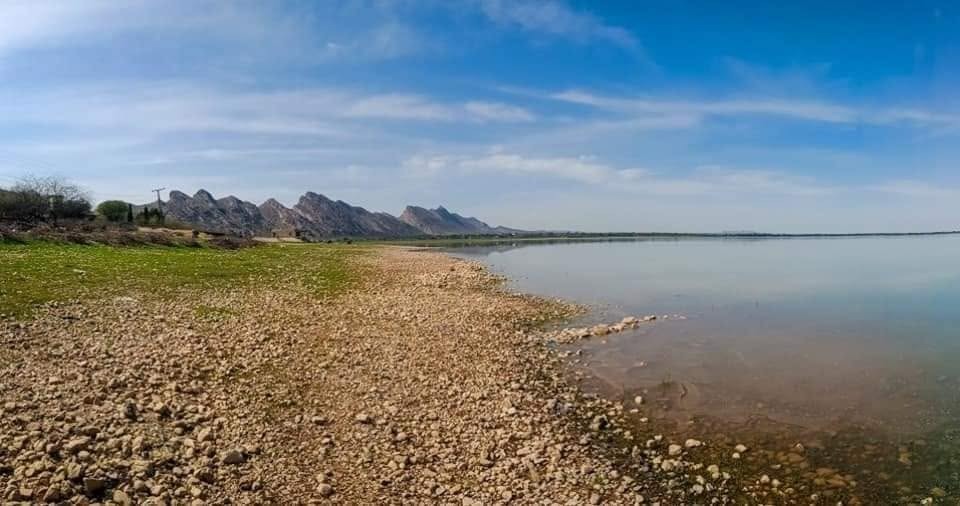
The drying of Namal Lake in Mianwali district has forced migratory flamingoes to seek alternative habitats at Jhlar Lake in the Soon Valley that has drawn attention to the growing threats facing Pakistan’s wetlands and the urgent need for stronger conservation measures.
Drying Namal Lake forces flamingoes to relocate, underscores stronger wetland conservation need
Ali Jabir Malik
ISLAMABAD, Jun 09 (APP):The drying of Namal Lake in Mianwali district has forced migratory flamingoes to seek alternative habitats at Jhlar Lake in the Soon Valley that has drawn attention to the growing threats facing Pakistan’s wetlands and the urgent need for stronger conservation measures.
Recent footage released by WWF-Pakistan and captured by wildlife photographer Umer Bin Khalid documented hundreds of flamingoes gathering at Jhlar Lake after their traditional seasonal refuge at Namal Lake largely dried up.
While the arrival of flamingoes has delighted birdwatchers and conservationists, environmental experts warn that the migration reflects a troubling ecological reality.
“Namal Lake has historically served as an important wetland ecosystem supporting migratory birds, aquatic life and local communities. Its shrinking water levels are a stark reminder of the pressures imposed by climate change, water mismanagement and ecosystem degradation,” said Hammad Naqi Khan, Director General of WWF-Pakistan.
According to WWF-Pakistan’s wetland conservation studies, Pakistan lies on the Central Asian Flyway and hosts millions of migratory birds annually that makes the protection of wetlands crucial for regional biodiversity and ecological stability.
A World Environment Day awareness campaign titled “Save Namal Lake” described the wetland as a “natural treasure of Mianwali” that supports biodiversity, sustains local livelihoods and provides habitat for migratory birds. The campaign warned that “a dry Namal Lake today means a water crisis tomorrow” and called for urgent action to conserve water, protect biodiversity, support local communities and restore degraded ecosystems.
Dr. Abid Qaiyum Suleri, Executive Director of the Sustainable Development Policy Institute (SDPI), has repeatedly highlighted in climate policy discussions that Pakistan’s wetlands are among the country’s most undervalued natural assets and that their degradation directly threatens biodiversity, water security and community livelihoods.
Research by the International Union for Conservation of Nature (IUCN) and the Ramsar Convention Secretariat shows that nearly 35 percent of the world’s wetlands have been lost since 1970 that makes wetland loss one of the fastest rates of ecosystem decline globally. Similar trends have been observed across South Asia, where increasing temperatures, erratic rainfall patterns and unsustainable land-use practices are placing additional pressure on freshwater ecosystems.
Punjab’s government has stepped up conservation efforts through the Punjab Wildlife and Parks Department, which manages protected areas, monitors migratory bird populations and implements habitat conservation programmes. The department has also worked to strengthen the management of internationally recognised Ramsar sites and wetlands across the province.
Director General Punjab Wildlife and Parks Department Mudassar Riaz Malik has emphasized that conserving wetlands and migratory bird habitats remains a priority under Punjab’s biodiversity conservation strategy, particularly in ecologically sensitive landscapes such as the Salt Range and Soon Valley.
The ecological concerns surrounding Namal Lake are also documented in the Namal Lake Restoration and Management Plan (2022-2027) prepared by the Urban Unit, Government of Punjab. The report warns that the lake is “shrinking at an alarming level” and requires immediate conservation interventions to preserve its ecological integrity and water resources. The study shows that Namal Lake was originally spread over approximately 5.5 square kilometres, but its surface area had declined to nearly 2.2 square kilometres by 2022 representing a loss of about 57 percent of its original size. The report attributes the decline primarily to climatic extremes, reduced environmental flows, siltation and improper channelization of natural watercourses feeding the lake.
The restoration plan notes that Namal Lake’s catchment depends largely on rainfall runoff from the Golar, Trappi, Rikhi and Namal streams. However, decades of sediment deposition have significantly reduced the lake’s storage capacity, while siltation has raised the lakebed and disrupted the natural functioning of inflow channels and dam structures.
The Urban Unit’s assessment identifies declining water levels, habitat fragmentation, deforestation, soil degradation, changing land cover patterns and the reduction of migratory bird populations among the major threats facing the wetland ecosystem. The report specifically warns that continued shrinkage could undermine biodiversity, eco-tourism potential and local livelihoods dependent on the lake’s natural resources.
To reverse the degradation, the restoration plan proposes a comprehensive programme including catchment rehabilitation, check dams, improved drainage infrastructure, desiltation measures, pollution control, plantation and greening initiatives, flood management interventions, ecological restoration and public awareness campaigns. The plan envisions restoring Namal Lake into a healthy ecological system capable of supporting biodiversity, sustainable tourism and community development while maintaining adequate water availability for future generations.
Conservation experts say the flamingoes’ relocation from Namal Lake to Jhlar Lake demonstrates precisely the ecological risks highlighted in the restoration plan. “The movement of migratory birds is often the first visible sign of ecosystem distress,” noted environmental researchers involved in wetland conservation efforts, adding that protecting Punjab’s wetlands requires coordinated action by government agencies, local communities and conservation organisations.
Experts point out that the Soon Valley’s interconnected wetlands, including Uchhali, Khabeki and Jhlar lakes, have become increasingly important refuges for migratory species as water availability declines elsewhere.
According to the United Nations Environment Programme (UNEP), wetlands store significant amounts of carbon and play a critical role in climate adaptation. Their degradation not only threatens wildlife but also increases vulnerability to droughts, floods and water shortages.
“The sight of flamingoes at Jhlar Lake is beautiful, but it reflects a larger environmental challenge,” said Rab Nawaz, Senior Director Conservation Programmes at WWF-Pakistan. “When one wetland disappears, wildlife is forced to compete for shrinking habitats elsewhere. Protecting wetlands is essential not only for birds but also for people.”
Environmental experts have called for integrated watershed management, restoration of degraded wetlands, improved water governance, stronger enforcement of environmental laws and greater community participation in conservation efforts.