ISLAMABAD, Jun 07 (APP):Amid rows of colourful vases, pottery, decorative pieces and imported handicrafts at a modest shop on College Road, rays of knowledge spread far beyond the shelves of Dream Land Handicraft. Here, Syed Muhammad Naeem is doing more than business. For years, he has been teaching Chinese language and practical trade skills to traders, factory owners and aspiring entrepreneurs, helping them understand not only how to speak with …
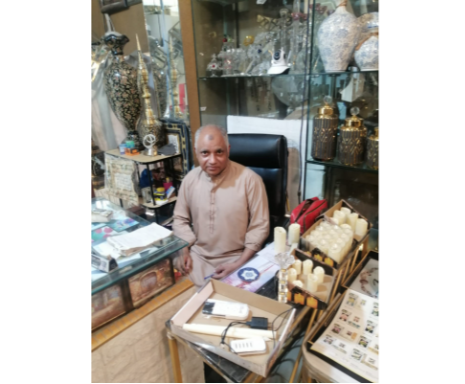
ISLAMABAD, Jun 07 (APP):Amid rows of colourful vases, pottery, decorative pieces and imported handicrafts at a modest shop on College Road, rays of knowledge spread far beyond the shelves of Dream Land Handicraft. Here, Syed Muhammad Naeem is doing more than business.
For years, he has been teaching Chinese language and practical trade skills to traders, factory owners and aspiring entrepreneurs, helping them understand not only how to speak with Chinese suppliers but also how to buy smarter, negotiate better and compete more confidently in one of the world’s largest markets.
While customers browse through interior decoration items, another group gathers around him with notebooks in hand, learning Chinese words, business terms and practical lessons that could one day help them negotiate deals in China’s bustling markets.
For Naeem, business and education have gone hand in hand for decades.

A businessman since 1995, Naeem’s academic journey is as diverse as the products displayed in his shop. He holds a BSc degree in Double Mathematics and Physics, an MA in Political Science from Punjab University, a Diploma in Computer Science from Quaid-i-Azam University, and studied Chinese language at Beijing Language and Culture University (BLCU), China, around 1999.
Over the years, he has taught nearly 2000 students, many of whom are traders, factory owners, entrepreneurs and businesspeople seeking to strengthen their links with China.
Speaking to APP, Naeem said learning Chinese language can open doors to opportunities, but understanding Chinese business culture is what truly helps people succeed.
Many Pakistanis travel to China every year to purchase goods for their businesses, but language barriers often create difficulties, he said. When you can communicate directly with suppliers, wholesalers and factory owners, you gain confidence, avoid misunderstandings and make better business decisions.
Naeem said many people focus only on products and prices, while overlooking the importance of communication and cultural understanding.
Language alone is not enough, he said. You must understand how Chinese businesspeople think, how they negotiate, how they build trust and how they conduct business. These things are equally important.
He believes that even small savings during negotiations can make a major difference for importers.
If a businessman saves even one Chinese Yuan during a deal, that amount can translate into thousands of rupees when large consignments arrive in Pakistan, he explained. That is why bargaining and communication skills are so important.
Inside his modest classroom, students are taught far more than vocabulary and grammar. Lessons often include real-life business scenarios, supplier communication, quality inspection methods, factory visits, product sourcing techniques and practical tips for identifying reliable manufacturers.
Drawing upon decades of business experience, Naeem teaches students how to communicate with shopkeepers, wholesalers and factory owners, how to compare prices, verify suppliers and avoid common mistakes made by first-time buyers.
I always tell my students that before spending money they should know how to search for products, compare options and verify quality, he said. “This knowledge protects them from fraud and helps them make informed decisions.
According to Naeem, many of his students are already involved in business, while others are preparing to enter the import and export sector.
His classroom attracts people from different walks of life, including traders from Rawalpindi and Islamabad, business owners, factory operators and young entrepreneurs eager to explore opportunities in China.
Among them is Muhammad Abu Bakar Butt, who recently joined Naeem’s classes.
Abu Bakar told APP that his father, a businessman, had previously learned Chinese language from Naeem and later encouraged him to study under the same teacher.
My father believed that understanding China is important for future business opportunities, Abu Bakar said. That is why he sent me to Sir Naeem so I can prepare myself before entering the import business.
He said the training goes far beyond language lessons.
We are learning how to communicate with factory owners, suppliers and shopkeepers, he said. Sir Naeem teaches us bargaining techniques, product searching, quality checking and professional business communication.
According to Abu Bakar, students also learn about the working style of Chinese markets and the expectations of Chinese business communities.
He shares practical experiences that cannot be found in books, Abu Bakar said. “These lessons help us understand how to build relationships, negotiate effectively and make better decisions when dealing with suppliers.
Back at Dream Land Handicraft, customers continue to browse among decorative pieces imported from various sources while students discuss business strategies nearby. The scene reflects a unique blend of commerce and education, where a traditional shop has evolved into a place where knowledge is shared alongside products.
Over the years, many of Naeem’s former students have travelled to China, established business connections and expanded their commercial activities with greater confidence.
Rather than keeping his experience to himself, Naeem has chosen to pass it on to a new generation of traders and entrepreneurs, believing that knowledge grows when it is shared.
As Pakistan’s trade ties with China continue to expand, people like Syed Muhammad Naeem are quietly helping bridge the gap between the two countries by preparing traders, shopkeepers, factory owners and aspiring entrepreneurs for the realities of international business.
Through his shop, classroom and decades of experience, Naeem continues to spread a practical form of education one that teaches both the language of communication and the language of commerce helping Pakistanis navigate Chinese markets with greater confidence and understanding.