Saudi Arabia has emerged as a leading force in digital healthcare, with investments exceeding 133 billion Saudi riyals, the expansion of AI-powered medical services, world-first robotic transplant procedures and one of the world’s largest virtual hospital networks driving a major transformation of the Kingdom’s health sector under Vision 2030.
ISLAMABAD, Jun 03 (APP): Saudi Arabia has emerged as a leading force in digital healthcare, with investments exceeding 133 billion Saudi riyals, the expansion of AI-powered medical services, world-first robotic transplant procedures and one of the world’s largest virtual hospital networks driving a major transformation of the Kingdom’s health sector under Vision 2030.
According to Saudi Press Agency (SPA), the Kingdom has shifted from a traditional treatment-focused model to a modern healthcare system emphasizing prevention, early diagnosis and digital care, supported by advanced technologies, major investments and integrated healthcare solutions.
The Saudi Ministry of Health has launched several AI-powered initiatives, including an AI Physician project designed to support accurate diagnosis and clinical decision-making, as well as a Smart Health Coach integrated with the Sehhaty application in cooperation with Google to provide personalized health guidance.
SPA reported that Saudi Arabia’s Virtual Hospital has become one of the world’s largest digital healthcare networks, linking 242 hospitals inside and outside the Kingdom with a capacity exceeding 597,000 beneficiaries, helping expand access to specialized healthcare services and reducing pressure on major hospitals.
Healthcare investments announced during the Global Health Exhibition 2025 exceeded 133 billion Saudi riyals, including 31 billion riyals for healthcare infrastructure projects, more than 12 billion riyals for venture capital and strategic investment funds, and 2.3 billion riyals for life sciences initiatives.
Saudi hospitals are also expanding the use of advanced robotic surgery systems, including Da Vinci, ROSA and CORI, in heart surgery, organ transplantation, cancer treatment, spinal procedures and joint replacement operations.
SPA said King Abdullah Medical City in Makkah introduced the advanced Da Vinci Xi robotic surgery system, enabling highly precise operations through incisions as small as one centimeter, significantly reducing pain, blood loss and recovery time.
The report highlighted the achievements of King Faisal Specialist Hospital and Research Centre, which performed the world’s first fully robotic heart transplant and the world’s first fully robotic liver transplant, placing Saudi Arabia at the forefront of advanced robotic surgery.
SPA told APP that the hospital also achieved another global milestone in 2026 by successfully performing seven cardiac procedures during a single robotic operation on a patient suffering from multiple complex heart conditions.
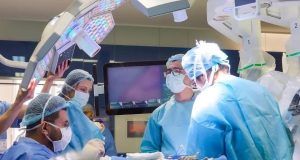
King Faisal Specialist Hospital ranks first in the Middle East and Africa and 12th globally among academic healthcare institutions. It has also been listed among the world’s best hospitals and smartest hospitals in international rankings.
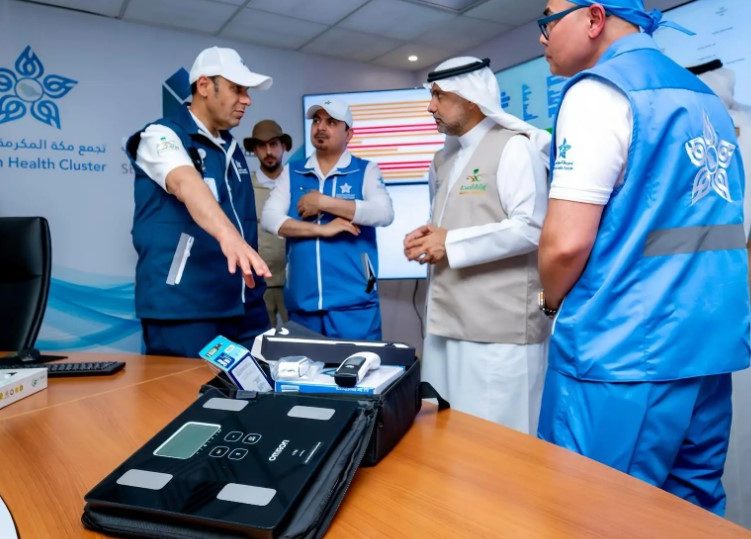
Smart healthcare technologies have also played a major role during Hajj. The Makkah Health Cluster deployed AI-powered solutions, including the “i-Selfie” system, capable of measuring vital signs and conducting cardiac assessments without physical contact. The technology reduced patient evaluation time by 70 percent and shortened vital-sign assessments from seven minutes to just two minutes.
Other Hajj innovations included the multilingual “Hajji” platform, which provides health information and guidance in more than 200 languages through WhatsApp, a mobile stroke unit equipped with instant CT scanning technology, mobile cardiac catheterization services in Arafat, and digital pharmacy services available in 11 languages.
SPA said smart watches linked to the Virtual Hospital are also being used to monitor pilgrims suffering from chronic diseases after their discharge from hospital, allowing medical teams to continue monitoring their health remotely.
Meanwhile, Saudi National Guard Health Affairs was ranked among the world’s best smart hospitals for the fifth consecutive year from 2022 to 2026, reflecting its advanced digital healthcare infrastructure and extensive use of artificial intelligence in patient care and hospital operations.
King Khaled Eye Specialist Hospital has also emerged as a regional leader in AI-driven eye care, using artificial intelligence to detect retinal diseases and diabetic retinopathy at an early stage. The hospital earned national recognition for its AI-based eye screening project and performed the Middle East’s first Boston Type II artificial cornea transplant in October 2025.
The report added that continued investment in digital infrastructure, medical innovation, national talent and global partnerships is helping Saudi Arabia strengthen its position as a leading regional center for digital healthcare and medical innovation while advancing the goals of Vision 2030.
According to SPA, the Kingdom’s healthcare transformation is creating a model that combines artificial intelligence, robotics, virtual care and advanced medical expertise to improve patient outcomes and shape the future of healthcare in the region and beyond.