Punjab Assembly (PA) Speaker Malik Muhammad Ahmad Khan said on Thursday that national security extended beyond the protection of borders and was intrinsically linked to economic stability, human security, education, environmental protection, cybersecurity, and effective governance.
National security linked to economic stability: PA Speaker Ahmad
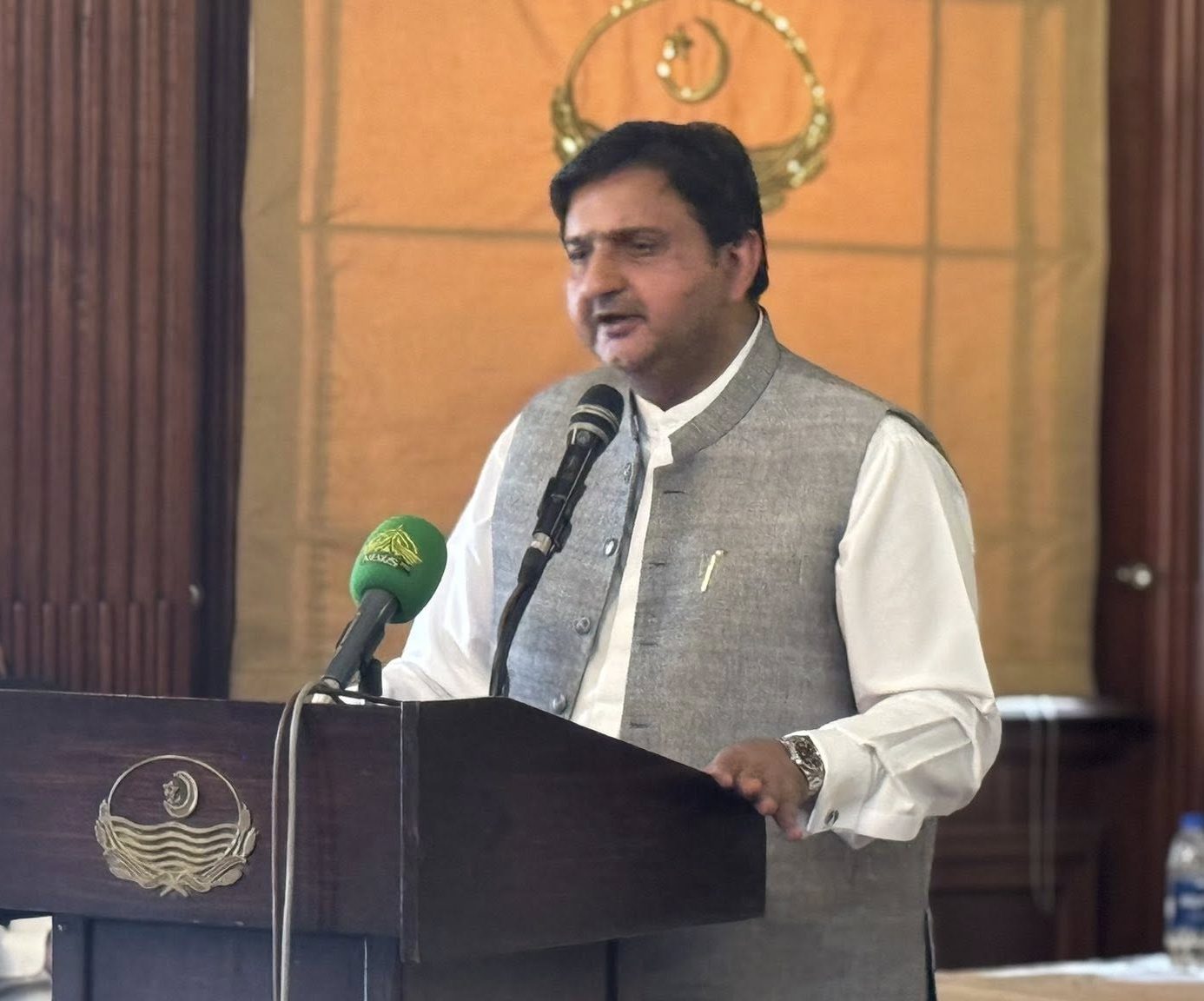
LAHORE, May 21 (APP): Punjab Assembly (PA) Speaker Malik Muhammad Ahmad Khan said on Thursday that national security extended beyond the protection of borders and was intrinsically linked to economic stability, human security, education, environmental protection, cybersecurity, and effective governance.
He made these remarks while addressing the “Forman Youth Summit 2026” and the “National Security and Governance Seminar” held at Forman Christian College.
Emphasizing the importance of youth engagement, he said it was imperative to raise awareness among young people regarding both traditional and non-traditional security challenges so that they could effectively respond to emerging global and national threats.
Appreciating the efforts of the organizers, faculty members, and students, the Speaker said such academic forums played a vital role in fostering intellectual growth and strengthening national consciousness among the younger generation.
Referring to “Youm-e-Takbeer,” he described May 28, 1998, as a landmark day in Pakistan’s history when, under the leadership of then prime minister Muhammad Nawaz Sharif, the country conducted successful nuclear tests in Chagai, becoming the seventh nuclear power in the world and the first in the Muslim world.
He paid tribute to Pakistan’s scientists, political leadership, and armed forces for making the country’s defence invincible, saying their contributions would always remain a source of national pride.
Malik Muhammad Ahmad Khan said traditional security threats included inter-state conflicts, border disputes, terrorism and proxy warfare, while non-traditional threats encompassed climate change, cyber warfare, pandemics, food insecurity, economic instability, and transnational organised crime.
He stressed the need for Pakistan to adopt a comprehensive and integrated national strategy to effectively address these multidimensional challenges.
Highlighting the importance of the United Nations Sustainable Development Goals (SDGs), he said they were fundamental to ensuring human security, poverty alleviation, improved healthcare, environmental sustainability, strong institutions, and peaceful societies.
The Speaker added that Pakistan’s legislative framework was continuously evolving in key areas such as national security, human rights, the protection of women and children, climate change, and counter-terrorism.
Referring to legislative measures, including the Punjab Child Marriage Restraint Bill 2026, the Zainab Alert Act, and the Pakistan Climate Change Act, he said Parliament was playing a proactive role in addressing public issues and strengthening national cohesion.
He said good governance was rooted in transparency, the rule of law, accountability, institutional responsibility, public participation, and equality of opportunity.
He also underscored the importance of political stability, strong institutions, an empowered local government system, an efficient bureaucracy, and a structured policymaking framework to further improve governance in the country.
The Speaker said Pakistan was currently facing both internal and external challenges, including terrorism, economic pressures, and climate change. However, he expressed confidence that these challenges could be overcome through national unity, strong leadership, and public trust.
He urged citizens to promote the consumption of locally produced goods to strengthen the national economy and reduce external dependence.
He further stated that the present government had successfully steered Pakistan away from the risk of economic default towards stability and was continuing efforts to ensure national security, development, and prosperity.