
Federal Minister for National Heritage and Culture, Aurangzeb Khan Khichi on Wednesday said the repatriation of priceless Pakistani antiquities from the United States reflected the deepening cultural partnership and mutual commitment of Pakistan and the U.S. towards the protection of shared human heritage, describing the returned artifacts as “a part of Pakistan’s soul, history and civilizational identity.”
ISLAMABAD, May 13 (APP):Federal Minister for National Heritage and Culture, Aurangzeb Khan Khichi on Wednesday said the repatriation of priceless Pakistani antiquities from the United States reflected the deepening cultural partnership and mutual commitment of Pakistan and the U.S. towards the protection of shared human heritage, describing the returned artifacts as “a part of Pakistan’s soul, history and civilizational identity.”
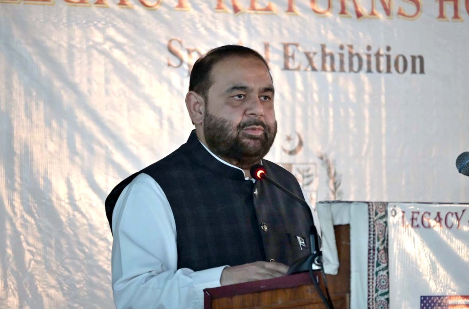
Speaking at the inauguration of the special exhibition “Legacy Returns Home” at the Islamabad Museum, he said the recovered objects were not merely artifacts but enduring symbols of Pakistan’s ancient civilizations, artistic excellence and historical continuity.
The minister said Pakistan, home to the ancient Indus Valley Civilization and the globally renowned Gandhara Art tradition, possessed one of the world’s richest cultural legacies, which continued to inspire scholars, historians, artists and researchers across the world, and must be safeguarded against illegal excavation, theft and smuggling.
Speaking at the inauguration of the special exhibition “Legacy Returns Home” at the Islamabad Museum, he said the recovered objects were not merely artifacts but enduring symbols of Pakistan’s ancient civilizations, artistic excellence and historical continuity.
The minister said Pakistan, home to the ancient Indus Valley Civilization and the globally renowned Gandhara Art tradition, possessed one of the world’s richest cultural legacies, which continued to inspire scholars, historians, artists and researchers across the world, and must be safeguarded against illegal excavation, theft and smuggling.

Calling illicit trafficking of antiquities a “crime against humanity,” he said such acts deprived nations and future generations of their historical memory and collective identity.
He said the government remained committed to strengthening legal, institutional and professional mechanisms for the preservation and recovery of stolen heritage, stressing that international cooperation was essential in combating the illicit trade in cultural property.
Aurangzeb Khichi appreciated the cooperation of the United States government, U.S. law enforcement agencies, Homeland Security authorities, cultural institutions, the District Attorney’s Office of New York and the U.S. Embassy in Islamabad in the successful repatriation of the artifacts. He also acknowledged the dedicated role of the Ministry of Foreign Affairs and Pakistan’s diplomatic missions abroad in facilitating the recovery and return of Pakistan’s cultural assets.
The minister referred to the bilateral agreement signed between Pakistan and the United States on January 30, 2024, aimed at protecting Pakistan’s cultural property and restricting the illicit movement of antiquities, terming it a significant milestone in bilateral heritage cooperation.
The exhibition, organised by the National Heritage and Culture Division and the Department of Archaeology and Museums, features selected antiquities intercepted by U.S. Homeland Security authorities and subsequently handed over to the High Commission of Pakistan in New York by the District Attorney’s Office of New York under Article 7(b)(ii) of the UNESCO 1970 Convention and the bilateral agreement signed between the two countries on January 30, 2024.
He said the government remained committed to strengthening legal, institutional and professional mechanisms for the preservation and recovery of stolen heritage, stressing that international cooperation was essential in combating the illicit trade in cultural property.
Aurangzeb Khichi appreciated the cooperation of the United States government, U.S. law enforcement agencies, Homeland Security authorities, cultural institutions, the District Attorney’s Office of New York and the U.S. Embassy in Islamabad in the successful repatriation of the artifacts. He also acknowledged the dedicated role of the Ministry of Foreign Affairs and Pakistan’s diplomatic missions abroad in facilitating the recovery and return of Pakistan’s cultural assets.
The minister referred to the bilateral agreement signed between Pakistan and the United States on January 30, 2024, aimed at protecting Pakistan’s cultural property and restricting the illicit movement of antiquities, terming it a significant milestone in bilateral heritage cooperation.
The exhibition, organised by the National Heritage and Culture Division and the Department of Archaeology and Museums, features selected antiquities intercepted by U.S. Homeland Security authorities and subsequently handed over to the High Commission of Pakistan in New York by the District Attorney’s Office of New York under Article 7(b)(ii) of the UNESCO 1970 Convention and the bilateral agreement signed between the two countries on January 30, 2024.

The displayed collection spans multiple historical periods and includes rare stone and stucco Buddhist sculptures, relic caskets, narrative reliefs of the Gandhara civilisation, a rare gold coin from the Indo-Greek period, as well as terracotta figurines and painted pottery from Balochistan dating back to 7,000 BC.
S. Paul Kapur, The Assistant Secretary of State for South and Central Asian Affairs, as a chief guest, said the exhibition marked the return of invaluable artifacts to their rightful home and demonstrated the strength of bilateral commitment to protecting cultural property and upholding the rule of law. He said the repatriation of more than 450 antiquities — collectively valued at over $23 million — was made possible by the exceptional work of the Antiquities Trafficking Unit of the Manhattan District Attorney’s Office, with invaluable assistance from the U.S. Department of Homeland Security and Pakistani partners.
Kapur said the returned artifacts, including terracotta figurines more than four thousand years old among the earliest human-crafted representations in the world, connected generations to their heritage and each of them now belonged to the people of Pakistan.
He said the repatriation held special meaning as the United States celebrated the 250th anniversary of its independence under the initiative called “Freedom 250,” reflecting on the importance of protecting cultural legacy.
S. Paul Kapur, The Assistant Secretary of State for South and Central Asian Affairs, as a chief guest, said the exhibition marked the return of invaluable artifacts to their rightful home and demonstrated the strength of bilateral commitment to protecting cultural property and upholding the rule of law. He said the repatriation of more than 450 antiquities — collectively valued at over $23 million — was made possible by the exceptional work of the Antiquities Trafficking Unit of the Manhattan District Attorney’s Office, with invaluable assistance from the U.S. Department of Homeland Security and Pakistani partners.
Kapur said the returned artifacts, including terracotta figurines more than four thousand years old among the earliest human-crafted representations in the world, connected generations to their heritage and each of them now belonged to the people of Pakistan.
He said the repatriation held special meaning as the United States celebrated the 250th anniversary of its independence under the initiative called “Freedom 250,” reflecting on the importance of protecting cultural legacy.

He described illicit trafficking of antiquities as a multibillion-dollar global criminal enterprise that robbed nations of their history and identity, fuelled organised crime and in some cases financed extremist networks.
He said no country could confront this challenge alone, adding that the United States worked with INTERPOL, customs and law enforcement agencies, and museum and academic communities worldwide to seize trafficked objects, dismantle criminal networks and promote ethical standards in the international antiquities market.
He highlighted the fully ratified U.S.-Pakistan Cultural Property Agreement, saying it helped prevent illegally exported artifacts from entering the U.S. art market and that its five-year Action Plan opened doors to museum exchanges, professional training in conservation, and new partnerships between universities, museums and research institutions in both countries.
Secretary National Heritage and Culture Division, Asad Rehman Gilani said the exhibition symbolised justice, international cooperation and a collective commitment towards preserving humanity’s shared heritage. He noted that Pakistan was a signatory to the UNESCO 1970 Convention and that the 2024 Hold Harmless Release Agreement had opened new avenues for collaboration in heritage protection, capacity building and technical cooperation.
He informed the audience that since 2007, a total of 513 cultural artifacts of Pakistani origin had been successfully repatriated from the United States in different phases — 39 in 2007, 46 in August 2021, 104 in September 2023, 191 in February 2025 and 133 in August 2025.
Director General of the Department of Archaeology and Museums, Amanullah termed the exhibition a celebration of the return of priceless pieces of Pakistan’s history and identity, and said it would help raise greater public awareness regarding the devastating impact of illicit trafficking of antiquities and the importance of protecting archaeological heritage.
Minister of State for National Heritage and Culture, Huzaifa Rehman, Parliamentary Secretary for National Heritage and Culture Farah Naz Akbar, Chairperson of the National Assembly Standing Committee on National Heritage and Culture Division Syeda Nosheen Iftikhar, and MNA Tufail Jutt were also present on the occasion.
He said no country could confront this challenge alone, adding that the United States worked with INTERPOL, customs and law enforcement agencies, and museum and academic communities worldwide to seize trafficked objects, dismantle criminal networks and promote ethical standards in the international antiquities market.
He highlighted the fully ratified U.S.-Pakistan Cultural Property Agreement, saying it helped prevent illegally exported artifacts from entering the U.S. art market and that its five-year Action Plan opened doors to museum exchanges, professional training in conservation, and new partnerships between universities, museums and research institutions in both countries.
Secretary National Heritage and Culture Division, Asad Rehman Gilani said the exhibition symbolised justice, international cooperation and a collective commitment towards preserving humanity’s shared heritage. He noted that Pakistan was a signatory to the UNESCO 1970 Convention and that the 2024 Hold Harmless Release Agreement had opened new avenues for collaboration in heritage protection, capacity building and technical cooperation.
He informed the audience that since 2007, a total of 513 cultural artifacts of Pakistani origin had been successfully repatriated from the United States in different phases — 39 in 2007, 46 in August 2021, 104 in September 2023, 191 in February 2025 and 133 in August 2025.
Director General of the Department of Archaeology and Museums, Amanullah termed the exhibition a celebration of the return of priceless pieces of Pakistan’s history and identity, and said it would help raise greater public awareness regarding the devastating impact of illicit trafficking of antiquities and the importance of protecting archaeological heritage.
Minister of State for National Heritage and Culture, Huzaifa Rehman, Parliamentary Secretary for National Heritage and Culture Farah Naz Akbar, Chairperson of the National Assembly Standing Committee on National Heritage and Culture Division Syeda Nosheen Iftikhar, and MNA Tufail Jutt were also present on the occasion.

