ISLAMABAD, May 03 (APP):As Pakistan prepares to mark the anniversary of Marka-e-Haq, Brigadier (retired) Masood Ahmed, a defence analyst has said that the operation has fundamentally transformed Pakistan's geopolitical standing and rewritten the security dynamics of South Asia. In an exclusive talk with APP, Brig (r) Masood Ahmed described May 10 not merely as a date on the calendar, but as a golden chapter in Pakistan's defence history that demonstrated …
Pakistan’s Marka-e-Haq rewrote Strategic balance of South Asia, says Brig (r) Masood Ahmed
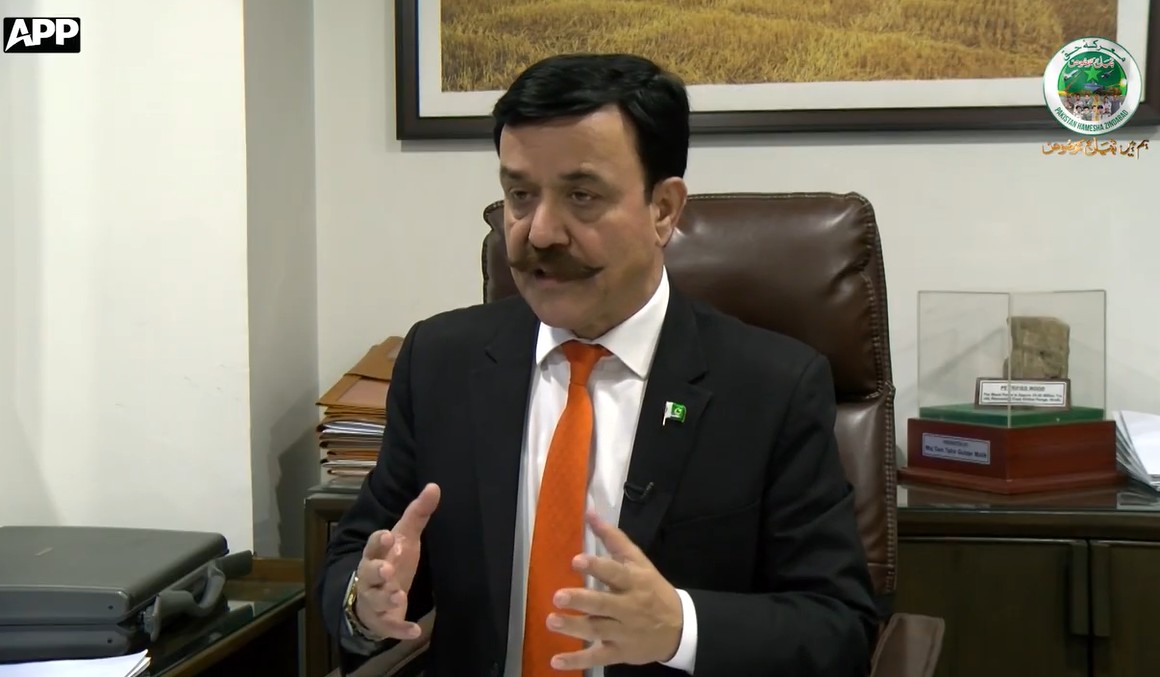
ISLAMABAD, May 03 (APP):As Pakistan prepares to mark the anniversary of Marka-e-Haq, Brigadier (retired) Masood Ahmed, a defence analyst has said that the operation has fundamentally transformed Pakistan’s geopolitical standing and rewritten the security dynamics of South Asia.
In an exclusive talk with APP, Brig (r) Masood Ahmed described May 10 not merely as a date on the calendar, but as a golden chapter in Pakistan’s defence history that demonstrated the nation’s resolve, military professionalism, and strategic depth in the face of aggression. “Every time the enemy has attempted to test Pakistan, history bears witness that they have received a decisive response,” he said.
“What Pakistan’s armed forces achieved in Marka-e-Haq is something the country had not witnessed in its previous 78 years”, he observed.
The defence analyst emphasized that the operation’s most lasting impact has been Pakistan’s emergence as a net security provider in West Asia and a credible geopolitical player on the world stage. “Pakistan has become a peer competitor to India. The dynamics of South Asia have totally changed,” he stated.
He added that Pakistan is now being increasingly recognized as a geopolitical mediator, including in the context of Iran-US tensions, and that world leaders including US President Donald Trump have publicly acknowledged Pakistan’s leadership and military performance in this regard.
On the role of the Pakistan Air Force, Brig (retd) Masood Ahmed said it was the first time in any war that Rafale jets were shot down, and that Pakistani pilots accomplished this remarkable feat.
He highlighted that the JF-17 Thunder, an indigenously co-developed aircraft, performed exceptionally during the conflict.
He said global demand for the aircraft has surged following the operation, with defence agreements already signed with Azerbaijan and Nigeria, and further engagement underway with other countries. “Technology alone does not win wars but professionalism does. And Pakistan’s Air Force has proven that conclusively,” he added.
The analyst said India entered the conflict expecting Pakistan to remain passive. “India’s thinking was that after firing missiles, Pakistan would simply protest at the OIC or the United Nations and establish a new normal of impunity,” he explained. “But Pakistan responded, and in doing so, established its own new normal.”
He cited a report summarising the conflict which stated that Pakistan inflicted a humiliating defeat on India. He warned, however, against complacency, stressing that Pakistan’s armed forces remain in a constant state of readiness and that any future violation would be met with a firm and decisive response.
The operation has also given a significant boost to Pakistan’s domestic defence industry. At a recent defence exhibition in Dubai, Pakistani defence products including aircraft, drones, tanks, and artillery attracted considerable international interest. “Battle-tested equipment sells.
The world knows these systems work,” Brig Masood Ahmed said, adding that Pakistan’s ability to indigenously produce its own weapons systems reduces dependency on other nations and strengthens its sovereign capability.
Contrasting Pakistan’s media conduct with India’s during the conflict, the analyst praised Pakistani media for acting with responsibility and restraint throughout.
He noted that every press conference featured representatives from all three armed services, and every statement was evidence-based and authoritative. He recalled that a former high-ranking Indian military official had written that those wanting to understand effective media handling should study ISPR as a model which is a stark contrast to India’s own media, which he said created a frenzy of unverified claims that were swiftly exposed before the world.
Concluding his remarks, Brig (r) Masood Ahmed said Pakistan now possesses all the attributes of a middle power including a strategic geographic location, nuclear capability, conventional military strength, and active diplomatic engagement.
He said Marka-e-Haq was not just a military victory but a victory of national will and identity. “When you are strong and you show courage, the world takes notice,” he said.