The Sindh Cabinet, chaired by Chief Minister Syed Murad Ali Shah, on Thursday approved a wide-ranging set of policy decisions aimed at strengthening governance, improving service delivery, and accelerating development across multiple sectors.
Sindh Cabinet approves key reforms in governance, economy, other sectors
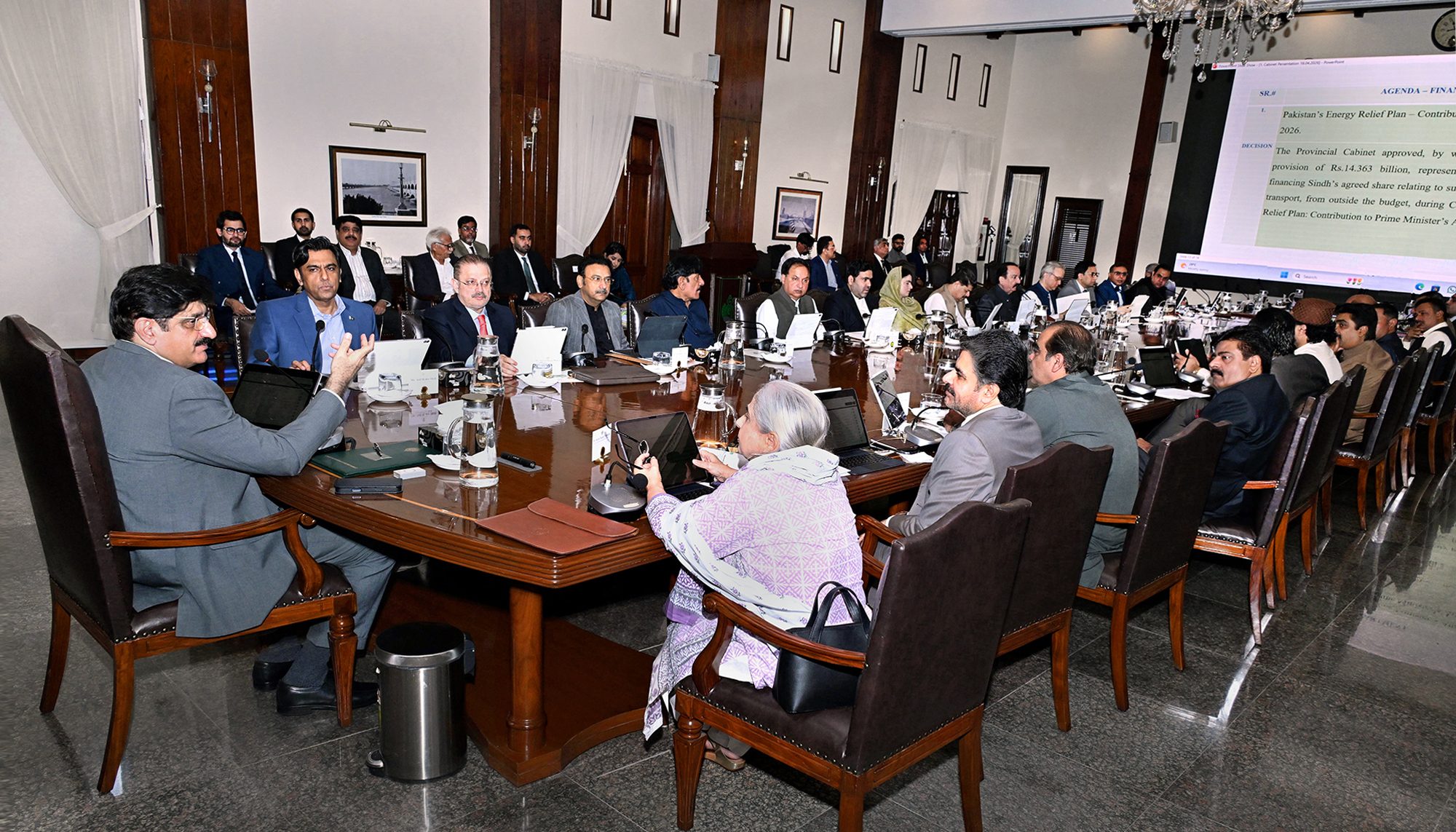
KARACHI, Apr 16 (APP): The Sindh Cabinet, chaired by Chief Minister Syed Murad Ali Shah, on Thursday approved a wide-ranging set of policy decisions aimed at strengthening governance, improving service delivery, and accelerating development across multiple sectors.
The meeting, held at the Chief Minister’s House, was attended by provincial ministers, advisors, special assistants, the Chief Secretary and other senior officials. The cabinet undertook a comprehensive review of reforms spanning employment policy, agriculture, education, health, infrastructure and financial management.
A key decision was the partial restoration of the deceased quota in government jobs. The cabinet decided that cases filed prior to September 2024, and meeting eligibility criteria, would be processed strictly on merit.
The cabinet noted that the quota, introduced in 2002, had been suspended following a September 26, 2024 ruling by the Supreme Court of Pakistan, which declared related laws discriminatory. After detailed deliberations, it was agreed to allow pending cases filed before the verdict to proceed in accordance with legal provisions.
The cabinet approved the allocation of six acres of land in District Ghotki for the construction of a new building for Police Station Khambra and an emergency camp. Given the station’s strategic jurisdiction—covering industrial zones, motorway sections, riverine areas and inter-provincial border points—the decision aims to enhance law enforcement capacity.
An amount of Rs 125.611 million was sanctioned for the project, including Rs 70 million for initial works and Rs 55.611 million earmarked for the fiscal year 2026–27. The existing police station building in Khambra village will be converted into a police post to maintain local access.
The cabinet approved the release of Rs 497.574 million as Sindh’s share for the upgradation of Rohri Railway Station, to be executed by Pakistan Railways.
The project, based on a 40:60 cost-sharing arrangement between Sindh and the federal government, has a total estimated cost of Rs1.277 billion. The approved funds will be disbursed through the Local Government Department as a grant-in-aid during the current financial year.
In an administrative move, Lyari Naddi was formally placed under the jurisdiction of Town Municipal Corporation (TMC) Lyari following completion of legal and public consultation processes. The step is expected to improve management and maintenance of the area.
To enhance financial transparency, the cabinet approved a new mechanism mandating all government departments and entities to route import-related Letters of Credit (LCs) exclusively through Sindh Bank Limited.
The move is aimed at improving oversight, reducing fragmentation of public funds, minimising bank charges, and strengthening the bank’s trade finance operations. The cabinet also approved performance evaluations of the bank’s leadership and considered delegating future evaluation authority to the Chief Minister in his role as finance minister.
The cabinet approved the draft Sindh Farmers’ Agricultural Collectives Act, 2026, designed to promote cooperative farming through shared resources, modern techniques and improved market access. A sub-committee was formed to finalise recommendations before the law’s enactment.
Additionally, it was decided that agricultural market committees would meet their pension liabilities through their own resources, alongside stricter recovery of outstanding dues.
The cabinet endorsed recruitment rules for the Anti-Encroachment Force (AEF) under the Board of Revenue, formalising its service structure from BPS-01 to BPS-19. The Chief Minister emphasised strict implementation to safeguard public property and strengthen enforcement against encroachments.
To promote digital education, the cabinet approved an agreement with Tech Valley Pakistan to provide 19,200 Google Career Certificate scholarships across 30 universities. The programme will train students in high-demand fields such as artificial intelligence, cybersecurity, data analytics and cloud computing.
The expansion of the Student Attendance Monitoring and Redress System (SAMRS) was also approved to curb school dropouts through real-time tracking.
The cabinet approved an agreement between the Health Department and UNICEF for the procurement of multiple micronutrient supplements for pregnant women under the Sindh Integrated Health and Population Program.
The initiative, aligned with global health guidelines, aims to distribute approximately 1.37 million bottles of supplements at an estimated cost of $2.4 million, jointly funded by the government and UNICEF.
The cabinet was briefed on the regularisation of 94 Community Midwife Workers from several districts. It was decided that while their contracts—already extended until June 2027—would continue with salaries, their employment status would remain contractual.
Concluding the session, the cabinet reaffirmed its commitment to governance reforms, legal compliance, digital transformation and targeted investments in key sectors, aiming to enhance public service delivery and institutional efficiency across Sindh.