A gentle curtain of rain on Tuesday transformed the lush valleys of upper Swat into a breathtaking spring wonderland, drawing families, adventurers, and nature lovers into its misty embrace.
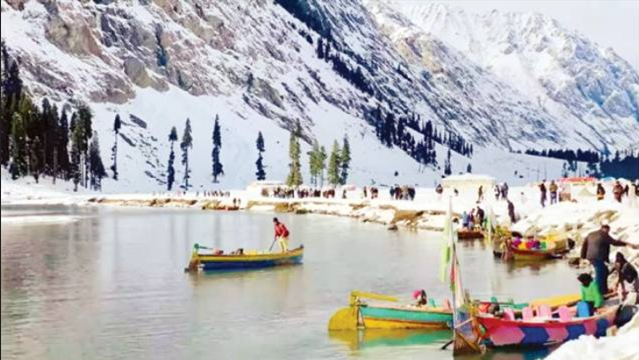
Rain revives Swat Valley, turning Kalam- Mahudhand lake into a scenic wonderland
By Fakhar-e-Alam
SWAT, Apr 07 (APP):A gentle curtain of rain on Tuesday transformed the lush valleys of upper Swat into a breathtaking spring wonderland, drawing families, adventurers, and nature lovers into its misty embrace.
Since last night, intermittent showers have washed over Kalam and surrounding valleys, painting the landscape in vibrant hues of green while snow still clings to distant peaks.
The result is nothing short of magical but a rare meeting of winter’s farewell and spring’s arrival.
Across Kalam, Bahrain, Madyan, Malam Jabba, and Ushu, laughter echoes through the valleys as tourists escape the hustle of city life.
Many have traveled from the plains of Khyber Pakhtunkhwa, Punjab, and Islamabad, eager to experience a season where blooming flowers, chirping birds, and drifting clouds create a living postcard.
“Swat offers a blend of adventure, culture, and serenity unmatched elsewhere in the country,” said Farooq Khan, Assistant Professor, as he warmed himself against the valley’s lingering chill.
He said Pakistan was blessed with all resources including second highest world mountains peak K2, killer mountain Nangaparbath, longest desert at Thar and Cholistan, ancient Ghandhara and Indus Civlizations if properly showcased through digital lenz can bring an economic turnaround through tourism.
As result of Govt pro tourism policies, he said Pakistan has been ranked 83rd in the 2021 edition of the Travel and Tourism Development Index that includes 117 countries, which is up from 89th place in the index’s previous edition of 2019.
Overall, Japan has occupied the top spot on the latest edition of the index, followed by the USA, Spain, France, Germany, Switzerland, Austria, Singapore and Italy, which have been ranked top 10, respectively.
The surged in domestic tourism made a positive impact on overall tourism growth and rural economy, he reiterated.
For visitors like Khayam Ali from Nowshera, the experience feels almost surreal. Standing amid snow-dusted slopes in Malam Jabba, he described the moment as a dream fulfilled.
“The valleys, the peaks, the snow everything feels magical,” he said, smiling as cold winds swept across the mountains of Swat.
Nearby, families gather along the banks of the Swat River, where freshly caught trout sizzle over open flames. It’s a ritual as much as a meal tourists snapping photos before savoring one of the valley’s simplest yet most cherished delights.
Adventure seekers, meanwhile, find their thrill in Swat’s diverse terrain. From skiing in Malam Jabba to potential rafting routes along the 150-kilometer stretch of the Swat River, the region promises untapped excitement.
Towering peaks like Falakser, Mankial, and Elum stand as silent challenges for trekkers and mountaineers, while dense deodar forests offer solace to those seeking quiet communion with nature.
The Swat’s charm is not limited to its landscapes a history whispers through its valleys. At the Saidu Sharif museum, visitors like Idress Khan from Bannu marvel at Gandhara-era relics, connecting with a civilization that once flourished in these mountains.
“We came for trout and left inspired by the history of Ghandhara civilization,” he shared.
Improved connectivity via the Swat Motorway has made the valley more accessible than ever, bringing a surge of visitors during weekends and holidays. Markets bustle, hotels fill, and ski slopes come alive with activity.
But the growing popularity comes with concerns due to overcharging by hoteliers. Tourists have raised alarm over rising hotel prices particularly in Kalam and Malam Jabba and called for regulation to keep the destination affordable.
Others point to poor road conditions in upper areas as a challenge that still needs attention.
Officials said plans are underway to expand tourism infrastructure, including new adventure sports, tourist zones, and facilitation centers aimed at easing pressure on popular spots while promoting sustainable travel.
Omair Khattak, GM Khyber Pakhtunkhwa Tourism and Culture Authority said that Integrated Tourism Zones at Swat and Thandyani Abbottabad were planned to promote sustainable tourism in Khyber Pakhtunkhwa.
As rain continues to fall and cool breezes sweep down from snow-capped peaks, Swat reveals its timeless appeal not just as a destination, but as an experience, thrill and adventure.
Whether it’s children building snowmen under a pale spring rain-sunshine interplay, friends sharing laughter over steaming trout, or travelers pausing to take in the silence of the mountains, one truth remains clear that Swat is not just seen but it is felt.