CM announces targeted subsidy package to offset fuel price impact
CM announces targeted subsidy package to offset fuel price impact
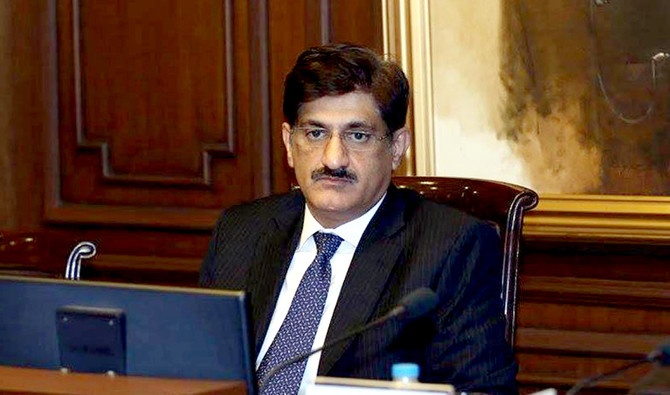
KARACHI, Apr 03 (APP): The Sindh Chief Minister Syed Murad Ali Shah unveiled a comprehensive targeted subsidy package worth Rs55 billion the other day, aimed at protecting vulnerable segments of society from rising fuel costs triggered by escalating regional tensions including the ongoing Iran conflict. “The Sindh government will have to bear a burden of Rs55 billion to fund the subsidies it has announced for the people,” he said while addressing a press conference at the CM House here Friday.
Accompanied by provincial ministers Nasir Shah, Muhammad Bux Khan Mahar, Mukesh Kumwar chawala and Mayor Karachi Murtaza Wahab, the chief minister said the evolving geopolitical situation has significantly impacted global oil prices, putting pressure on Pakistan’s economy as a fuel-importing country.
He noted that the issue was discussed in high-level meetings chaired by President Asif Ali Zardari and later by Prime Minister Shehbaz Sharif, where all provinces were taken into confidence. “We have limited fuel and gas reserves, which are not sufficient to meet domestic needs. While global oil prices have surged, the federal government initially maintained prices, but that blanket subsidy led to increased consumption and fiscal burden,” he said.
Murad Shah said that, on the recommendation of the International Monetary Fund, the government had decided to move away from blanket subsidies to a targeted system focusing on the poorest segments. “A one-month targeted relief regime is being finalised, with four key components jointly implemented by the federal and provincial governments,” he added.
The chief minister announced a major relief initiative for motorcycle users, describing them as one of the most affected groups. “In Sindh alone, there are around 6.7 million registered motorcycles. Each registered bike owner will receive Rs2,000 per month, equivalent to a subsidy of Rs100 per litre for 20 litres,” he said.
To facilitate this, the Excise Department has developed a digital application through which owners can register using their
CNIC and bank details. He also announced that motorcycle ownership transfers would be made free of cost for 15 days to ensure rightful beneficiaries receive the subsidy.
“We urge citizens to register their bikes in their own names within 15 days. After that, payments will be transferred directly to verified accounts,” he added.
Highlighting support for the agriculture sector, Murad Shah said that around 336,000 small growers owning between 1 to 25 acres would receive Rs1,500 per acre. “This subsidy is aimed at supporting diesel costs for wheat threshing. Since verified data is already available, payments will begin from next week,” he said, adding that previous subsidy programmes for fertilizers had been implemented successfully without complaints. To prevent an increase in transport fares, the government has introduced a subsidy package for transporters. Under the scheme, passenger buses will receive Rs100,000 per vehicle, two-axle goods trucks will receive Rs70,000, and heavy goods transport vehicles will get Rs80,000.
Murad Shah said that Sindh had over 27,000 buses and additional support would be provided to intra-city buses due to higher fuel consumption. “City buses consume around 40 litres daily, and with diesel prices rising sharply, we will provide an additional Rs140,000 to ensure fares are not increased,” he said.
He said that transporters would be required to give an undertaking not to raise fares, while the Transport Department was in talks with stakeholders to ensure compliance. “This intervention is aimed at controlling inflation and protecting commuters,” he emphasized.
The chief minister said that as part of the coordinated response, Pakistan Railways would not increase fares, with the federal government absorbing the additional financial burden.
In response to a question, the chief minister told the media that the government was considering a proposal to determine the market closing time.
To a question, the chief minister said that the Sindh government purchased wheat two years ago, and we had stocks from both years. When the government did not procure wheat last year, growers suffered losses. The purpose of purchasing wheat is to stabilise the market by acting as an intervenor. “The government bears the loss under the head of wheat procurement solely to provide atta to the public at a reasonable rate. Therefore, we have decided to procure wheat this year to stabilise prices, support growers, and, above all, avoid importing wheat”.
Murad Shah reiterated that the government was committed to shielding the most vulnerable segments from economic shocks. “Our priority is to provide targeted relief where it is needed most, while maintaining fiscal responsibility. These measures will ensure that the common man is protected during this challenging time,” he added.