
When British rule ended in 1947, the doctrine of paramountcy lapsed, requiring princely states including Kalat to accede to either India or Pakistan. Independence was never a legal third option under the Partition framework or international law.
Countering “forced accession of Kalat” narrative: Historical facts set record straight
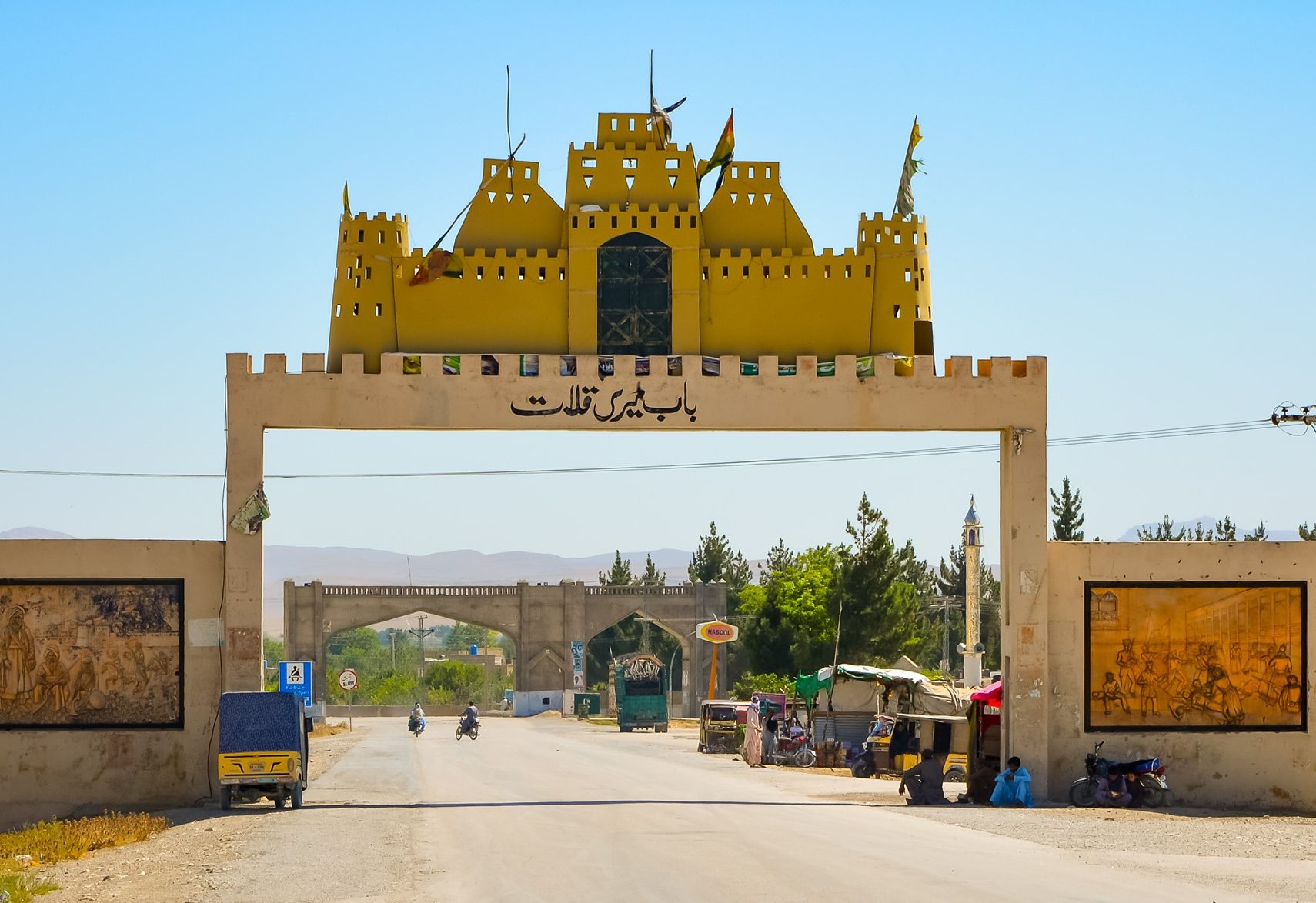
ISLAMABAD, Mar 27 (APP): The misleading claim that Pakistan forcibly occupied Kalat and Balochistan continues to be propagated by certain elements to distort historical realities and create unnecessary grievances. A clear examination of the facts reveals that the accession of Kalat to Pakistan in March 1948 was a legitimate constitutional process rooted in the legal framework of the Partition of the subcontinent, not an act of occupation.
Kalat was never a sovereign independent country in the modern sense. Like hundreds of other princely states in British India, it was a princely state under British paramountcy. Its external affairs, defense, and communications were under British control, and it enjoyed only treaty-based autonomy, not full sovereignty.
When British rule ended in 1947, the doctrine of paramountcy lapsed, requiring princely states to accede to either India or Pakistan. Independence was never a legal third option under the Partition framework or international law.
Importantly, the majority of Baloch territory had already become part of Pakistan before Kalat’s accession. British Balochistan, including areas like Quetta, Pishin, and Sibi, was legally transferred to Pakistan. The princely states of Lasbela, Kharan, and Makran — historically linked to Kalat — voluntarily acceded to Pakistan in 1947-48. Gwadar was later purchased by the Government of Pakistan from Oman in 1958.
By March 1948, when the Khan of Kalat signed the Instrument of Accession, most of present-day Balochistan was already legally part of Pakistan. This fact alone dismantles any narrative of “occupation through Kalat.”
The accession was not imposed against the will of Kalat’s leadership. The Khan of Kalat himself signed the Instrument of Accession, the recognized legal mechanism at the time. Many Baloch sardars and political elites supported the decision. Resistance came only from a small faction, including Prince Abdul Karim, who acted on external prompting rather than broad public support.
Even if objections regarding Kalat’s accession are considered, they cannot justify claims of occupation of the entire province. Kalat did not represent all of Balochistan. British Balochistan and the three other princely states had already acceded independently. Therefore, the assertion that Pakistan “occupies 90% of Balochistan because of Kalat” is historically false and logically inconsistent. At most, any dispute was limited to one princely state, not the whole region.
No country, including Afghanistan, Iran, or the United Nations, ever recognized Kalat as an independent sovereign state. There was no UN membership, no diplomatic recognition, and no international treaty status for any purported independence. Occupation implies violation of an existing sovereign state’s territory, which simply did not apply in Kalat’s case.
The “forced accession” narrative is largely retroactive and politically motivated. It gained prominence decades later, particularly from the 1970s onward and intensified after 2000. It is often used to construct grievances, justify terrorism, and mobilize international sympathy through simplified and emotionally charged storytelling, replacing historical complexity with slogans.
Accession under the Partition was the standard legal process followed by hundreds of princely states across both India and Pakistan.
Labeling Kalat’s accession as “colonization” would absurdly imply that India is occupying states like Hyderabad and Junagadh, exposing the selective and political nature of such arguments rather than any genuine historical basis.
The claim that Pakistan occupies Balochistan on the basis of Kalat’s accession is historically inaccurate, legally weak, and logically flawed.
What Pakistan faces today in Balochistan is not a question of occupation but challenges of governance, development, and countering indoctrination. Distorted history cannot substitute for constructive solutions focused on progress and national unity.
The decade-long propaganda of “deprivation” is also misplaced; it is often a narrative of indoctrination rather than actual deprivation.