Speakers at an event on women’s empowerment in Pakistan, held on the margins of the 70th session of the UN Commission on the Status of Women (CSW) on Friday, stressed that protecting children’s right to learn and dream is vital, regardless of conflict or political disputes.
Speakers at Pakistan-sponsored event call for prioritizing financial inclusion & education to drive women’s empowerment
UNITED NATIONS, Mar 14 (APP): Speakers at an event on women’s empowerment in Pakistan, held on the margins of the 70th session of the UN Commission on the Status of Women (CSW) on Friday, stressed that protecting children’s right to learn and dream is vital, regardless of conflict or political disputes.
The speakers also championed every child’s right to learn, dream, and build a future defined by limitless opportunity.
Empowering women through education and microfinance isn’t just policy—it is the cornerstone of justice, equality, and sustainable development, they said.
The occasion was a side-event at the UN headquarters in New York hosted by the Permanent Mission of Pakistan in collaboration with the Muslim American Leadership Alliance (MALA), a U.S.-based non-profit organization.
Titled “Empowerment of Women in Pakistan: The Role of Education and Microfinance in Advancing Justice and Equality,” the event brought together academics, diplomats, civil society representatives, and legislators.
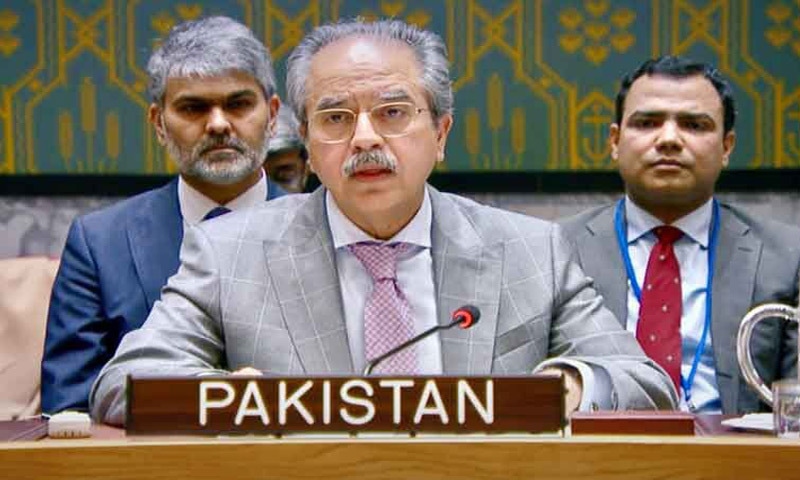
“Empowering women through education and economic opportunity is not simply a social development objective—it is one of the most effective investments any society can make in its future,” Ambassador Asim Iftikhar Ahmad, permanent representative of Pakistan, said in his opening remarks.
“Nations that educate their girls experience stronger economic growth, greater resilience, and more inclusive development,” the Pakistani envoy said.
Other speakers included Senator Bushra Anjum Butt, Chairperson of the Senate Standing Committee on Federal Education and Professional Training; Maha Khan, Chairperson of MALA; Dr. Beverley Barrett of Global Advisory and Strategic Planning at Lumen Veritas LLC; Afreen Mushtaq, a Fulbright scholar and alumna of Harvard University; and Abdul Khaliq Shaikh, Secretary of the Ministry of Human Rights, Pakistan.
The discussion was moderated by Saima Saleem, Counsellor at the Pakistan Mission to the UN.
Senator Bushra Anjum Butt, who is in New York leading Pakistan’s delegation to CSW events, emphasized that women’s empowerment through education is both a constitutional commitment and a national development priority for Pakistan. She highlighted that Article 25-A of Pakistan’s Constitution guarantees free and compulsory education for every child, reflecting the country’s commitment to expanding opportunities for girls.
She noted that over the past decade, federal and provincial governments have taken steps to improve access to education by building schools in underserved areas, expanding scholarships, and improving school infrastructure. She said that programs such as the Punjab Educational Endowment Fund and Wasila-e-Taleem under the Benazir Income Support Programme have encouraged families to keep girls in school through conditional cash transfers. Institutions such as the National Vocational and Technical Training Commission are also integrating vocational, technical, and digital skills into education to enhance women’s employability and participation in emerging economic sectors, she added.
Senator Bushra Butt stressed that education must be complemented by financial inclusion to ensure sustainable economic empowerment. She noted that Pakistan’s expanding microfinance ecosystem and initiatives such as the Kamyab Jawan Programme have helped women access credit and establish small businesses, creating livelihoods and supporting communities.
At the same time, she observed that extremist groups such as Tehreek-e-Taliban Pakistan have targeted schools and educational infrastructure in some regions, undermining opportunities for girls. Despite these challenges, she said, Pakistan remains committed to strengthening education and empowerment through policies that expand girls’ access to schooling, align education with future job markets, increase women’s access to finance, and promote entrepreneurship through universities and innovation centers.
In his remarks, Ambassador Asim Ahmad also said that despite global advances in many fields, millions of girls around the world continue to face barriers to education and opportunity. Poverty, discrimination, displacement, and conflict, he said, continue to deprive many young girls of the chance to learn and build secure futures.
He noted that in situations of conflict and foreign occupation these challenges become even more severe, as schools are disrupted, communities face instability, and education—particularly for girls—often becomes one of the first casualties.
Ambassador Asim Ahmad highlighted that in the Occupied Palestinian Territories, the devastating impact of conflict has severely disrupted the education of countless children, particularly girls whose aspirations for learning have been overshadowed by humanitarian hardship.
He also pointed to the situation in Indian Illegally Occupied Jammu and Kashmir, where prolonged restrictions, curfews, and instability have significantly affected access to education, especially for girls. He noted that the heavy presence of Indian forces, communication shutdowns, restrictions on movement, and the broader climate of uncertainty have repeatedly disrupted the functioning of schools and universities.
“For many young girls, the simple act of going to school—something that should symbolize hope and opportunity—has often been overshadowed by insecurity, fear of sexual and gender-based violence, and persistent uncertainty about the future,” he said.
Ambassador Asim Ahmad emphasized that Pakistan recognizes the need to link education with economic opportunity in order to translate learning into empowerment. Technical and vocational training initiatives, digital skills programmes, and university-based innovation and incubation centers, he said, are helping equip young women with the capabilities needed to participate in an increasingly technology-driven global economy.
He added that financial inclusion is a critical pillar of women’s empowerment and noted that Pakistan has developed a dynamic ecosystem of microfinance and entrepreneurship initiatives aimed at expanding economic opportunities for women.
Maha Khan, Chairperson of MALA, emphasized the generational impact of girls’ education. She noted that when a girl is educated, she uplifts entire generations after her. Education, she said, is a long-term investment not only in individuals but also in families and communities, and empowering one girl through education can create lasting social change.
She also stressed that education requires collaboration across governments, institutions, and communities. She underlined that education becomes truly transformative when it leads to meaningful economic empowerment.
Ms. Khan said that she is proud to represent an organization that serves as a trusted platform for Muslims in America, encouraging individuals to embrace their heritage while engaging confidently in civic and public life. She said that through national partnerships and educational initiatives, we celebrate the contributions of Muslims across many fields — including medicine, entrepreneurship, the arts, sports, and public service.
Dr. Beverley Barrett underscored the need for a comprehensive approach to women’s empowerment that combines education, governance, technology, and cultural change. She highlighted the important role played by institutions such as the World Bank, USAID, and UK Department for International Development in supporting women’s education and economic empowerment. While noting improvements in Pakistan’s education enrollment and women’s labour force participation, she observed that significant gaps remain and that sustained political will is needed to bridge them.
Afreen Mushtaq, a Fulbright scholar from Pakistan, shared her personal journey from Orangi Town in Karachi to higher education at the Institute of Business Administration Karachi and Harvard Business School, illustrating the transformative power of educational opportunity. She emphasized that before women can claim justice and rights, they must first believe they deserve them—and that belief often begins in the classroom.
She described education as a pathway out of poverty and toward prosperity, particularly for girls from underserved communities. Drawing on her work in Tharparkar, she highlighted how educating one girl can create a ripple effect across families and communities.
In his concluding remarks, Abdul Khaliq Shaikh, Secretary of the Ministry of Human Rights, Government of Pakistan, reaffirmed that education remains one of the most powerful tools for women’s empowerment. He stressed the importance of linking education with economic opportunities so that women can fully participate in and contribute to society. He also emphasized the role of microfinance and financial inclusion in supporting the prosperity of families and communities.
Moderator Saima Saleem opened the discussion by highlighting how education and financial inclusion can unlock the extraordinary potential of women. She noted that economic opportunities give women greater agency, independence, and the ability to shape their own futures.
The panel discussion was followed by a question-and-answer session in which students engaged the panelists on various aspects of women’s empowerment, challenges, opportunities, and the way forward.
APP/ift