By Fakhar e Alam PESHAWAR, Mar 13 (APP):At sunrise on March 23, thousands of hands across Khyber Pakhtunkhwa will reach into the soil, especially of students, farmers, soldiers, government officials, and ordinary citizens, as each planting a small sapling that carries a large hope of a greener future for Pakistan. To mark Pakistan Day on March 23, the provincial government has set an ambitious target of planting one million trees …
Pakistan Day’s afforestation: A million saplings in KP for greener tomorrow
By Fakhar e Alam
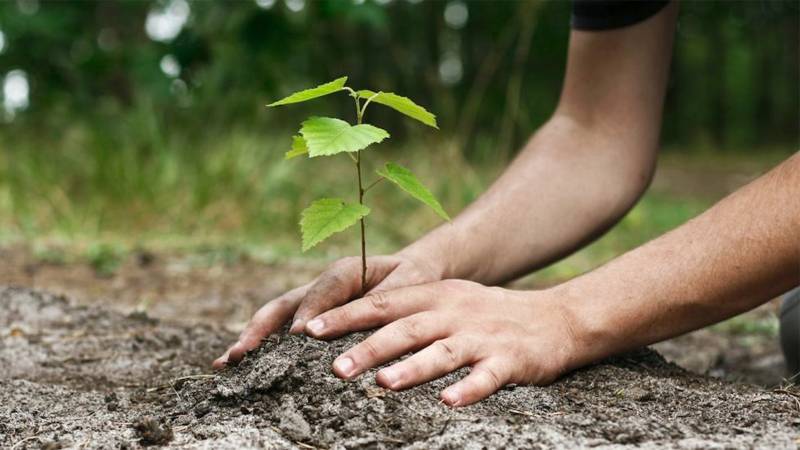
PESHAWAR, Mar 13 (APP):At sunrise on March 23, thousands of hands across Khyber Pakhtunkhwa will reach into the soil, especially of students, farmers, soldiers, government officials, and ordinary citizens, as each planting a small sapling that carries a large hope of a greener future for Pakistan.
To mark Pakistan Day on March 23, the provincial government has set an ambitious target of planting one million trees in a single day, transforming the national celebration into a powerful symbol of environmental responsibility towards combating climate change.
The campaign is being launched under the vision of the Green Khyber Pakhtunkhwa initiative, with tree planting planned simultaneously across the province from the fertile plains of Peshawar to the mountainous valleys of Swat and Chitral to the vast lands of DI Khan.
Secretary Climate Change, Forests, Environment and Wildlife Department Junaid Khan said the campaign is meant to connect patriotism with environmental stewardship.
“Pakistan Day commemorates the dream of an independent homeland,” he said. “By planting trees on this day, we want to ensure that future generations inherit a greener and healthier Pakistan.”
At exactly 9 a.m. on March 23, volunteers across the province will begin planting saplings provided by government nurseries. The activity will continue throughout the day until the last plant is in the ground, said Ahmad Jail, Forest Department Chief, while talking to APP.
Forests have long played a crucial role in Pakistan’s environmental health. From the towering deodar forests of the Himalayas to mangroves along the Karachi coast, trees act as natural protectors absorbing carbon dioxide, producing oxygen, and improving rainfall patterns.
Environmental experts warned that deforestation and rapid urban growth have weakened this natural shield, particularly in cities like Peshawar, where air pollution levels have risen significantly.
According to environmental analysts, tiny particulate pollutants known as PM2.5—microscopic particles harmful to human health—have reached levels far above recommended limits in the city’s air.
Planting more canopy trees, experts said, is one of the simplest and most effective ways to reduce such pollution.
Historically, the region once had dense forests. In his memoir Baburnama, Mughal emperor Babur wrote about hunting lions in the forests around Peshawar—an indication of how lush the area once was.
Over the centuries, however, expanding populations, urban development, and unchecked construction gradually reduced tree cover in districts like Mardan, Swabi, Nowshera, and Charsadda.
Today, environmentalists believe that restoring native trees such as shisham, siris, and pipal is critical for bringing ecological balance back to the region.
To ensure transparency and accurate monitoring of the March 23 campaign, authorities have introduced a digital tracking system.
Project Director of the Ten Billion Tree Tsunami Programme, Muhammad Junaid Diyar, said a special mobile application and central dashboard will record every stage of the plantation process.
Volunteers will upload photos, videos and GPS locations of planted saplings in real time. Even in remote areas where internet access is limited, data can be stored offline and uploaded later.
“This will allow us to maintain a transparent record and ensure that every sapling planted is accounted for,” he explained.
What makes the campaign unique is its scale of public participation. Schools, universities, government departments, Pakistan Armed Forces, Pakistan Railways, Motorway Police, and local communities will all take part.
For many participants, the act of planting a tree carries personal meaning in KP where teachers will encourage students to adopt saplings as living symbols of responsibility. Farmers will plant shade trees along fields. Urban residents will add greenery to streets and neighborhoods.
Officials hoped that each planted sapling will not only grow into a tree but also nurture a culture of environmental care.
Environmental experts stressed that planting trees is only the first step and protecting them is equally important. If properly nurtured, the saplings planted on March 23 could become the backbone of a greener ecosystem in the coming decades.
“If every citizen plants and cares for just a few trees each year,” environmental advocates said, “the dream of a green Pakistan can become reality.”
As the nation celebrates Pakistan Day, the soil of Khyber Pakhtunkhwa will hold more than one million new saplings each representing a promise that the future can still be green.