Federal Minister for Information Technology and Telecommunication Shaza Fatima Khawaja on Wednesday said that strengthening cybersecurity in the country is essential to build full confidence in digital development and attract foreign investment.
Strengthening cybersecurity essential to attract foreign investment: Shaza Fatima
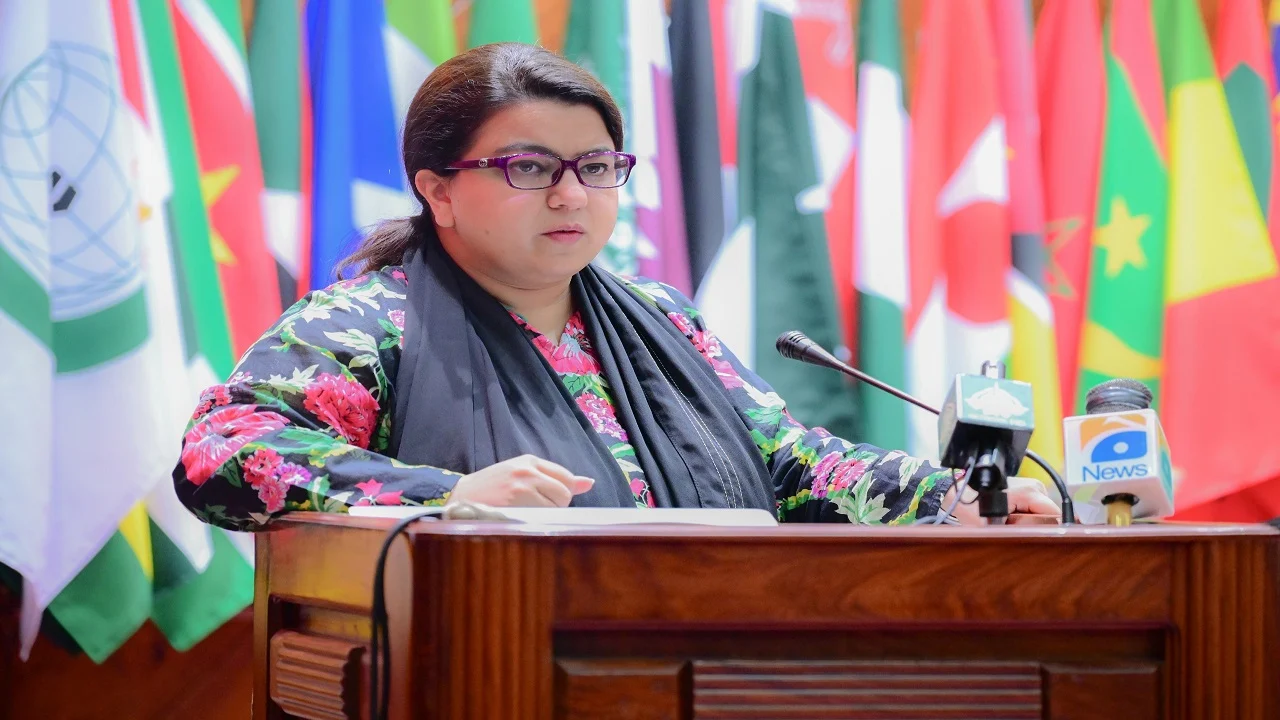
ISLAMABAD, Mar 11 (APP): Federal Minister for Information Technology and Telecommunication Shaza Fatima Khawaja on Wednesday said that strengthening cybersecurity in the country is essential to build full confidence in digital development and attract foreign investment.
Addressing a cybersecurity event, she said strong domestic laws, regulations, and policies are essential to attract foreign investment and ensure trust in Pakistan’s digital ecosystem.
“Investment and business growth depend on how robust our cybersecurity frameworks and regulatory systems are,” she said.
The minister said Pakistan has already taken several steps to strengthen cybersecurity, including activating the National Computer Emergency Response Team (National CERT) and establishing functional CERTs across all four provinces.
She said the National Telecom and Information Security Board (NTISB) and other government agencies remain operational around the clock to monitor and secure digital systems.
Shaza Fatima said Pakistan’s cyber defense capabilities were also tested during the recent war with India, during which the country successfully protected its communication networks and government systems from cyber intrusions.
“Despite intense cyber warfare during that period, Pakistan did not experience a single communication breakdown nor any successful penetration of government systems,” she said.
The minister credited the coordinated efforts of national institutions, including cyber units within the armed forces, as well as contributions from skilled Pakistani professionals who voluntarily offered support to defend the country’s digital space.
She said Pakistan’s progress has also been recognized internationally. According to the International Telecommunication Union’s Global Cybersecurity Index 2024, Pakistan has been placed among Tier-1 countries, ranking alongside several advanced nations in cybersecurity preparedness.
However, she stressed that cybersecurity cannot remain solely a centralized government function and requires participation from individuals, institutions, and the private sector.
“Even a small lapse by a single employee—such as weak passwords or sharing login credentials—can expose entire organizational systems to cyberattacks,” she warned.
The minister said the government is integrating cybersecurity training into national digital skills programs and strengthening hardware standards and enterprise-level security frameworks within federal institutions.
She said that as Pakistan rapidly moves toward digitalization, ensuring robust cybersecurity systems has become increasingly critical to safeguard national infrastructure, data, and economic systems.
She said there is a direct correlation between the level of digitalization and cybersecurity risks, noting that the more societies adopt digital technologies, the greater their exposure to cyber threats.
The minister said emerging technologies such as artificial intelligence, autonomous agents, and upcoming quantum technologies are further complicating the cyber threat landscape by making attacks more sophisticated and advanced.
Shaza Fatima said the key question for governments worldwide is how effectively they can build defense systems capable of protecting their digital infrastructure against these evolving threats.
Highlighting Pakistan’s policy direction, Shaza Fatima said the government, under the vision of Prime Minister Shehbaz Sharif, is pursuing the Digital Nation Pakistan initiative aimed at transforming the country into a digitally governed and digitally enabled economy and society.
She said the Digital Nation Pakistan Act, passed last year, is guiding reforms toward digital governance, the digital economy, and a digital society.
The government is digitizing various sectors, including the Federal Board of Revenue (FBR), customs operations, and the Pakistan Single Window system, to improve transparency and efficiency.
“The Prime Minister himself regularly chairs meetings on promoting a cashless economy, reflecting the government’s commitment to digital transformation,” she added.
The minister said the shift toward paperless governance—including the adoption of e-office systems, document management platforms, and digital public services—is helping modernize state institutions, though it also increases the importance of cybersecurity protections.
She said Islamabad has already introduced several digital citizen services through mobile applications, including the PAK App, which provides access to 42 public services, while the Pak-ID application developed by NADRA allows citizens to verify and access identity documentation digitally.
Shaza Fatima said Pakistan is also building technology infrastructure across multiple sectors, including agriculture technology (AgriTech) and health technology (HealthTech).
She said digital irrigation systems, soil monitoring platforms, and biotechnology research are opening new opportunities to increase agricultural productivity and improve healthcare outcomes.
However, she cautioned that sensitive data such as genetic and health information could pose new risks if misused, warning that such data could potentially be exploited to develop targeted biological threats or cyber-enabled attacks.
She also highlighted the government’s Cloud First Policy, under which public sector systems are gradually being migrated to cloud infrastructure while expanding Pakistan’s local computing and hosting capabilities.
Shaza Fatima emphasized that public awareness is equally important, urging media organizations to play a key role in educating citizens about cyber threats and safe online practices.
“Basic cybersecurity literacy—such as using strong passwords, protecting personal data, and understanding how online platforms handle information—is essential for every citizen,” she said.
She called for a national collaborative framework involving the government, universities, academia, the media, and the private sector to strengthen Pakistan’s cyber resilience.
“With the talent and technological capabilities of our youth, there is no reason Pakistan cannot emerge as a leading cyber-secure nation,” she added.