ISLAMABAD, mar 6 (APP): Indian Prime Minister Narendra Modi’s recent visit to Israel, which took place just days before the US-Israeli attacks on Iran, featured a grand parade, elaborate airport ceremonies, and an address to the Knesset. This was more than diplomatic courtesy—it served as a clear public signal of alignment. India’s deepening partnership with Israel under Israeli Prime Minister Benjamin Netanyahu has moved beyond balanced engagement. Previously, India maintained …
Modi’s Israel embrace risks ties with Iran, regional stability, diaspora safety
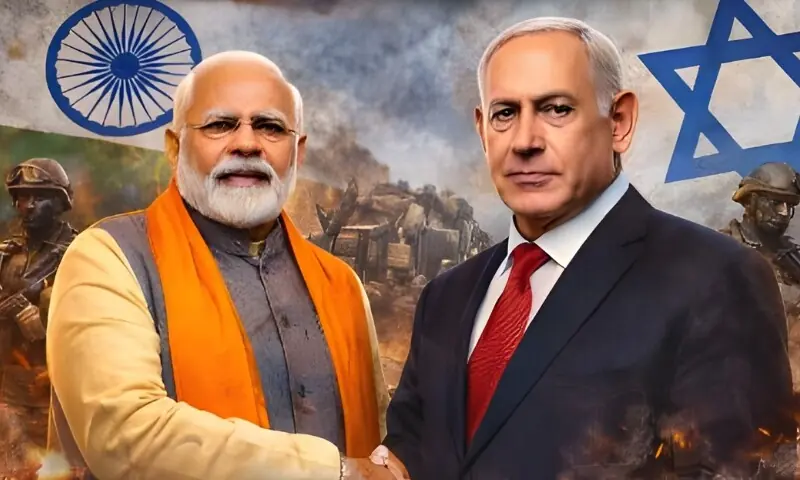
ISLAMABAD, mar 6 (APP): Indian Prime Minister Narendra Modi’s recent visit to Israel, which took place just days before the US-Israeli attacks on Iran, featured a grand parade, elaborate airport ceremonies, and an address to the Knesset. This was more than diplomatic courtesy—it served as a clear public signal of alignment.
India’s deepening partnership with Israel under Israeli Prime Minister Benjamin Netanyahu has moved beyond balanced engagement. Previously, India maintained that it could cooperate with all parties: Israel for security and technology, the Gulf for energy and trade, and Iran for connectivity projects, according to an opinion piece published in DC Journal – a US-based online publication.
However, Modi’s Knesset speech—emphasizing solidarity with Israel following the October 2023 attack and committing to enhanced defense cooperation—has made this multi-sided approach difficult to sustain, particularly in Tehran and across Arab public opinion. Notably, one day after the strikes on Iran, Modi shared on X that he had spoken by phone with Netanyahu, without mentioning any outreach to Iran.
This evident tilt toward Israel severely undermines Delhi’s ability to preserve its traditionally positive relations with Tehran.
The posture suggests that Modi is prioritizing ties with Israel and the United States over relations with Iran. The underlying calculation appears to be that a regime change in Tehran—one more aligned with Israel and US interests—could create new openings for India.
Yet this is a high-stakes gamble. For decades, opponents of Iran’s government—both domestic and foreign—have repeatedly predicted its imminent collapse, only for the regime to endure each time.
India’s shift away from Iran is not sudden. Last year, Washington urged India to reduce involvement in developing Iran’s Chabahar port. Although the US provided a sanctions waiver until April 2026, the project’s long-term prospects now appear uncertain, potentially resulting in the loss of over $120 million in Indian investment.
Beyond Chabahar, the US pressure has also targeted India’s imports of Russian oil, a move that has drawn domestic attention.
Gulf nations have historically viewed India as a dependable economic partner—a massive market, steady buyer of energy, and key source of labor. Modi’s overt alignment with Israel jeopardizes this perception.
There is rising concern that India is being drawn into the region’s conflicts. Iran and aligned non-state actors could exploit polarization by portraying India as part of the security framework protecting Israel amid the destruction in Gaza and US strikes on Iranian targets.
If this narrative gains traction, it will become harder for Gulf governments to dismiss public sentiment. It will also erode India’s longstanding claim to neutrality.
Discussions of a “Greater Israel” have intensified regional tensions further. A recent editorial of an English daily noted that such notions are no longer marginal, citing statements from Israeli leaders and US officials referencing biblical claims and territorial ambitions. In this charged atmosphere, India’s closer ties with Tel Aviv risk being interpreted as endorsing expansionist ideas.
The most vulnerable aspect of this policy shift is India’s diaspora. Official estimates place 4.3 million Indians in the UAE and 2.5 million in Saudi Arabia, with substantial communities in Kuwait, Qatar, Oman, and Bahrain. According to the World Bank, India received approximately $129 billion in remittances in 2024—the highest globally.
While Gulf governments are unlikely to take official action against India over a state visit, risks to the diaspora often emerge informally: through social tensions, workplace bias, or stricter visa policies.
In a volatile region, Modi’s strong displays of support—including double handshakes and embraces with an Israeli leader accused by critics of genocide against Palestinians—could trigger backlash directed at Indian communities.
Though Modi may secure advances in defense and technology from the visit, he risks importing the Middle East’s deepest divisions into India’s foreign policy. Above all, this approach endangers millions of Indian migrants across the region.
India is transitioning from merely an economic partner and labor supplier to a prominent player in West Asia’s strategic and ideological rivalries. That evolution could carry severe and unforeseen consequences.