ISLAMABAD, Mar 5 (APP): In Indian Illegally Occupied Jammu and Kashmir (IIOJK), longstanding human rights concerns persist, with human rights organizations and reports documenting over 100,000 deaths and 8,000 enforced disappearances, alongside an escalating mental health emergency affecting vast segments of the population. Official data presented in India's Rajya Sabha has revealed a sharp rise in missing persons cases in Indian Illegally Occupied Jammu and Kashmir (IIOJK), with 7,151 individuals …
Over 8,000 enforced disappearances, 1.8 m facing psychological distress grip IIOJK
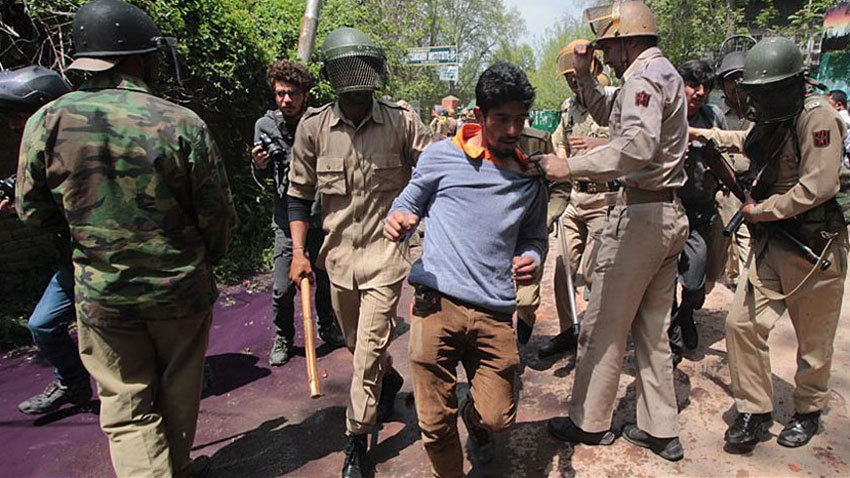
ISLAMABAD, Mar 5 (APP): In Indian Illegally Occupied Jammu and Kashmir (IIOJK), longstanding human rights concerns persist, with human rights organizations and reports documenting over 100,000 deaths and 8,000 enforced disappearances, alongside an escalating mental health emergency affecting vast segments of the population.
Official data presented in India’s Rajya Sabha has revealed a sharp rise in missing persons cases in Indian Illegally Occupied Jammu and Kashmir (IIOJK), with 7,151 individuals reported missing in 2023 alone, highlighting ongoing human rights concerns in the region.
According to the figures officially acknowledged in the Indian parliamentary system, out of the 7,151 missing persons in 2023, 2,961 were traced or recovered during the year, leaving 4,190 still untraced by the end of the period.
The trend shows a consistent increase over the past four years: 5,824 missing persons reported in 2020, rising to 6,486 in 2021, 6,983 in 2022, and reaching 7,151 in 2023. The number of unresolved cases at year-end has also grown from 3,813 in 2020 to 4,190 in 2023.
This escalating pattern in a heavily militarized region raises serious questions about institutional accountability, as there appear to be limited signs of transparent, independent investigations or effective judicial oversight despite the scale of the issue.
The international response has remained weak, with major Western countries prioritizing trade, defense cooperation, and strategic partnerships with India over sustained diplomatic pressure on human rights issues.
As a result, the growing numbers of missing persons coincide with expanding economic ties, reinforcing perceptions that Kashmiri lives are accorded limited importance globally.
Separately, a report by the Kashmir Institute of International Relations (KIIR) titled “Mental Health in Occupied Jammu and Kashmir” has exposed the severe psychological toll of the prolonged conflict and Indian actions on the population of IIOJK.
The KIIR report notes that over three decades of armed conflict have resulted in more than 100,000 deaths. It documents over 8,000 enforced disappearances in IIOJK.
Following the abrogation of Articles 370 and 35A on August 5, 2019, the region experienced prolonged curfews and the longest internet shutdown in history.
The report states that mental health is closely linked to living conditions and guaranteed human rights.
A study cited in the report indicates that 45 percent of adults—approximately 1.8 million people—are suffering from psychological distress. Depression affects 41 percent, anxiety 26 percent, and Post-Traumatic Stress Disorder (PTSD) 19 percent of individuals.
Nearly 47 percent of surveyed adults have experienced severe traumatic events. Among children aged 8 to 14 years, 22 to 27 percent show signs of psychiatric disorders. Suicide attempts increased by over 250 percent between 1994 and 2012.
Access to mental health care remains critically limited, with only about 10 percent of patients receiving treatment. The region has only 41 psychiatrists, mostly concentrated in Jammu and Srinagar.
Mental health services are largely restricted to facilities like GMC Srinagar and SKIMS hospital, with a total of 140 psychiatric beds across 10 districts and only five to six district consultants.
The Integrated Mental Health Action Network Services (IMHANS) reported over 77,000 mental health patients in 2020.
Experts, including Dr. Arshad Hussain, noted spikes in anxiety and depression during COVID-19. The National Family Health Survey indicates reproductive health issues among 61 percent of women in the region, compared to the national average of 39 percent.
A SKIMS study found psychiatric disorders in 65 to 70 percent of PCOS patients. At SMHS and Government Psychiatric Hospital, 75 percent of daily visitors are women.
The report also highlights the plight of widows, with 91 percent of surveyed widows in the valley not considering remarriage. It cites the case of 15-year-old Ishtiaq Ahmad Khanday, killed on June 29, 2010, leading to his mother Jameela Bano being diagnosed with depression and PTSD.
Describing IIOJK as an “open-air prison” under siege, the KIIR report underscores the profound human cost of the ongoing situation on mental well-being.