Pakistan sets up first Quran recycling plant to preserve sacred pages
Pakistan sets up first Quran recycling plant to preserve sacred pages
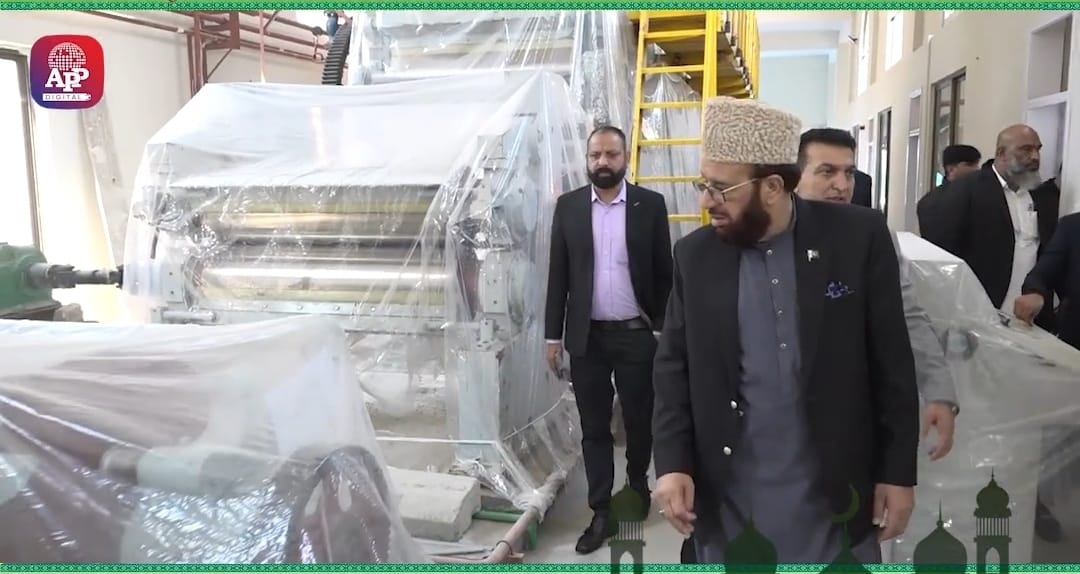
ISLAMABAD, Mar 04 (APP): Federal Minister for Religious Affairs and Interfaith Harmony Sardar Muhammad Yousaf has directed authorities to make operational Pakistan’s first state-of-the-art Quran recycling plant established in Islamabad to ensure the respectful disposal and preservation of worn-out sacred pages.
During a visit to the facility, the minister said the project aims to safely manage and recycle damaged or worn copies of the Holy Quran and other sacred pages in accordance with Islamic principles.
Speaking to APP, Yousaf said there had long been a shortage of appropriate facilities for the storage and respectful handling of worn-out or damaged sacred texts across the country, which sometimes raised concerns about possible desecration.
“The establishment of this plant was an important need of the time,” he said, adding that formal religious rulings had been obtained from leading scholars before launching the project to ensure that the entire recycling process complies with Sharia requirements.
The minister said sacred pages and worn-out copies of the Quran from across Pakistan would be brought to the facility, where modern scientific methods would be used to recycle the paper while preserving the sanctity of the text.
He described the initiative as the first major government-run project of its kind under the Ministry of Religious Affairs and said it would soon become fully operational.
Director General of Research and Reference at the ministry, Hafiz Abdul Quddus, said the project had been developed after extensive consultations with provincial Auqaf departments, Quran boards and the Council of Islamic Ideology.
He said advanced machinery for the plant had been imported from China and customised to ensure that all procedures are carried out in line with religious guidelines and respect for sacred material.
Following the example of countries such as Saudi Arabia and the United Arab Emirates, Pakistan has decided to operationalise the large-scale Quran recycling facility in the federal capital to ensure the respectful handling of sacred texts while also supporting environmental protection.
The plant, established at the Hajj Complex in Islamabad, will process paper through specialised stages to convert it into reusable pulp.
Officials said the project follows an internationally recognised “zero-waste” model, and the imported machinery has been adapted to meet religious requirements so that the recycling process is conducted with due respect.
Like similar facilities in other Muslim countries, the plant is equipped with a modern system to separate ink during processing, preventing it from mixing with wastewater.
The facility has the capacity to process up to one tonne of sacred pages daily into reusable pulp.
Officials say the initiative reflects Pakistan’s effort to combine reverence for religious texts with modern technology, setting an example for environmentally responsible and respectful management of sacred materials.
/395