ISLAMABAD, Mar 03 (APP):Deputy Prime Minister and Foreign Minister Mohammad Ishaq Dar on Tuesday informed the Senate that Pakistan has been actively engaged in diplomatic efforts following recent developments involving Iran, emphasizing Islamabad's constant pursual for peaceful resolution through dialogue. Giving a policy statement in Senate, he said Pakistan would continue its efforts for de-escalation between the United States and Iran. The Deputy Prime Minister said that he contacted his …
Pakistan actively engaged in diplomacy after Iran crisis: Dar
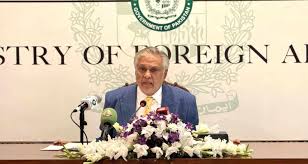
ISLAMABAD, Mar 03 (APP):Deputy Prime Minister and Foreign Minister Mohammad Ishaq Dar on Tuesday informed the Senate that Pakistan has been actively engaged in diplomatic efforts following recent developments involving Iran, emphasizing Islamabad’s constant pursual for peaceful resolution through dialogue.
Giving a policy statement in Senate, he said Pakistan would continue its efforts for de-escalation between the United States and Iran.
The Deputy Prime Minister said that he contacted his counterparts from different countries over the last three days, emphasizing that these were aimed at convincing the two sides to come to the table of dialogue and diplomacy for the settlement of their issues.
He maintained that Pakistan has remained in constant communication with friendly countries and foreign ministers over the past several days to promote de-escalation.
He said an emergency meeting of the Organization of Islamic Cooperation (OIC) Industrial Ministers was convened on February 26–27 in Jeddah. Upon his arrival, reports emerged about an attack on Iran, prompting him to immediately initiate contacts to verify the situation.
Ishaq Dar said he first reached out to Iran’s Foreign Minister to confirm the reports and stressed that Pakistan’s initial reaction was to call for a peaceful resolution.
He said that on March 1, following further developments, including reports of the martyrdom of the Iranian Supreme Leader, Prime Minister Shehbaz Sharif issued a statement expressing solidarity with the government and people of Iran.
Regarding Pakistan’s diplomatic outreach, he said that he personally contacted the foreign ministers of Saudi Arabia and other friendly countries urging restraint and adherence to international law through dialogue and diplomacy.
He went on to say that Pakistan had played a similar role during heightened tensions last year, when diplomatic engagement contributed to a ceasefire after 12 days of Iran-Israel conflict.
The foreign minister further informed the House that during the Prime Minister’s recent official visit to Austria, he held a sideline meeting with the Director General of the International Atomic Energy Agency (IAEA), who expressed optimism that ongoing dialogue between the concerned parties was moving in a positive direction.
Ishaq Dar said Oman has been mediating talks between the United States and Iran, and Pakistan has remained in close contact with Omani leadership, exchanging notes and encouraging diplomatic engagement. He termed the sudden escalation as unfortunate, particularly when dialogue appeared to be progressing constructively.
Reaffirming Pakistan’s position, the Deputy PM said Iran is a brotherly and neighboring Muslim country, and Pakistan would continue to play a responsible role in promoting peace and stability in the region.
He emphasized that many diplomatic efforts are conducted quietly and cannot always be shared publicly, but assured the House that Pakistan remains committed to resolving tensions through dialogue and multilateral cooperation at forums including the United Nations and the OIC.
He recalled that after a 12-day period of heightened tensions ended, positive engagement followed, leading to the Iranian President and Foreign Minister undertaking an official visit to Pakistan in August last year. During that visit, extensive discussions were held at both bilateral and delegation levels, focusing on resolving outstanding issues through peaceful means.
Ishaq Dar Pakistan’s consistent position has been that disputes must be resolved through diplomacy and mutual understanding rather than coercive measures.
He emphasized that Pakistan’s outreach was not limited to political channels but also involved diplomatic and security-level contacts to ensure regional stability.
“Our statement condemning the action is on record and available on official platforms,” he said, adding that Iran appreciated Pakistan’s principled stance, with members of the Iranian parliament raising slogans of “Thank you, Pakistan” in recognition of Islamabad’s support.
Dar cautioned against politicizing the issue domestically, stressing that Pakistan’s efforts were driven by sincerity and a sense of responsibility, not by any desire for recognition.
He highlighted that Pakistan achieved a major diplomatic success when, for the first time in 12 years, a resolution was unanimously adopted by the UN Security Council during Pakistan’s presidency. The resolution’s key provisions are now being referenced in debates at various UN forums.
Regarding Pakistani citizens and pilgrims stranded in Iran, he said approximately 35,000 nationals are currently in Iran under various circumstances. Due to the crisis, commercial flights have been suspended, but border crossings at Taftan and Rimdan remain operational. So far, 792 Pakistanis have been repatriated safely, he said.
He said Provincial authorities in Balochistan and Sindh, including Karachi, have been fully involved to manage arrivals and provide necessary assistance.
Ishaq Dar said that the government is prioritizing the safe evacuation and welfare of Pakistani citizens amid the regional crisis.
He said crisis management unit at the Foreign Office has been actively coordinating operations, including support for students and those traveling on “without visa” arrangements.
Ishaq Dar said that an in-camera briefing would be given to the parliamentary leaders and opposition leaders of both the National Assembly and the Senate on Wednesday regarding the Middle East situation. The issue of Afghanistan would also be discussed in the briefing, he added.
The Deputy PM emphasized that this is a national issue, not a partisan one, and stressed the importance of consistency in Pakistan’s official position across government and opposition.