ISLAMABAD, Mar 02 (APP): Climate experts, policymakers and development practitioners have stressed the need to transform Pakistan’s waste sector into a strategic pillar of its climate mitigation agenda under the Nationally Determined Contributions (NDCs) by setting up robust data systems, life-cycle based emissions accounting, and formal integration of informal waste workers. The call was made during a webinar titled “Waste Sector Emissions & Bottom-Up Policy Inputs for NDCs in Pakistan,” …
Need stressed to transform waste sector into a strategic pillar of Pakistan’s climate agenda under NDCs
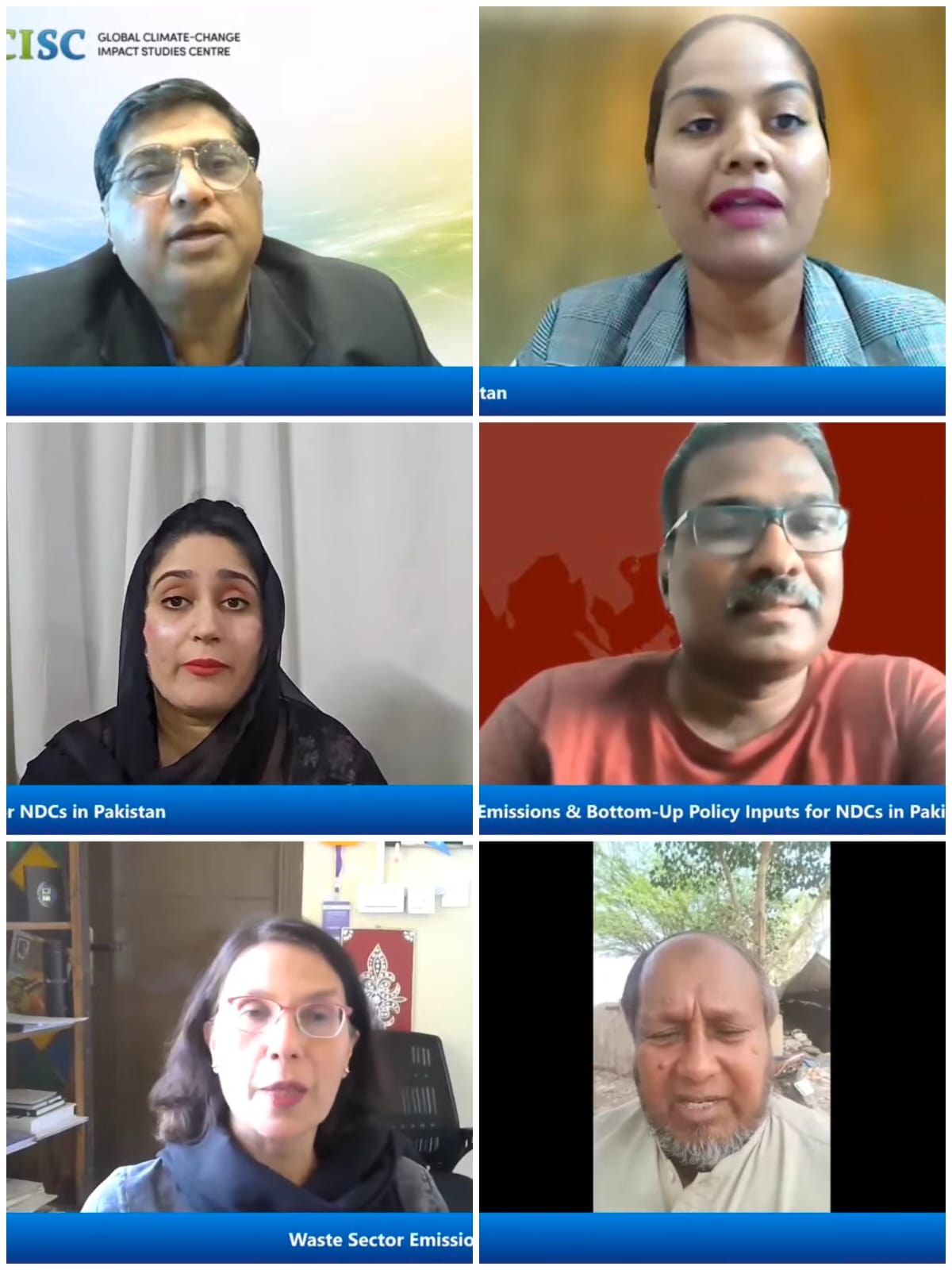
ISLAMABAD, Mar 02 (APP): Climate experts, policymakers and development practitioners have stressed the need to transform Pakistan’s waste sector into a strategic pillar of its climate mitigation agenda under the Nationally Determined Contributions (NDCs) by setting up robust data systems, life-cycle based emissions accounting, and formal integration of informal waste workers.
The call was made during a webinar titled “Waste Sector Emissions & Bottom-Up Policy Inputs for NDCs in Pakistan,” organized by the Sustainable Development Policy Institute (SDPI) here on Monday.
Executive Director of the Global Change Impact Studies Centre (GCISC), Arif Goheer, said the waste sector sits at the intersection of climate science, urban governance and sustainable development, yet remains “one of the most under-recognized but high-impact mitigation opportunities” for Pakistan.
He said that according to the 2024 greenhouse gas (GHG) inventory prepared under the United Nations Framework Convention on Climate Change (UNFCCC) reporting framework, the waste sector contributes around eight per cent of Pakistan’s total GHG emissions, mainly in the form of methane, which has nearly 20 times higher global warming potential than carbon dioxide over the short-term.
“Pakistan generates approximately 45 million tons of municipal solid waste annually, increasing at 7 to 8 per cent per year due to rapid urbanization and changing consumption patterns,” he said, adding that though the national per capita waste generation figure used in inventories is 0.65 kilogrammes per day, it has risen to between one and 1.25 kilogrammes per day in metropolitan cities such as Karachi and Lahore.
He noted that 70 to 80 per cent of collected waste is openly dumped, while wastewater treatment coverage remains only about 10 per cent nationwide, leading to unmanaged anaerobic decomposition and significant methane and nitrous oxide emissions.
He suggested shifting from a bulk-approach emissions inventory to a life-cycle approach, supported by time-series data at district and municipal levels. Establishment of a centralized dashboard and structured data management system, he said, would enable robust baseline setting, credible emission accounting and improved access to climate finance.
Head of SDPI’s Ecological Sustainability and Circular Economy Unit, Associate Research Fellow, Zainab Naeem, said that the developing countries, particularly in South Asia, face serious challenges due to the dominance of informal actors in the waste sector, lack of source segregation, open dumping and inadequate landfill infrastructure.
She also pointed to global developments around circular economy solutions and negotiations on plastic pollution, emphasizing the need to recognize locally practiced, climate-friendly solutions instead of relying solely on imported models.
To sustain the dialogue, SDPI proposed the formation of a Waste Sector Emissions Working Group aimed at consolidating practitioner evidence, supporting data-driven policy recommendations, facilitating engagement with climate institutions and contributing technically informed inputs to national processes.
Chief Executive Officer of the Akhtar Hameed Khan Foundation, Dr Ayesha Khan, said that formal recognition of informal waste workers is critical for long-term impact.
She said that even when informal workers form cooperatives, lack of legal, social and contractual recognition keeps them confined to isolated pilot initiatives. She suggested integrating them as recognized contract workers within municipal service frameworks.
Rabia Razak from the International Labour Organization (ILO) suggested adopting a just transition framework in NDC implementation. Referring to the inclusion of just transition language in Pakistan’s NDC 3.0, she urged stakeholders to translate it into sector-specific action, including identification, mapping and provision of decent working conditions for waste workers.
Angel Imdad, representing a circular economy-focused SME, highlighted the need to complement mitigation measures with adaptation strategies. She called for enhanced awareness among waste generators and greater corporate accountability, noting that Environmental, Social and Governance (ESG) reporting could drive behavioural change in industry.
Shibu Nair from the Global Alliance for Incinerator Alternatives (GAIA), underscored the importance of zero-waste models as climate action tools and advocated leveraging international methane partnerships and climate finance mechanisms for cities with populations exceeding one million.
Earlier, Amna Arooj of SDPI said that the objective of this consultation was to generate structured, evidence-based policy inputs aligned with local implementation realities to strengthen sectoral integration within NDC frameworks.
The participants agreed that diversion and recovery strategies alone could reduce landfill methane emissions by nearly 30 per cent in urban centers, while also delivering co-benefits such as improved public health, reduced air pollution, renewable energy generation and job creation.
They emphasized that aligning municipal waste management systems with national climate commitments requires institutionalized data collection, life-cycle-based inventory preparation, integration of informal workers under just transition principles, and structured engagement between local governments and federal climate bodies.