BEIJING, Mar 2 (PEOPLE'S DAILY/APP):As China accelerates the integration of AI and manufacturing, how to ensure reliability and high-quality development has become a key concern among national lawmakers ahead of this year's "two sessions," the annual meetings of China's top legislature, the National People's Congress (NPC), and the top political advisory body, the National Committee of the Chinese People's Political Consultative Conference (CPPCC). "If a user asks an AI application …
NPC deputy advocates for deeper AI-manufacturing integration
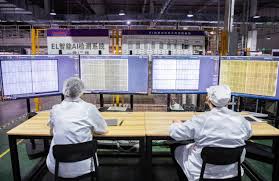
BEIJING, Mar 2 (PEOPLE’S DAILY/APP):As China accelerates the integration of AI and manufacturing, how to ensure reliability and high-quality development has become a key concern among national lawmakers ahead of this year’s “two sessions,” the annual meetings of China’s top legislature, the National People’s Congress (NPC), and the top political advisory body, the National Committee of the Chinese People’s Political Consultative Conference (CPPCC).
“If a user asks an AI application a question on a smartphone and encounters an ‘AI hallucination,’ the incorrect answer can still be verified,” said Zhang Fan, an NPC deputy and vice president of China Electrical Equipment Group Co., Ltd. “But if similar errors occur on a manufacturing production line, the consequences would be unimaginable.”
Having worked in the electrical equipment manufacturing industry for nearly two decades, Zhang has been involved in the research and development of a range of high-end equipment. He notes their accelerating penetration across industries, bringing significant potential to enhance manufacturing quality.
“However, my research indicates challenges remain in this AI-manufacturing integration,” Zhang stated. He pointed out that while China has issued guiding policies for “AI Plus Manufacturing,” the sector’s diverse industries have varying levels of readiness. Some enterprises have rushed into developing specialized large models, leading to issues like redundant efforts, fragmented resources, and inconsistent quality. Furthermore, there is a shortage of relevant talent.
“Critically, there is a lack of high-quality industrial data, and data sharing remains difficult, which constrains the training efficiency and generalization capability of AI models,” he added.
In response, Zhang submitted a suggestion titled “On Accelerating the Deep Integration of Manufacturing and AI for High-Quality Innovation and Development” at the 2025 NPC session.
He called for faster formulation of AI development plans in sectors such as electrical equipment manufacturing, joint efforts to establish industry AI innovation centers, coordinated development of sector-specific large models, multi-pronged measures to build a high-quality industrial data ecosystem, and accelerated cultivation of interdisciplinary AI talent.
High-quality suggestions have helped advance related work in an orderly manner. The Ministry of Industry and Information Technology (MIIT), along with other central government departments, has engaged in in-depth communication with Zhang through field research, symposiums, and consultations to solicit his views.
Recently, eight government departments, including the MIIT, jointly issued an implementation plan for the “AI Plus Manufacturing” initiative. The plan outlines a series of measures, including developing high-level industry models, advancing coordinated data-model initiatives, accelerating AI applications in key industries, and strengthening talent training and recruitment.