M Atif Ismail MULTAN, Feb 25 (APP):The growing signals from New Delhi about suspending or undermining the Indus Waters Treaty have generated deep concern among experts in Pakistan. Talking to APP, a senior educationist Dr Naeem Mahboob (Dept of Social Science) from Bahauddin Zakariya University described such a move not merely as a bilateral dispute, but as a step that could destabilize regional food systems, threaten millions of livelihoods, and undermine …
Violation of Indus Waters Treaty can push South Asia toward agricultural, humanitarian turmoil
M Atif Ismail
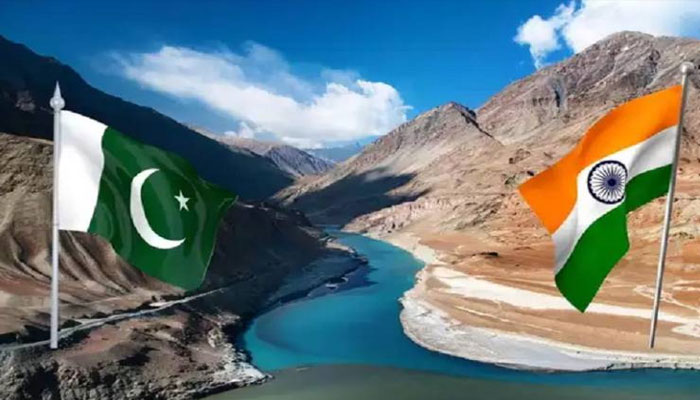
MULTAN, Feb 25 (APP):The growing signals from New Delhi about suspending or undermining the Indus Waters Treaty have generated deep concern among experts in Pakistan.
Talking to APP, a senior educationist Dr Naeem Mahboob (Dept of Social Science) from Bahauddin Zakariya University described such a move not merely as a bilateral dispute, but as a step that could destabilize regional food systems, threaten millions of livelihoods, and undermine the credibility of international agreements.
Signed in 1960 with the facilitation of the World Bank, the treaty has long been regarded as one of the most resilient water-sharing arrangements in modern diplomatic history. It survived wars, political hostility, and decades of mistrust. Any unilateral suspension, the professor argued, would not only be a legal and moral breach but a dangerous precedent in transboundary water governance.
According to Naeem Mahboob, if water is used as leverage to pressure Pakistan, the consequences would extend far beyond diplomatic messaging. Pakistan’s agricultural economy is fundamentally dependent on the Indus Basin system. Nearly 80 to 90 per cent of irrigation infrastructure is linked to the western rivers allocated under the treaty. Any disruption, whether temporary or prolonged, would directly affect crop cycles, rural incomes, and national food security.
Agriculture remains the backbone of Pakistan’s economy. Wheat, rice, cotton, and sugarcane depend on timely and predictable water flows. Even short-term interruptions during critical growth phases can reduce yields. A reduction in water availability would not remain confined to farms; it would ripple through supply chains, affect exports, increase food prices, and intensify inflationary pressures in urban centers.
The professor emphasized that Pakistan is already grappling with climate volatility, irregular monsoon patterns, glacial melt variations, and extreme weather events. Introducing deliberate upstream uncertainty into an already fragile hydrological system could multiply risks. Farmers located at the tail-end of canal networks would be the first to suffer. As canal supplies shrink, reliance on groundwater extraction would rise, increasing energy costs and accelerating soil salinity problems. Over time, such stress could degrade agricultural land and reduce long-term productivity.
Beyond economics, the humanitarian implications are severe. Tens of millions of people rely directly or indirectly on the Indus Basin for sustenance. Rural employment, livestock survival, and agro-based industries are tied to stable water flows. If water is strategically restricted, the impact would not be abstract but it would translate into reduced incomes, rural migration, and heightened social tensions.
The professor warned that weaponizing water erodes trust in international norms. The Indus Waters Treaty has long been cited as proof that even adversarial states can manage shared resources through law. Undermining this framework could send a troubling message globally that treaties can be discarded for political convenience. In a region already marked by volatility, such a step would amplify uncertainty, he added.
He further observed that food security is no longer a domestic issue but it is a global concern also. Disruptions in one major agricultural system affect regional markets and humanitarian stability. If Pakistan’s agricultural output declines due to engineered water constraints, the consequences would extend beyond borders. South Asia, home to nearly a quarter of the world’s population, cannot afford water brinkmanship.
Similarly, institutions that facilitated and endorsed the agreement must recognize their role in safeguarding it. Diplomatic engagement, legal recourse, and multilateral dialogue are essential to prevent escalation.
Concluding the discussion, professor Naeem Mahboob stated that rivers are lifelines, not instruments of pressure. Using water as a geopolitical tool may create short-term leverage, but it risks long-term instability. Millions of farmers, laborers, and families depend on predictable flows of the Indus system. Any deliberate attempt to disrupt that flow would not only harm Pakistan’s agriculture and economy but would endanger regional stability itself.
The world must recognize that destabilizing a river system in South Asia is a decision with far-reaching human consequences.