ISLAMABAD, Feb 27 (APP):A meeting of the Special Committee on Gender Mainstreaming was held today in the Committee Room of the Benazir Income Support Programme (BISP), Pak Secretariat, Islamabad, under the chairpersonship of Hon. Dr. Nafisa Shah, MNA. The Secretary, BISP, briefed the Committee on ongoing programmes and initiatives, with particular emphasis on women’s socio-economic empowerment and institutional measures aimed at promoting inclusive, equitable, and gender-responsive service delivery. He informed …
Dr. Nafisa Shah Seeks Clarifications on Integrity and Updating of NSER in Special Committee Meeting
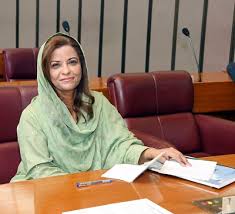
ISLAMABAD, Feb 27 (APP):A meeting of the Special Committee on Gender Mainstreaming was held today in the Committee Room of the Benazir Income Support Programme (BISP), Pak Secretariat, Islamabad, under the chairpersonship of Hon. Dr. Nafisa Shah, MNA.
The Secretary, BISP, briefed the Committee on ongoing programmes and initiatives, with particular emphasis on women’s socio-economic empowerment and institutional measures aimed at promoting inclusive, equitable, and gender-responsive service delivery. He informed the Committee that BISP, Pakistan’s flagship social safety net programme, currently supports over 10.2 million families nationwide — a substantial increase from 2.2 million beneficiaries in 2008.
Under the Benazir Kafalat Programme, quarterly stipends have been enhanced to Rs. 14,500, with Rs. 561 billion allocated for FY 2025–26. The Secretary further apprised the Committee that BISP is modernizing its payment mechanisms through CNIC-linked Social Protection Wallets to strengthen transparency, promote financial inclusion, and ensure nationwide digital access. More than 7.26 million SIMs have been issued to beneficiaries to facilitate secure and direct transactions.
He further highlighted that BISP continues to invest in human capital development through the Benazir Taleemi Wazaif Programme (education stipends linked to school attendance) and the Benazir Nasho-Numa Programme, implemented in collaboration with the World Food Programme, aimed at combating child stunting and improving maternal health outcomes. Through the Dynamic National Socio-Economic Registry (NSER), the Programme ensures transparent, poverty-based targeting across 38.7 million households. With a sustained focus on women’s financial empowerment, digital inclusion, and poverty alleviation, BISP continues to strengthen an inclusive and shock-responsive social protection framework across Pakistan.
Honourable Members observed that, in light of prevailing fiscal constraints, concerns arise regarding the long-term sustainability of BISP and the extent to which it can continue operating at its current scale without exerting pressure on fiscal stability.
The Hon. Chair and Members raised several questions concerning transparency and accountability within the payment system, particularly regarding safeguards against unauthorized deductions, biometric verification mechanisms, and interbank interoperability under the new digital payment framework.
The Hon. Chairperson sought clarifications regarding the integrity and periodic updating of the NSER, including the frequency of third-party registry surveys, inclusion and exclusion criteria, and measures to prevent manipulation or political influence in beneficiary selection.
In addition, inquiries were made regarding grievance redress mechanisms, third-party audits, data protection protocols, and oversight arrangements to ensure that public funds are disbursed in a fair, transparent, and efficient manner.
The Chairperson of the Special Committee proposed consideration of the inclusion of elderly persons, persons with disabilities, and indigent men who may not presently fall within the existing eligibility framework, particularly in cases where adequate family support is lacking.
The Chairperson further suggested that relevant data be obtained and verified through the National Database and Registration Authority (NADRA) to identify such vulnerable individuals through existing demographic and disability records. It was emphasized that data-driven targeting, supported by administrative databases, would help ensure transparency, minimize exclusion errors, and extend social protection coverage to marginalized groups remaining outside the formal safety net.
The Committee underscored the need for a comprehensive assessment of fiscal implications, eligibility criteria, and verification mechanisms prior to any expansion of the Programme’s scope.
The Committee recommended expediting the transition to CNIC-linked Social Protection Wallets to ensure full nationwide interoperability across banks and payment platforms. This would enhance transparency, reduce reliance on specific payment agents, and improve beneficiary convenience.
It was further recommended that compliance monitoring under Benazir Taleemi Wazaif be strengthened through the induction of additional field Compliance Monitors, particularly in undeserved districts. Enhanced coordination with provincial governments was also deemed necessary to address shortages of girls’ secondary schools and transport barriers contributing to dropout rates.
The Committee recommended scaling up digital and financial literacy training to enable beneficiaries to effectively utilize digital wallets and safeguard against fraud. Expansion of API-based integration of the Dynamic NSER with federal and provincial databases would further improve targeting accuracy and reduce inclusion and exclusion errors.
Additionally, the fleet of Mobile Registration Vans should be expanded to enhance outreach in remote and conflict-affected areas. Stronger linkages between cash transfers, skills development, and employment initiatives were also emphasized to promote sustainable poverty graduation and long-term socio-economic empowerment of beneficiaries.
The Hon. Chairperson and Secretary, BISP, responded comprehensively to the questions and observations raised by the Hon. Members, providing detailed clarifications on the matters under discussion.
The Chair approved the minutes of the previous meetings of the Committee.
The meeting was attended by Ms. Shaista Pervaiz, Ms. Shahida Rehmani, Ms. Munaza Hassan, and Ms. Shahida Begum, MNAs. The Chairperson BISP, along with senior officers of BISP and officials from the Ministry of Human Rights, also attended the meeting.